Enjoy a great day out on 1,000-acre castle estate
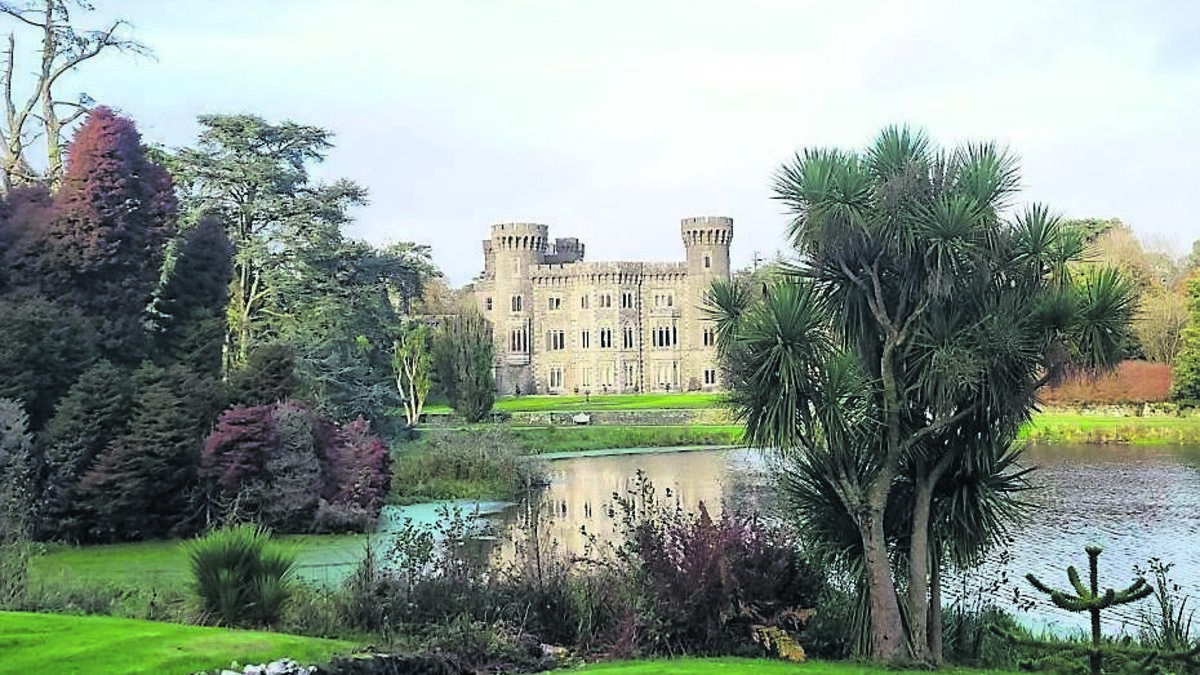
Johnstown Castle near Wexford town, looking across the Castle Lake.
AS November arrives, we continue to experience unusually warm temperatures for this time of the year.
Grass is still growing and, but for the falling leaves, the countryside would be fully clothed in green. Everything is getting damp and soggy, with the rain a persistent feature of the last few weeks.
It’s time now to get the garden furniture inside for the winter months and store away the pots not in use, putting any tender plants like pelargoniums into the shed or glasshouse until they spring to life again next year.
A recent trip to the sunny south-east brought me to Johnstown Castle, Estate, Museum and Gardens near Wexford town for a visit. The estate is managed and cared for by The Irish Heritage Trust and comprises some 1,000 acres, much of which is used by Teagasc for forestry and agricultural research.
The first castle on the estate was built in the 12th century by the Esmondes and what remains is an altered, expanded version influenced by the Gothic Revival. The castle itself is under restoration and guided tours need to be booked in advance, check online at www.johnstoncastle.ie for more details.
The gardens make up about 120 acres around the castle and are currently in the process of being restored under the direction of head gardener Ciaran Fitzgerald. The gardens comprise a lot of woodland, an arboretum, a four-acre walled garden, sunken garden, three lakes, waterfalls, a statue walk and several follies within the gardens, like the meat store and Rathlannon Castle.
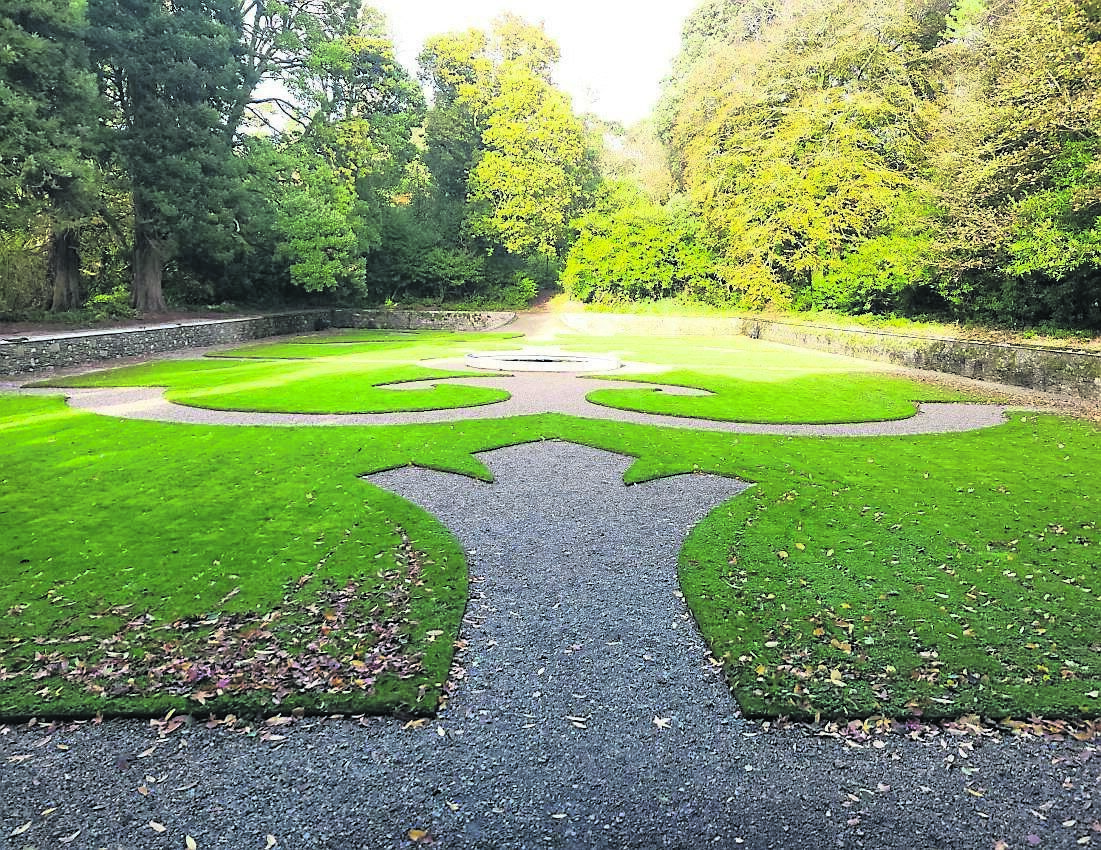
The gardens as they are today are totally man- made, with three lakes which now have walks around the perimeter. One of the lakes, the lost lake, had become totally overgrown, it covers 14 acres, and is the largest body of fresh water in the east of Ireland. This lake was a famine relief project and it took 400 men to hand dig this most imposing of landscape features.
The architect, Daniel Robertson, designed this man-made landscape in the mid 1800s. He was also involved in the design of the landscape at Powerscourt and Wells House.
There is an arboretum, as was the fashion at the time, which is home to more than 140 species of trees, amongst them a champion Monterey Cypress and some large redwoods.
When a tree falls in a storm or high winds or due to old age, the policy in more recent years is to leave the fallen timber in situ in the woodland areas, to provide food and material for fungi and invertebrates to feed off, making these environments richer in biodiversity.
This is in evidence throughout the woodland walks, with attractive patterns created with the cut timber on the woodland floor.
There is plenty of wildlife throughout the gardens and the management team are very proud that every native land mammal has been registered on the estate over the last few years.
Hay meadows are part of the new management plant on the estate, with 22 acres of cut grass reduced to eight acres, allowing more cover for insects and wildlife throughout the summer months
For the next few years, the main focus will be on the walled garden, where herbaceous planting is adopting a prairie style with the focus on providing food and cover for native pollinators and insects, retaining seed heads for the winter months to provide nourishment for birds and other wildflife and plenty of material useful for nesting.
The plan is to include plants in the design that are multi functional and useful, not just there for their aesthetics but to serve nature also and in doing so greatly enhance the biodiversity of the space.
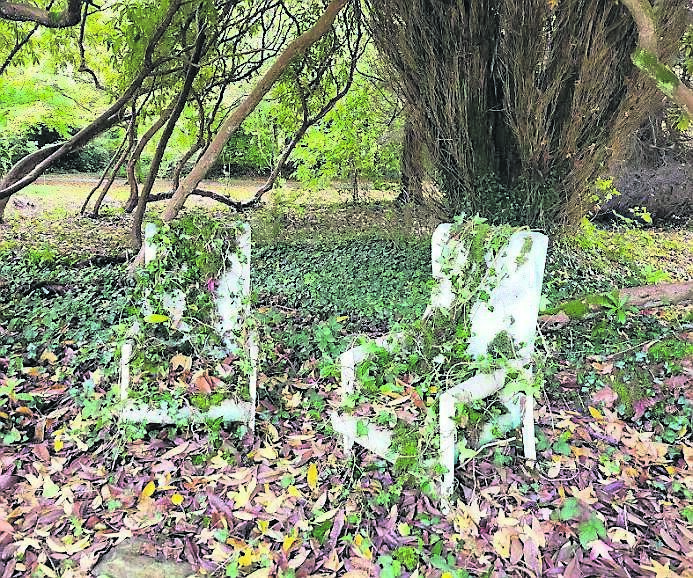
The glasshouses are also under restoration with plans for a propagation area and a palm house on the agenda over the next few years. There is a plan to propagate and sell plants from the garden to the public in the future. Good news for locals and visitors!
The emphasis over the next 10-20 years will be planting of native species and there are plans to plant 5,000 native trees in the next five years. The focus is on enhancing our own native plants, which will nurture wildlife of all descriptions and continue to enhance the ecological diversity on the estate.
In addition to the gardens and castle, there is a new visitor centre which is home to a shop and restaurant with a playground outside. This is adjacent to a courtyard which houses the Irish Agricultural Museum, which is home to a most interesting array of agricultural machinery, hand tools, restored tractors, carts, threshing machines, dairy equipment and barrel top caravans.
The Famine Experience exhibition gives an account of the build up to the famine and the devastating aftermath. The Irish Country Life exhibit displays Irish country furniture and celebrates traditional trades like black smith, copper smith and wheelwright.
It really is a great day out, with lots to interest everybody about the history and development of agriculture in the area.
It’s wonderful to see investment in such an important historical estate, which is now providing a valuable local amenity to people and providing an important tourist attraction in the area also.
It will be interesting to see how the garden develops and grows over the next few years as new plantings evolve over time.
It is possible to become involved in the ongoing work in the gardens as they welcome volunteers to help out in the gardens.
Contact info@johnstowncastle.ie or go to their website and check out ‘get involved’.






 App?
App?


