In the Garden: Time to enjoy the fruits of your labour
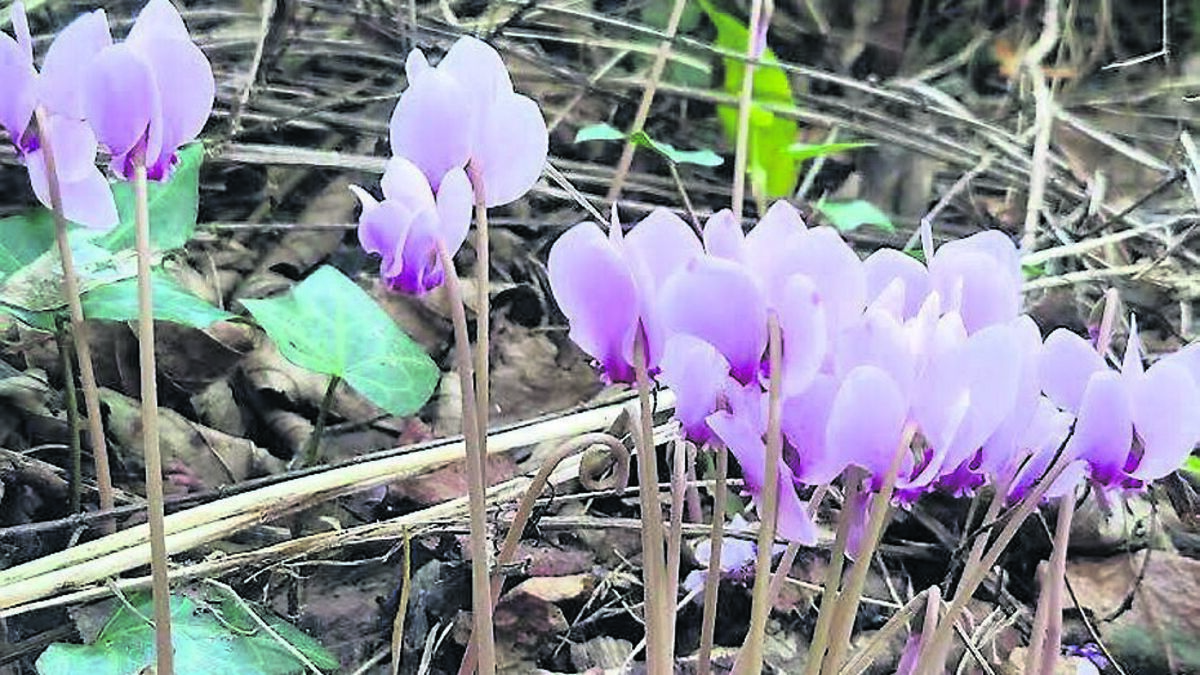
Summer dormant Cyclamen hederifolium sends forth its flowers to produce an autumn display
THE rains came, and they restored the lush green that we are accustomed to throughout the countryside and in our gardens.
It is wonderful how the recent downpours have managed to revive plants of all descriptions, from annuals right through to established trees this late in the growing season.
As we transition from summer into autumn, it does help when there is not too drastic of a change in temperatures too quickly. An ‘Indian summer’ is always a welcome prospect, and great when it materialises as it allows us to enjoy the garden right into the autumn.
The phrase ‘Indian summer’ originated from North America, where a ‘warm, calm spell of weather occurring in autumn’ is quite common and enabled native American Indians to forage successfully, building up food supplies before the approaching winter.
When we get this kind of weather in September, a similar concept applies today, it makes harvesting all that his been growing throughout the summer easier and the quality of the crops are better.
There may still be later varieties of apples to be picked, autumn flowering raspberries continue to produce, and blackberries, although the did not appreciate the rain earlier this month, may well revive and produce a last picking.
September is usually the best month for picking blackberries in Ireland, with tales of the devil getting to them any later than, so best avoided after that!
In truth, the weather starts to get damper into October, with heavy dews morning and evening, so the quality of the fruit is not as good.
Looking around the garden and the hedgerows, nature’s bounty is all around, with fruit forming on the holly, mountain ash, sloes and hawthorns colouring up, and rose hips forming in clusters, all making very seasonal displays in the garden, and future fine dining locations for birds in leaner times over the next few months.
It is a time of the year to admire all that has been produced throughout the past growing season and maximise on the harvest that can be preserved for use during the winter months.
Kitchens around the country are alive with the sound of pickling, preserving, jam making, blanching and freezing as summer surplus is put to good use.
Of course, the planning for next year’s crop starts now and the soil is in good condition for sowing green manures to get them established before conditions are too cold for germination.
Phacelia, clover, rye grass, beans and winter vetch all provide good cover for the soil over winter and can be dug in next spring before crops are planted.
This is a great way of ensuring that valuable nutrients are not washed out of the soil over winter and incorporating organic matter back into the soil the following spring.
Some of the green manures fix nitrogen from the air into a usable form in nodules in their roots, increasing valuable nitrogen levels which will be used to fuel growth next year.
Green manure seeds are available at most garden centers, and Fruit Hill Farm in Bantry do a great online selection that will be delivered to your door.
Now is also the best time to sow yellow rattle in an area that may be being considered for wildflower development. This native Irish wildflower, which is parasitic to root of grass, provides the key to developing a wildflower area, weakening the competitive grass to allow native wildflowers a chance to seed and become established.
One of the requirements for germination of the seed of yellow rattle is that the seeds have undergone a period of cold in the ground, this is known as vernalization and it is a survival technique, ensuring the seeds do not emerge until winter is over.

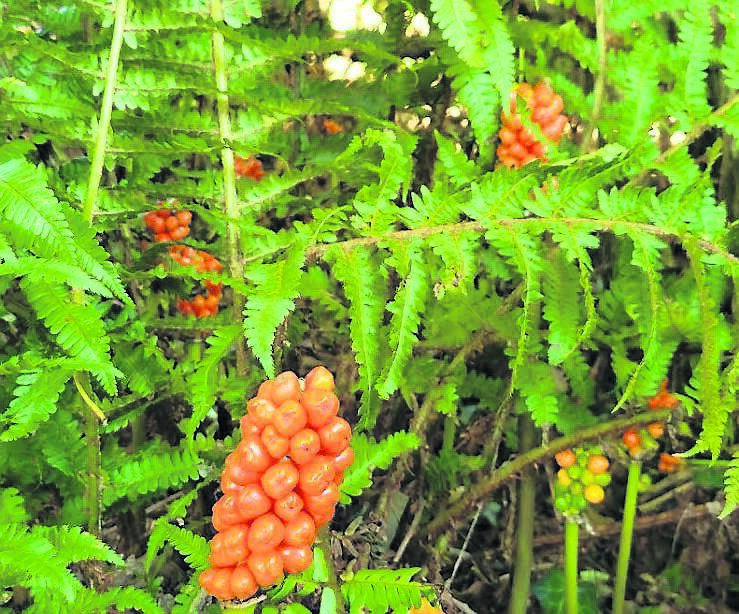
There are seasonal pops of colour appearing throughout the garden now in hues of orange, reds and browns. Arum italicum can be an invasive groundcover woodlander and is not one of my favourites in the springtime, when its foliage is aggressive and can smother other plants with it vigour!
In the autumn, however, it produces spikes of orange and red berries that are a welcome sight on the floor of the woodland.
These berries are poisonous to humans, but not to birds, which feast on them and spread the seed, when ejecting the non-palatable seed within the fleshy orange coating - part of the reason that they become invasive!
In a more naturalized woodland setting, they work fine, but in a garden area they can become problematic when trying to allow space for more choice plants to establish.
Cyclamen hederifolium is a summer dormant cormous perennial that begins to make an appearance towards the end of the summer, pushing its dainty pink/purple flowers above ground before the grey/green mottled foliage appears later.

Plant of the Week
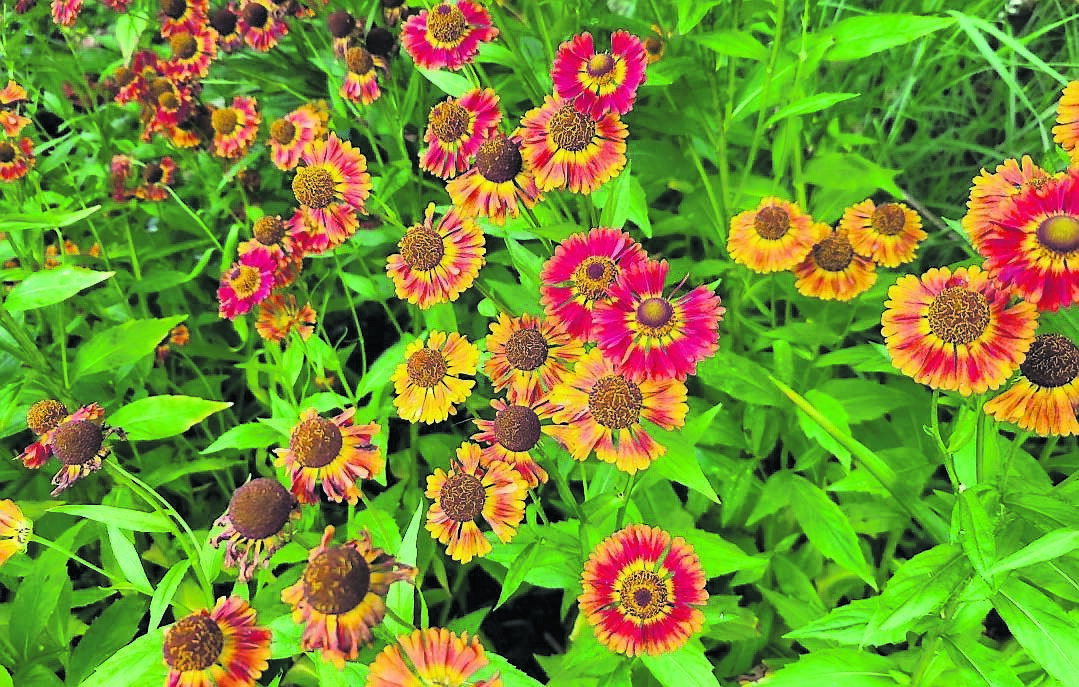
At this time of year, a good late flowering perennial can do a lot to brighten up the border, and one of the best late summer flowering perennials has to be Helenium, with their russet tones setting the scene for the season ahead.
Helenium autumnale ‘Salsa’ (right) produces daisy shaped flowers with hues of orange yellow, brown and red. It is one of the more compact Heleniums, getting to about 50cm in height, with a similar spread, and will grow best in a moisture-retentive but free-draining soil in full sun.
These plants are clump-forming and will benefit from digging them up and dividing them every 3-5 years.
A great addition to extend flower colour in the garden into the autumn months. Happy Autumn Gardening!

App?