Musician undertakes county-wide tour of great Cork churches
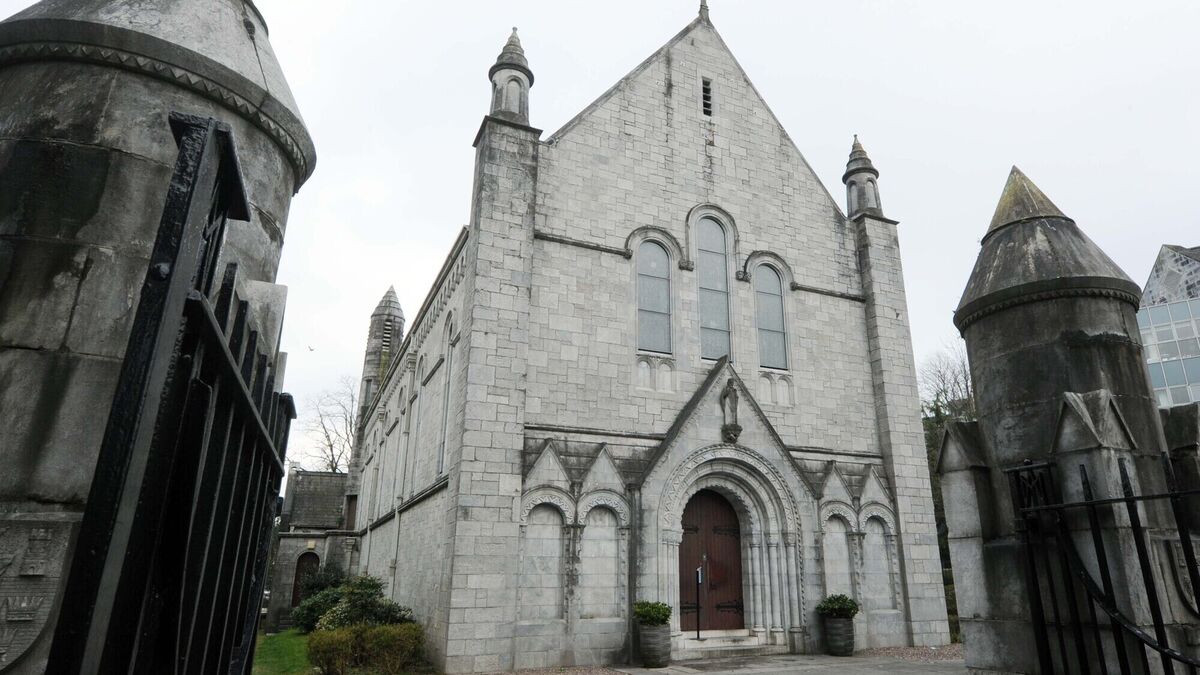
The Honan Chapel at UCC, Cork.
AS a busy musician who has been ‘resting’ for a considerable period of time, due to Covid, I have been reflecting on some of the many beautiful churches in Cork city and county.
This was triggered by last week’s Nationwide TV show on the restoration of the Honan Chapel in UCC. It brought back many memories and inspired this county-wide tour of some of my favourite musical venues.
Known in the business as ‘The Wedding Cellist’, more recently ‘The Garden Cellist’, I have performed in every county in Ireland and have a soft spot in particular for a number of churches in Cork.
As a church musician, you are not the centre of attention and we usually position ourselves at the back or in the organ gallery. This takes ‘the pressure off’!
As you arrive at a church before the ceremony, you have the opportunity to study the surroundings. The first thing that always strikes me in the Honan Chapel is the mosaic floor, whose design is based on the signs of the zodiac, and then the magnificent Harry Clarke windows.
A critical musician is only as good as his last gig, and a good acoustic inspires the performer, as do the surroundings.

A wedding in Honan is quite unique as every couple has some connection to UCC.
The chapel was built in 1916 from the estate of the Honan family. It does not have any independent source of income and is totally dependent on the generosity of others for its funding. Thus, it is dependent on the fee from marriages for its upkeep.
Its construction was initiated and supervised by the Dublin solicitor, John O’Connell, a leading member of the Celtic Revival and Arts and Crafts movements.
It was funded by Isabella Honan, the last member of a wealthy Cork family, who made a significant donation towards the construction of the chapel.
O’Connell oversaw both the architectural design and the commissioning of its exterior carvings and interior furnishings.
In 1986, the sculptor Imogen Stuart was commissioned to oversee the building and installation of a new altar and other carvings, furnishings and fittings.
The Honan Chapel was one of the first modern Irish churches conceived with a thematic design not directed by the clergy.
It is a good place to start a tour of beautiful Cork churches.

The next one on my list is St. Finbarr’s Oratory in Gougane Barra.
It features stunning stained glass windows, coursed limestone walls with concrete quoins and a rounded wooden entrance. The inside has an elegant vaulted ceiling and a free standing altar.
There are a number of cell structures and a cross which make up the ruins of this historic place. It is said that one of these cells belonged to St Finbarr.

Now I travel onto St Brendan’s in Bantry.
It’s situated in the centre of town, on Wolfe Tone Square, the heart of Bantry, and claims an ancient connection with St Brendan, the first European to discover America. This church is one of the main venues for the West Cork Music festivals.
The present building was erected on land donated by the First Earl of Bantry, Richard White. The first time the town clock on the church was rung was to herald in the 20th century. The Church was dedicated to St. Brendan the Navigator in 1999.

I then make my way to St Barrahane’s in Castletownshend. ‘The church of Sommerville and Ross’ is well worth a visit, and is well known for its beautiful stain-glass windows, three of them by the famous Harry Clarke and three by Powell of London.
In the porch there is an oar from the S.S. Lusitania. The authors, Dr Edith Somerville and Violet Martin, are buried on the bank at the church’s east end.
The floor mosaic on the altar was designed by Edith Somerville, the organist in the church for 70 years, and is similar to the mosaic on the floor of her house in the village.

On my way back to Cork city, I call into the Church of the Ascension Timoleague, Church of the Mosaics. This must be the only church building in Ireland where the interior walls are not only covered in colourful mosaics, but where also the story of those mosaics has local connections, as well as links to India.
There are many stories of historical interest linked to the mosaics. These were mainly paid for by His Highness, the Maharajah of Gwalior, India, in gratitude for a locally born doctor, Aylmer Martin Crofts. Originally from the townland of Concamore, Crofts had become the Maharajah’s personal physician for 20 years, and on one occasion, he helped to save his son’s life.

My mini tour brought back memories of all the church services I have played for and the eclectic mix of people I have met. Some of the ceremonies I was sworn to secrecy not to reveal to the press. My most striking memory was playing in an organ loft for a church ceremony and wondering who were the giants who were climbing all over me, the Munster rugby team!



 App?
App?


