Relationship expert: ‘We change all the time...talking is key in relationships’

The ‘honeymoon’ period lasts a maximum of two years, says Carmel.
Falling in love is “intoxicating”, says former co-active life coach Carmel Wynne, whose latest book, , puts romantic relationships under the spotlight.
With Valentine’s Day approaching, many couples are planning a special night out, but Carmel says that some will be disappointed.
“There’s the expectation that it’s going to be wonderful but it may not live up to your expectations because they’re unrealistic or too high. People end up disappointed. The thing about Valentine’s Day is why not make it a daily thing instead of once a year?”
That may be a tall order, but Carmel means that if the same consideration was shown to your partner and vice versa all the time and not just on that Hallmark occasion, couples would be much happier. But the path of true love is rarely smooth.
“Let’s say you have a couple that are married for five years and they have one or two children. One of the grandmothers offers to babysit so the couple can go out. They haven’t been out in two years.
“They have an amazing night; superb food, great background music and they have a lovely chat. Everything is wonderful and they say they’ll come back next year on Valentine’s Day with the expectation that they’re going to have the same experience.
“But next year, instead of being present and enjoying the occasion, they’re comparing it to last year and it’s probably going to fall short because they’re not ‘in’ the experience.”
In her book, Carmel writes that a couple moving in with each other to have a monogamous relationship are heroic.
“They really are because they’re committing to being with somebody for the rest of their lives. But the ‘honeymoon’ period lasts a maximum of two years. In the beginning, he wants her to be happy and she wants him to feel the same. But then things begin to change.
“They could be little things. For example, when they were going out together, she went along to watch his rugby matches and didn’t mind the cold. Because she loved being with him so much, she would have gone to the ends of earth for him. But then they get married and settle down. He has the expectation that she is going to continue going to his rugby matches. But she says to him – ‘you go, I’ll do something else’.
“Small things like that can result in a tiny bit of resentment. But as resentments build up, what happens is that she doesn’t like him as much as she used to. He feels disappointed. She simply doesn’t want to stand around in the cold anymore. Having a conversation around that could clear the air.
“But people don’t have those conversations, what is called the psychological contract. People make assumptions about each other and think they understand how we feel. But we don’t tell them when they’re wrong and so, there is a lot of miscommunication which causes stress and unhappiness because people aren’t talking to each other.”
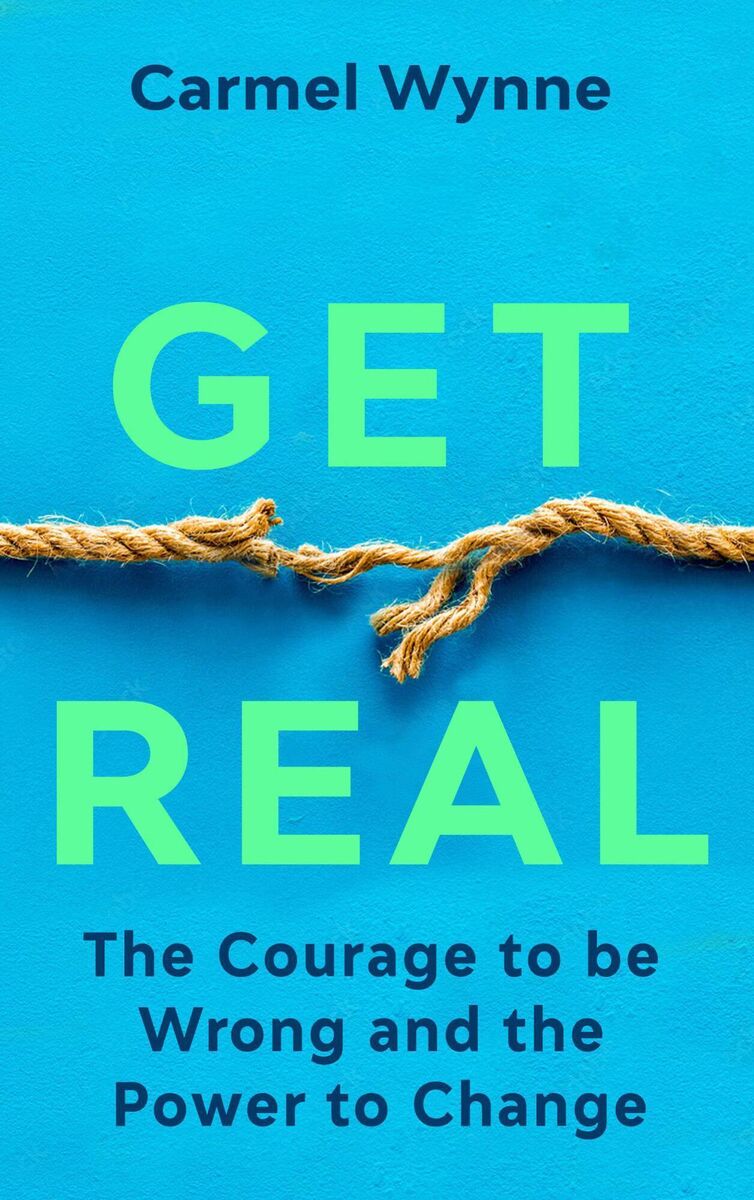
Carmel, who is also the author of and is described as an expert in relationship dynamics and communication, drawing on her training in spirituality, neuro-linguistic programming, emotional intelligence, and life coaching.
A mother of four grown-up daughters, Carmel reckons ‘unrecognised miscommunication’ is at the root of relationship problems.
She has been married “three times – to the same man”.
“People are shocked when I say that but it’s the reality. They say you never divorce the man you married. We change all the time and grow at different rates. When a woman has a baby, there is a paradigm shift in her relationship with her husband. Instead of him being the most important person in her life, there is this tiny new life taking that role. It’s an incredibly difficult time for a man.”
Carmel worked outside the home until the birth of her first child in 1972. “My boss left the job open so I could work my own hours. But I was breastfeeding and I made the decision to stay at home and be a full time mother.
“My husband Colm was out doing the things he normally did and I was in a housing estate and knew nobody. My relationship changed and my life was different because I was on my own. I wasn’t seeing colleagues; I didn’t have my own money although it was always ‘our money’.”
Because they know the importance of continuing to work on their relationship throughout their lives, Carmel and Colm remain happily married. But it takes effort and openness to each other’s needs.
“In a relationship, people have different love languages. For me, communication is really important. I feel safe when there’s lots of communication. I would say to Colm that we need to talk. I’m aware that doesn’t like having long, drawn-out conversations. I became more accepting of his acts of service. We learned each other’s love language.”
When their children were at secondary school and college, Carmel and Colm embarked on a new phase in their marriage.
“We had a ball; we travelled the world. It was like a very different relationship. We were very comfortable with each other.”
When Colm saw the impact that neuro-linguistic programming had on Carmel, he trained in it himself. “Neuro-linguistic programming is about communication but it’s not communicating at word level but with the awareness of body language and tonality. The whole point of it is that you look for the deeper meaning under the word where the emotional impact is.
“Neuro-linguistic programming is really powerful. It trains you to listen and to take sensory things into account as well as the words.”
Carmel no longer works as a co-active life coach but it has given her the tools by which to live. It’s based on the premise that the client has all the answers and it’s up to the coach to ask the questions that will empower the person to find their own answers.
It seems Valentine’s Day could actually mean work. It’s not just about red roses and champagne. Heart to heart conversations are vital to keeping a relationship alive and healthy.
- by Carmel Wynne, is published by Mercier Press.






 App?
App?


