Cork director: ‘We’re all on that treadmill of going, going...’
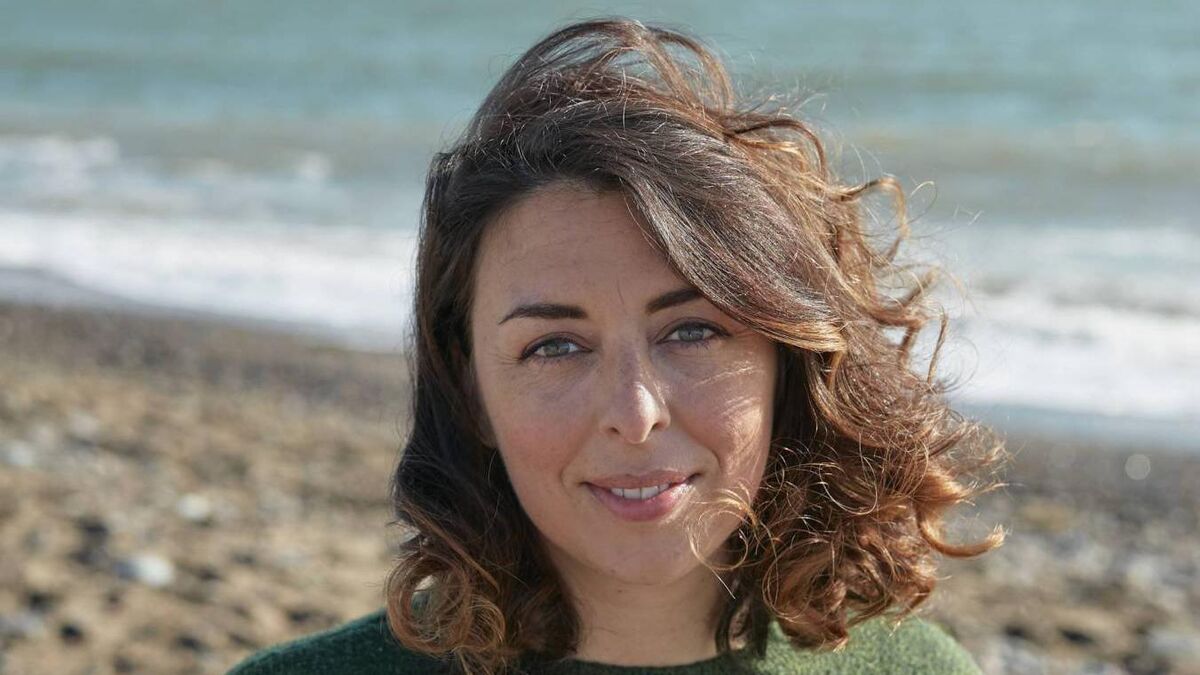
Julie previously held the role of artistic director of the Everyman before moving to Bray, where she was artistic director of the Mermaid Arts Centre.
Now, Julie is dividing her time between Wicklow and her native Cork.
As part of the 50th anniversary of Cork Arts Theatre, she was invited to direct a contemporary play under the banner, Re: Directing. It’s one of three contemporary plays being staged at the venue this year.
Julie says that when she got the call from Fin Flynn of the Cork Arts Theatre to direct a play, she went about reading widely.
“The parameters Fin set were that the play should be a contemporary work that hadn’t had an Irish production as of yet. I knew that the other directors were looking at writing by contemporary British playwrights, so I was curious to know what could be complementary from other English language traditions, and indeed those of other traditions in translation, in terms of the overall shape of the season.”
When Julie read by Canadian playwright Hannah Moscovitch, she didn’t have to think too hard about its suitability.
Julie had seen and read other plays by Hannah Moscovitch and knew her to be a writer “who could deal with intellectual complexity, who knows how to truly work within the form of theatre and who could, crucially for me, move the viewer.”
For this production, it’s a case of sisters doing it for themselves with not only a female director and playwright but also an all-female creative team. It comprises Aedin Cosgrove, the set and lighting designer; Fiona Sheil, the composer and sound designer; Valentia Gambardella, the costume designer; and movement and intimacy director, Cathy Walsh.
Was it a conscious decision to have so much girl power involved in the production?
“It’s actually more about people who have relationships with Cork that I wanted to work with. It’s really lovely (that the team is all female). And when you’re putting together a cast and creative team, you want collaborators for whom the material resonates.”
has at its heart three people – a composer, a mathematician and a physicist - trying to work out who they are, and who they are in relation to others.
“Moscovitch expertly weaves in ideas about time from both theoretical physics and music as a way of considering the lives and predicaments of these beautifully drawn characters, while also staying completely grounded in their very human dramas.
“She gives us funny, flawed characters that we care about, who are grappling with questions such as the nature of time and the universe as well as the nature of what it means to love and be loved.”
The play, says Julie, “is not super-lofty. It’s much more of a domestic drama. It’s not hugely plot-driven; it’s more character and ideas-driven. It’s about people having barneys and trying to work each other out, the regular stuff of being in a relationship with other humans in a house, a life or a partnership.
“And there’s that classic thing in drama with people misunderstanding each other.”
Julie says the play is surprisingly comedic, “very funny and dry. I also think it does unexpected things. It goes places you don’t expect it to go.”
With the nature of time as one of its themes, Julie says she can be “a bit obsessive” about time.
“That’s not unique to me. We’re all a little obsessed with it, with age and how much available time we have to get a certain thing done. In the theatre, time is always a constraint. But regardless of industries, we’re all on that treadmill of going, going, going. Covid forced a lot of us to slow down. We have now gathered pace again.”
Julie is interested in time “which is also to do with ageing. I feel I’m coming back to live this kind of life. Currently, I feel much more of a sense of possibility rather than pressure.”
Julie, who has an MA in drama and theatre studies, worked as a freelance director, producer and actor before her stint at the Everyman from 2014 to 2020. She was with the Mermaid Arts Centre from 2020 to 2024.
The theatre scene in Cork has changed since Julie moved to the Mermaid Arts Centre. The closure of Corcadorca is a big loss, she says. The Cork Theatre Collective is a positive development. And greater Arts Council funding, where it has been made available, is very welcome for all theatre practitioners.
Through the Cork Theatre Collective, Julie received a bursary to do some “focused work” on musician Mick Flannery’s second musical, which she is directing.
It will be performed at the Pavilion in Dún Laoghaire in April and atthe Everyman in May.
“I’m really excited about it and a bit daunted. It’s a big undertaking as I’ve never directed a musical before (Kelleher produced Flannery’s first musical, , in 2019.)
“But part of my buzz is to do things that are a challenge,” says Julie.
- is at the Cork Arts Theatre from February 5 to 14.






 App?
App?


