Cork cousins: ‘We’re the first to do this... and now we just want to take over the world’
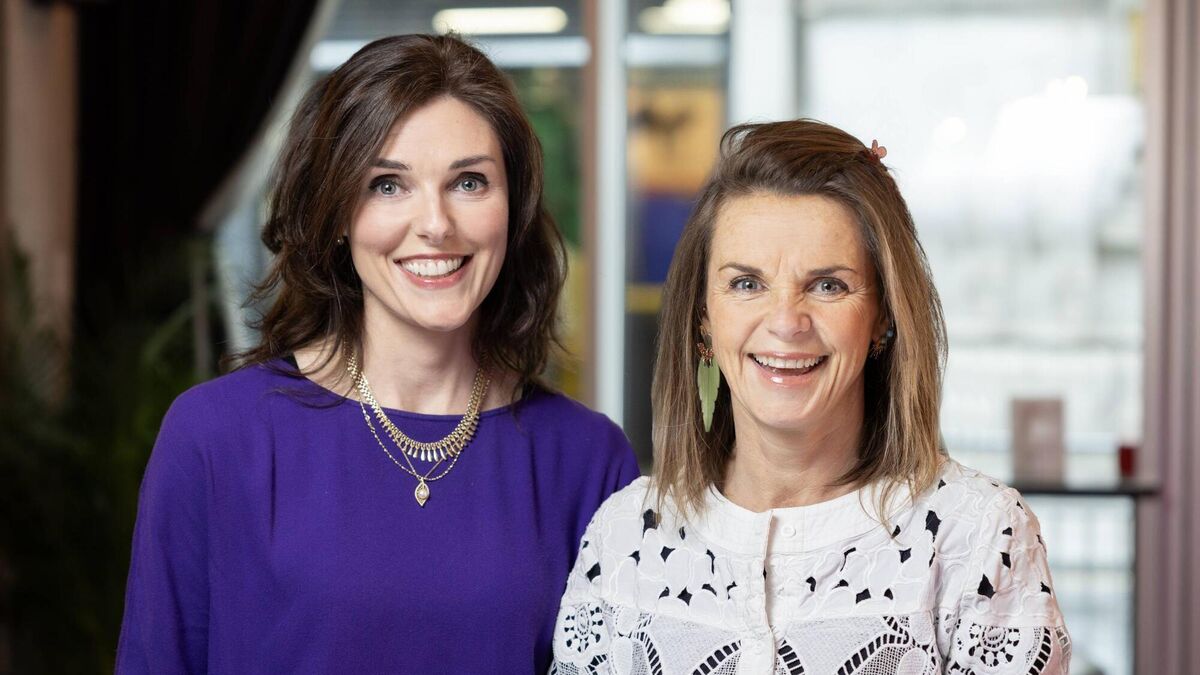
Cork cousins Dr Mary O’Riordan and Lisa O’Riordan founded HaPPE Earth in 2021.
Personal Protection Equipment, or PPE, captured the zeitgeist of the covid years. Gowns, gloves, aprons, and masks, all made from single-use plastic, were used in their millions, transported in bulk from China.
Cork cousins, Dr Mary O’Riordan and Lisa O’Riordan, knew there had to be a better solution to this reliance on plastic PPE, and in 2021, they founded HaPPE Earth, creating fully-compostable PPE made out of thistles.
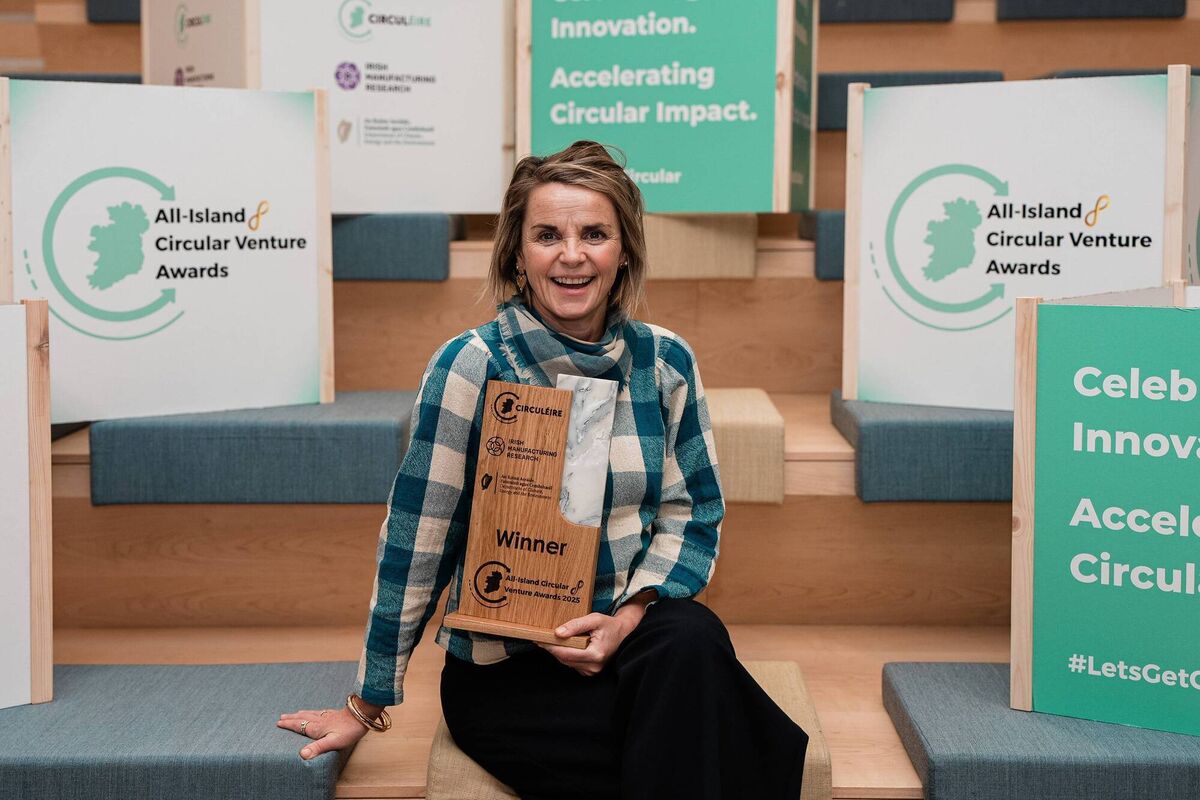
These efforts have now been recognised with the duo scopping the overall award in the inaugural All-Island Circular Venture Awards in 2025.
Dr Geraldine Brennan, Director of Circular Economy Innovation at Irish Manufacturing Research, who presented the prize, said HaPPE Earth “embodies circular innovation, circular excellence, execution strength, commercial viability, and system level impact”.
From the beginning, HaPPE Earth zeroed in on the healthcare sector. That’s because a significant proportion of the products used in the healthcare sector are single-use.
In Ireland, we use around 50 million single-use aprons every year.
In the South Infirmary Victoria University Hospital (SIVUH) in Cork, over 700,000 single-use aprons are used annually.
HaPPE Earth’s apron was their first product, and the team ran a pilot in the SIVUH, replacing the hospital’s plastic aprons with compostable ones. The pilot was a success, says Lisa O’Riordan.
“We got all the lovely feedback that we were hoping for - it’s guilt-free, more breathable, and positive reports from all people that were wearing it. So then we thought, let’s take on the full life cycle of this apron. We worked with a company called Harp Renewables, and we medicalised one of their bio digesters so that hospitals could process this waste on-site safely.
“So now we’re doing another pilot through Health Innovation Hub Ireland (HIHI) with Clonakilty Hospital that’ll be coming up this year. What we’re doing is taking the food waste from the hospital and our aprons, and then on site it will go through a 24 hour cycle and will end up as this lovely pathogen-safe, nitrogen rich fertiliser. Our goal is simple: our product comes from the land, it has its function, and then it goes back to the land safely.”
In May, 2025, the cousins won a tender to provide “Ireland’s first full-cycle sustainable waste solution” to the Royal Victoria Eye and Ear Hospital in Dublin. The hospital will use HaPPE Earth’s thermophilic biodigester to “transform more than 20 tonnes of annual food and compostable clinical waste into reusable compost”.
The project is being hailed as “the benchmark for sustainability in clinical operations” by Alan Dillon, Minister of State at the Department of Enterprise, Trade and Employment, with a special responsibility for the circular economy.
Initial reports are positive, says Lisa.
“We’ve done a proof of concept there, and we can show that it does exactly as it’s supposed to do. With our dashboards, they can see that they’ve reduced their plastics, reduced their carbon emissions because we’ve set up manufacturing now in Ireland, but we’ll also get them produced in mainland Europe.
“But also they can see they’ve actually made cost savings, because by redirecting the food waste through our stream, that waste is completely eliminated for them, so there’s good cost saving for hospitals.”
The HaPPE Earth duo are not ones for standing still. They have expanded their product range to include shoe covers, hair nets and beard nets, and set up a manufacturing facility in Cork. At this base, they manufacture the shoe covers, the hair nets and the beard nets. By manufacturing them in Ireland, Lisa says, the company has “shortened the supply chain, which in turn helps our clients to meet their CO2 targets”.
And the team is also now looking beyond the healthcare industry, particularly with the shoe covers, explains Lisa. “Pharma uses them, construction uses them, particularly in the construction of data centres, the catering industry, and they’re dying for an easy changeover. What we’ve made is a like-for-like swap. They’re the exact same foot cover, except one is 50 to 100 years in landfill, and the other one, if it goes through our system - the HaPPE Cycle - is completely eradicated within 24 hours. Or if it goes to landfill in the right environment, it breaks down within 12 weeks.”
The award-winning solution is making waves and has produced “a simple solution to a massive problem”.
“When you look at the figures, they’re staggering. If you look at our four products, the apron, the hair net, beard net and shoe cover, in one of Cork’s super pharma companies, eight million of these products are used every year. In just one plant!
“What’s brilliant about Ireland is we’re an innovative country. And there’s momentum now building in this area. We’re the first to do what we’re doing, and we just want to get going now and take over the world.”





 App?
App?


