My Career: ‘I love meeting people coming on the show and chatting to them’
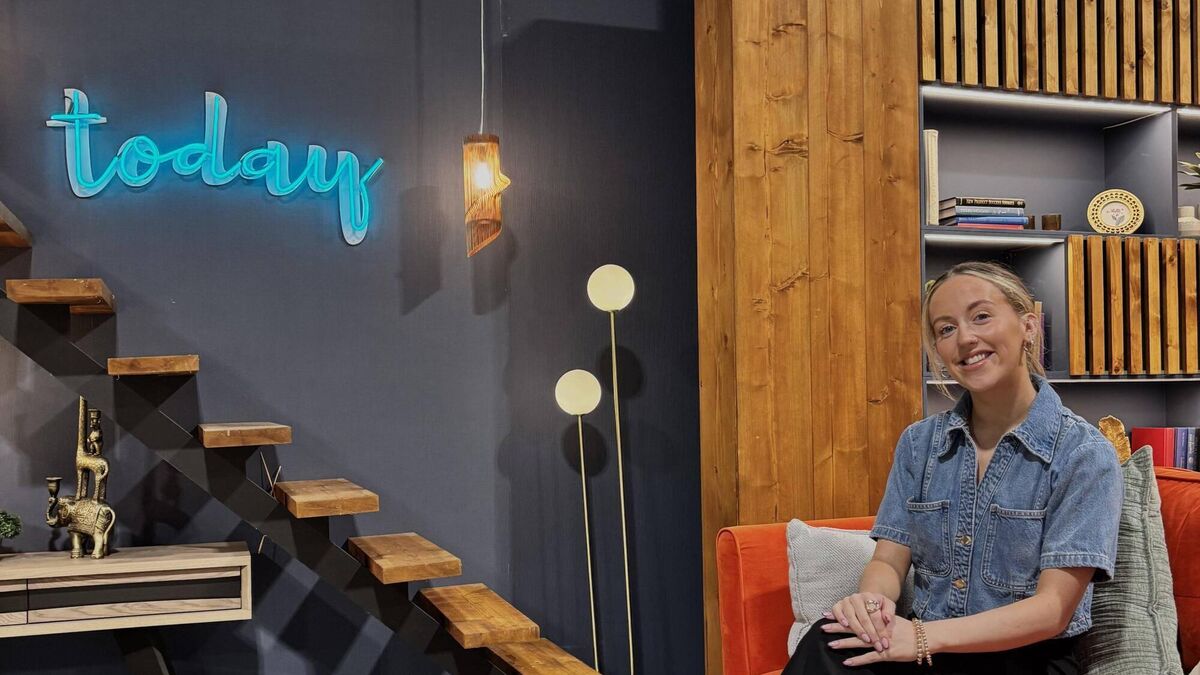
Nicola says collaboration is an important part of her role.
Name: Nicola Flynn.
Age: 24
Lives: Mallow.
Job title: TV Researcher, Today, on RTÉ One.
Salary bracket: The pay grade varies based on your level of experience upon entering the job, and there is always potential to grow. At the minute, my wage keeps me content and caffeinated, and allows for the odd browse on ASOS!
Education background: I went to St Mary’s Secondary School in Mallow, before heading up to the University of Limerick to study a Bachelor of Arts in Journalism and Digital Communications.
I’d really recommend the course for anyone interested in working in media. It’s a four-year degree, and the modules are all really practical and engaging. In third year, you also get the opportunity to go on a work placement and study abroad as part of the ERASMUS+ programme.
Hobbies: I absolutely love to bake, so much so that I thought about pursuing it as a career, but I know I made the right choice with media. It’s definitely true what they say about how turning your hobby into a career isn’t always the best thing to do! I’m also a big reader, a huge fan of Irish fiction books like Graham Norton’s and fellow Cork woman Caroline O’Donoghue’s. Other hobbies of mine include sauna and swims and running (which is not as easy as it looks on TikTok!)
Describe your job in five words: Busy, exciting, fast-paced, fun, and insightful.
Describe yourself in five words: Decisive, chatty, curious, open-minded, and creative.
Personality needed for this kind of work? You need to be confident and creative, have the ability to think on your feet, and be a good communicator who can collaborate well with others.
How long are you doing this job? I joined Today in February last year, towards the end of Season 13.
How did you get this job? I mentioned earlier how in third year of the UL Journalism course you get the opportunity to go on placement. For mine, I was lucky enough to join Cork’s RedFM as an intern in the newsroom. This was my first real taste of what it was like to work in a live broadcasting environment, so I tried to take in as much information as I could over the five months!
After returning to UL to finish my degree, I got a place on the Learning Waves graduate programme. I cannot praise this programme highly enough - 10 graduates are picked and placed in radio stations across the country for a five-month work placement, and each week you also take part in workshops/lectures with industry professionals.
I was placed in Cork’s 96fm & C103, and really learned everything I know today over the five months on the grad programme. From newsreading to producing Cork Today on C103, and even throwing my hand at the farming and sports shows, I did a bit of everything, and that has really stood to me.
Towards the end of my programme, an opportunity came up in RTÉ Cork. I loved working in radio broadcasting, and was intrigued to see how it worked with a visual element added to it. The timing was right, and I thought it would be great experience so I grabbed it with both hands!
Do you need particular qualifications or experience? Not necessarily but I’m sure they would be helpful! Like I said, I learned so many skills throughout college, placement, and my graduate programme - all of which are very useful on the day to day.
Describe a day at work: On my show days, I’m listening to Newstalk Breakfast from around 7am. When I get to the office at 8am, I grab the papers straight away and flick through them, and also give a good scan of news outlets online and pick some stories I think would work for our Talk of Today news panel. At 9am, I have a meeting with my day producer and executive producer, where we discuss the stories and decide which ones to use on the panel.
Once this is over, I get to work straight away on my research briefs. When these are finished, I send the briefs to my panelists, before printing them and dropping them down to the studio floor so the presenters can go through them. I also copy the information from my brief into the script for that day. After this, it’s time for a quick lunch before my panelists arrive for the show. I sit down with them in the green room and go through the brief with them, making sure they are happy with each story.
Once 3.30pm hits and our show begins, I’m watching it from the green room while keeping a close eye on texts and WhatsApps coming in from our viewers.
On my non-show days, I’m organising prizes and questions for our Win The Wheel competition, booking panelists, and also helping get some behind-the-scenes content for our social media platforms.
How many hours do you work a week? Roughly 44.
Is your industry male or female-dominated? I would still consider myself new to the industry, but overall I think there is a good mix of both. At the minute, the team I work with on a day to day basis is made up of mostly female producers and researchers. Hup the mná!
Does this affect you in any particular way? I don’t think so! It’s great to work with open-minded people who all have the same goal - producing some great television.
Is your job stressful? How? Rate it on a scale of 1-10: It depends on the day - I am definitely kept busy, that’s for sure.
Some days it could be a 7, other days it could be a 3. Balance is key and it hasn’t hit 10 yet, thankfully!
Do you work with others or on your own? I work closely with my team, and we also collaborate with other researchers, producers, editors, and those that work on the studio floor and in the gallery. I also get to work with all of our fantastic panelists that appear on the show every day.
When do you plan to retire or give up working? Since I’ve just started, I don’t even want to think about that! I can be very bad at wishing my life away. It really helps that I enjoy my job.
Best bits: Getting to be creative, working with a great team, and keeping informed on what’s going on in the world. I also love meeting the people coming on the show and chatting to them in the green room, they always have the most interesting stories to tell.
Getting to taste the chef’s food is always great too!
Worst bits: Slow news days! We always get something, but it can be tough, as you want your panel to be the best it can be.
Also, I’m usually so focused on the next show I have to do that it can be difficult to pause and reflect on what went well or what resonated with our audience.
Advice to those who want your job? Put yourself out there, talk to people, make connections. Say yes to as much as you can (even if you feel it’s not your forté) without burning yourself out.
Any other comments? Don’t be afraid to ask questions, and don’t be afraid to share your ideas. I’m still learning how to do this but hope I get better at it as my career progresses!




 App?
App?


