There's still life in Cork’s Knitting Map as it heads stateside
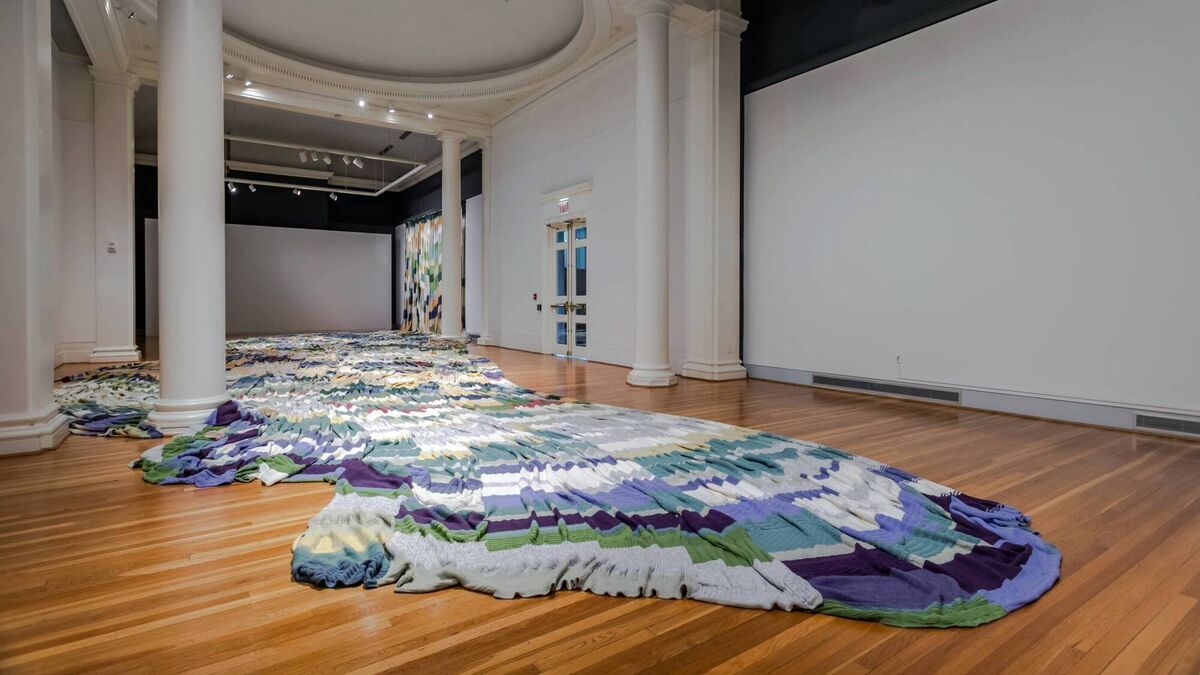
Cork’s Knitting Map is currently being exhibited in the U.S. COLETTE SHERIDAN talks to the artistic director of the ambitious project from Cork’s tenure as European Capital of Culture, back in 2005.
There's still life in Cork’s Knitting Map as it heads stateside

Cork's Knitting Map, created back in 2005 when Cork was the European Capital of Culture.

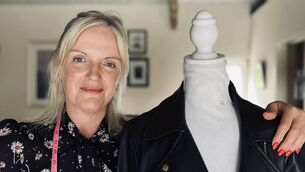
THERE is still plenty of life in the Knitting Map, says Jools Gilson, who was artistic director of the ambitious project and is now the custodian of this huge textile work (the size of a tennis court) that was created in 2005 to mark Cork’s tenure as European Capital of Culture.
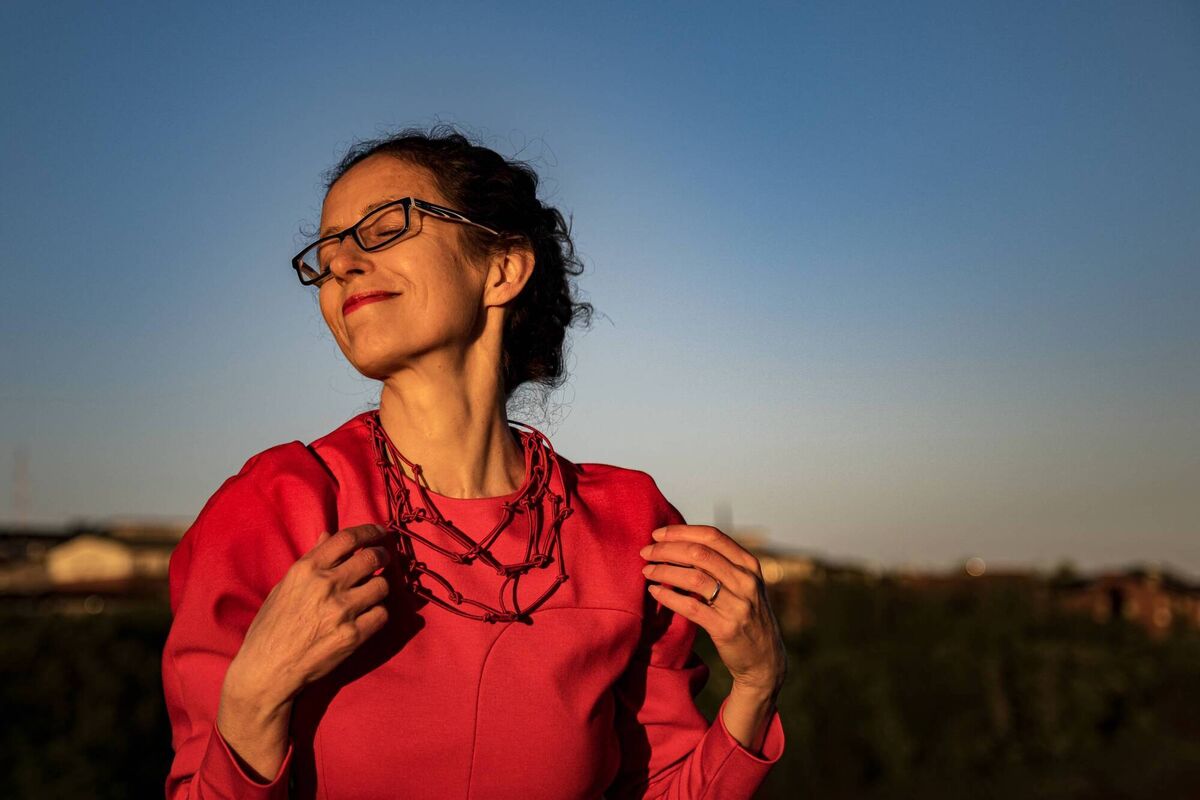

Jools, who is professor of creative practice at UCC, recently travelled to Wisconsin in the US where the Knitting Map is exhibited at the Kohler Gallery, Lawrence University. Jools gave a series of talks and workshops there. The exhibition continues until mid-November.

The Knitting Map’s trajectory saw it premiering in 2006 at Cork’s Millennium Hall. It was exhibited twice in Pennsylvania and, in 2015, it was unfurled and shown at UCC’s Glucksman Gallery.

The project, expedited through arts production company Half/Angel comprising Jools and Richard Povall, was established at the crypt in St Luke’s Church. With a computer programme designed by Richard, the idea was that the map would reflect on the weather patterns in Cork and on the busyness of the city, over a year.

A number of CCTV cameras were set up around the city centre. The data they gathered was fed through the computer programme. The busier it was in the city, the more complex the Knitting Map would be that day. The coded colours represented the weather and how busy Cork was. It was a record of aspects of the city during 2005.

The Knitting Map attracted controversy, not least its price tag of €258,000, but this was over three years. The funding primarily paid for a staff of five, office rental and the renovation, fitting out and running of an arts centre for a year.

The Wisconsin exhibition is entitled ‘Mapping Climate Change: The Knitting Map & The Tempestry Project’. As Jools explains, the Tempestry Project started in the US around the time Donald Trump was elected in 2016.

“A tempestry is a textile project where you knit or crochet one line a day in a colour related to a standardised temperature. 

The blues and greens would be the colder colours with red being a hot colour. It’s a document for a year.

“It was initially put together because Trump questioned whether there was climate change. He was threatening to get rid of data relating to climate. But he didn’t do so. There’s lots of historical climate data. In the exhibition, there are tempestries from the coldest and the hottest places recorded in the US. (The coldest was Utqiagvik in Alaska and the hottest was Death Valley in California.)”

Jools Gilson who was artistic director of the ambitious Cork Knitting Map project.

Jools says there is a lot of interest in the Knitting Map.

“At the time we were making it, we weren’t thinking specifically about climate change. But in some ways, it’s the original tempestry because it documents the weather for a year in Cork city at a time when we didn’t really realise what jeopardy our climate was in.”

Locally, people were dismissive of (or mystified by) the Knitting Map with the media sometimes ridiculing it. Jools says that when it is exhibited out of Ireland, people are shocked that (controversy) was part of its history.

“I embrace the Knitting Map. I’m really moved when other people can see it. 

I’m proud of it... It documents concrete data. It’s a translation of what happened in Cork during 2005 in terms of the weather and how people moved around the city.

Jools has thought a lot and written about the Knitting Map. The negativity “was less to do with the project. It’s quite complex. It was largely knitted by women from Cork city who were generally older and working class”.

Perhaps these women were, unfairly, not taken seriously, suggests Jools.

“But it really strikes a chord with people in terms of it being a community project where people came together and engaged with all kinds of data normally associated with the civic authority and local government.”

Jools says she is always interested in seeing if the work can be shown in different places.

“That’s always an open discussion. It’s not just me. It’s normally other people who are passionate about the Knitting Map and want to make things happen around it.”

Manchester-based, northern Ireland-born art critic Fionna Barber “has written quite a lot about Irish art and particularly Irish women artists. She and I have just published an article about the Knitting Map in the peer reviewed journal, Textile.”

For Jools, the Knitting Map is “haunting, because it’s handmade. It’s like a river. When it was exhibited in the Glucksman, it was brought down a wall and then pleated across the floor. It’s really effective that way. It animates it. People can get close to it. People are curious and can’t quite believe that it was made collaboratively.”

The Knitting Map could be said to reference “knitting and women whose history includes a really difficult colonial history. There was a time when knitting was much more associated with poverty and craft. Now, it’s a kind of luxury hobby as it’s expensive,” says Jools, who hopes to continue travelling with the Knitting Map.

More in this section

Emer O'Callaghan: How your phone can ruin your beauty Emer O'Callaghan: How your phone can ruin your beauty
Cork woman recognised for fundraising efforts in aid of Marymount Cork woman recognised for fundraising efforts in aid of Marymount
Cork’s Olga becomes first person to complete 10 hour, 28km swim route Cork’s Olga becomes first person to complete 10 hour, 28km swim route

Sponsored Content

From graduate engineer to director: A 25-year career helping to shape Ireland’s electricity future From graduate engineer to director: A 25-year career helping to shape Ireland’s electricity future
Brian Brennan, Tax Partner at KPMG in Ireland, President of Irish Tax Institute Budget 2027 should mark the beginning of tax simplification, says KPMG
CS Bord Gáis Energy Sep 2026 Predictable and pragmatic energy solutions that boost a business’s resilience
Contact Us Cookie Policy Privacy Policy Terms and Conditions

© Examiner Echo Group Limited

Add Echolive.ie to your home screen - easy access to Cork news, views, sport and more