Throwback Thursday: Remembering Cork’s caterers on railways
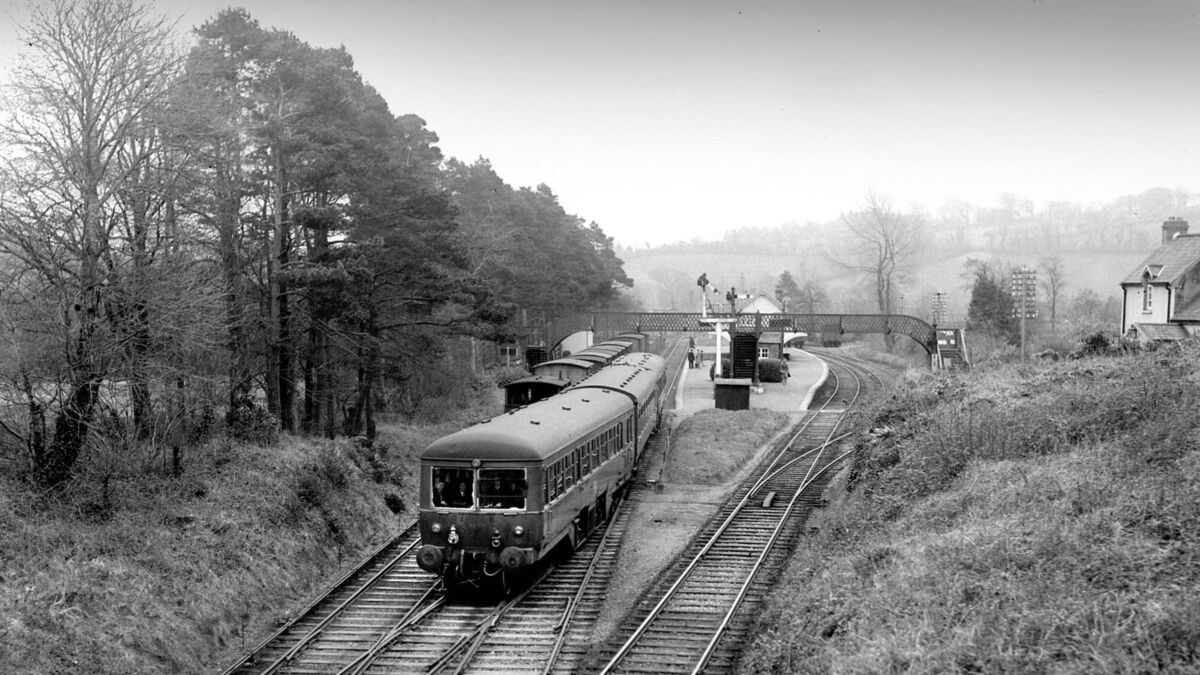
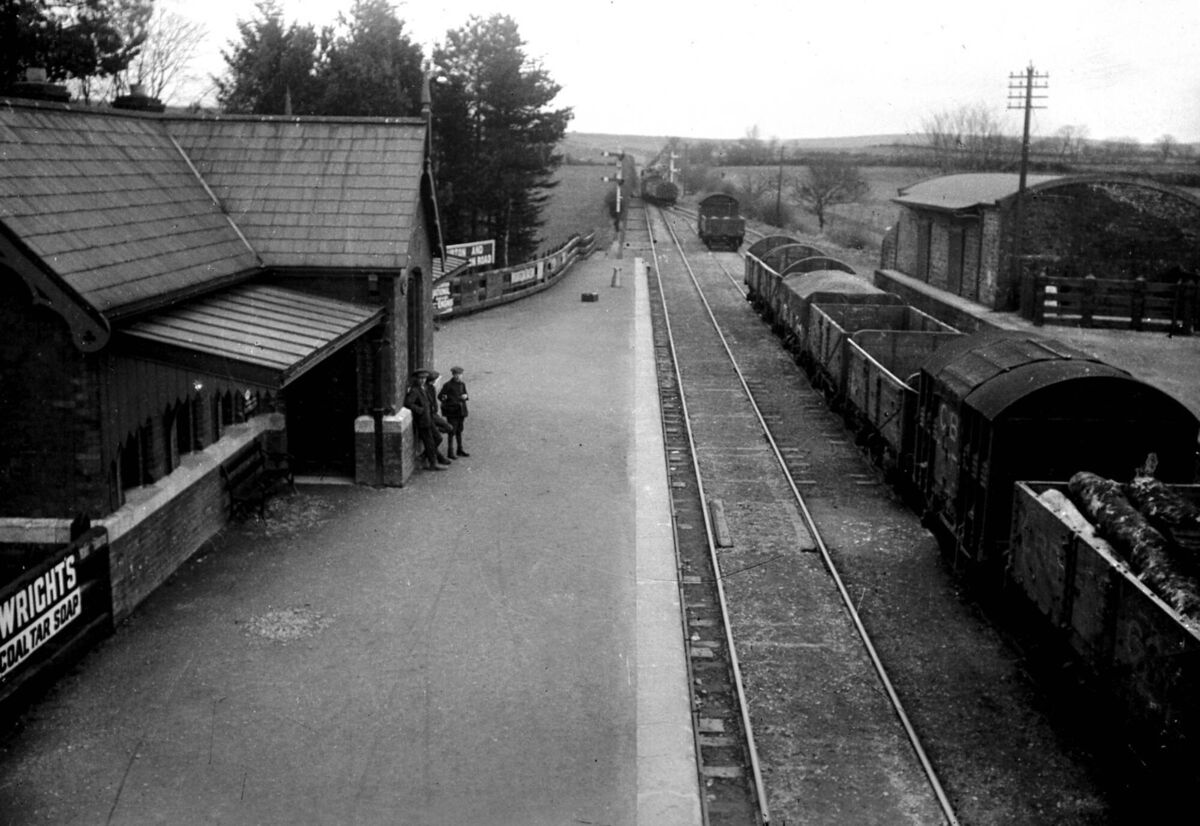
Clonakilty Junction on the old West Cork railway line in March, 1961
Do you remember that Micheál Kenefick reminisced last week in Throwback Thursday about the great days of dining on the train, and praised the wonderful catering staff on board, especially John Connolly and Ned?
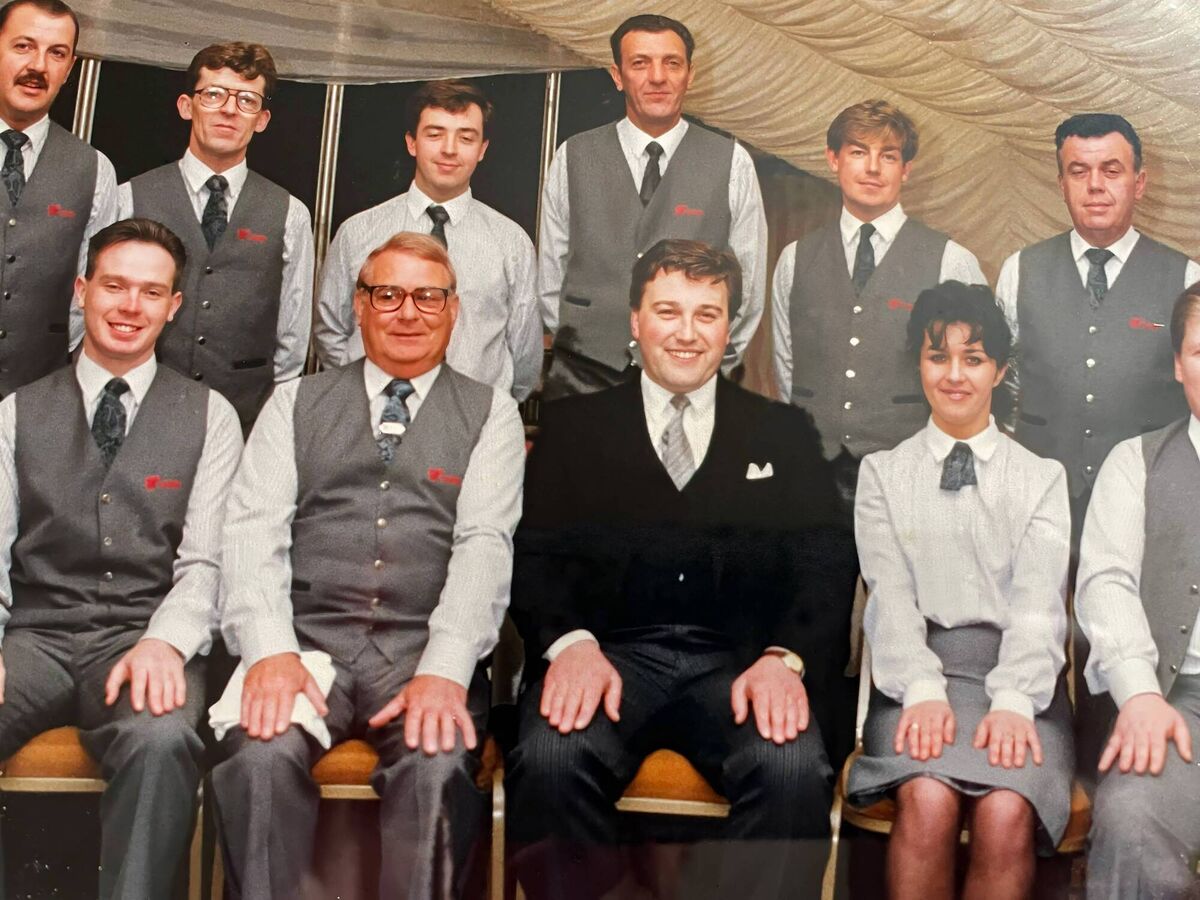
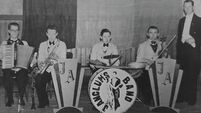
Well, he has now actually managed to dig out a picture of that self-same CIE catering staff for us. How did you manage to have that in your collection, Micheál? It’s not often that people took pictures of the catering staff. What other riches do you have tucked away?!
Trains are a bit different these days, of course. No chance of an early breakfast on board, tea and toast at your table, or enjoying a mixed grill while the countryside whirls by. It’s all in the past, alas.
You are fortunate if there is even a trolley being pushed from carriage to carriage, even in first class.
Look, let’s face it, once they pushed the steam trains into retirement, a lot of the delight went out of rail travel. (Had you noticed though that the warning signs for level crossings still show a steam locomotive? Suppose a diesel would just look like a long sausage, whereas the old loco really evoked instant recognition.)
And how many parents tell their children to look out for the ‘puff puff’? Even though it doesn’t puff any more!
Old habits die hard, and for those of us who grew up to the whistle of the steam engine, the glimpse of a column of smoke from beyond the bend, and all the sounds and smells and sights of the old days, there will always be a sense of regret that they are no longer.

Yes, of course, they were grubby, created lots of grit and smoke and cinder dust, and weren’t at all suited to today’s environmental concerns, but we do miss them, don’t we?
All the same, there is still, somehow, a vestige of romance about a train. Even when you have to stop at a level crossing to let the InterCity whiz past, it is still a thrill; while to stand on the platform at an utterly peaceful little station like Millstreet is to take yourself back half a century.
You half expect to see ladies and gentlemen in tweeds, well-behaved children in smocked frocks, and leather suitcases piled on a barrow and pushed by a lad in a peaked hat. You are quite surprised when a smooth diesel comes into view, instead of the blackened smokestack and echoing whistle of the beloved old steam locomotive.
But there is still definitely some of that excitement, about a train, whether it means a journey, a meeting, or a parting.
So many movies have been made about and around railways. The Railway Children comes to mind immediately, of course, Polar Express. That thrilling scene in Around The World In 80 Days when the American locomotive backs up and then takes a run at the rickety high-level bridge over a frightening ravine, only to barely make the other side before the entire thing collapses. The Lady Vanishes. High Noon. Ghost Train. The Madonna Of The Sleeping Cars. (“I have a ticket for Istanbul, but I may disembark at Trieste or Venice. It all depends on my whim, and the colour of the eyes of the gentleman who shares my compartment…”)
Murder On The Orient Express, of course. In all its versions. This writer considers the 1974 one, with Lauren Bacall, Sean Connery, John Gielgud, Vanessa Redgrave, Wendy Hiller, and so many other stars, the best, even if Albert Finney hammed it up a bit too much as Poirot.
Others will claim first place for Kenneth Branagh’s more recent rendering which he hammed up even more. David Suchet’s was intensely inward-looking. It’s all a question of taste. You will have your own favourites, and we trust you will write in immediately to tell us so.
(This writer travelled on the Orient Express way back in 1970, on a trip behind the Iron Curtain which was, at that time, still very firmly drawn closed. No show-off or nonsense on the train then – it left the Gare du Nord at around 11pm and travelled through the night, so that you breakfasted in Switzerland, stepped out to stretch your legs at Venice (keeping a sharp eye on the train which was shunting itself around, in case it decided to leave unexpectedly with all your worldly possessions on board), and crossed into Eastern Europe the second night (uniformed officials boarding, checking your passport, your visas, your bags, saluting, leaving again).
It was a sensible, useful service that had been running for almost a century. Nothing like the dressed-up, ridiculously expensive Disneyland experience they offer these days to those with pots of money.
And, tragically, the normal nightly service no longer runs. You either pay extortionate costs (and double that for the designer clothes you will have to buy to wear on board), or you drive across Europe in your car. Thus do the joys of life disappear…
Remember that classic Brief Encounter movie from 1945, directed by David Lean, where almost all the action takes place in the railway station: in the café, on the platform, in the tunnel between platforms?

In the original Noel Coward piece, the entire play is set in the station café, and you only get the back story from the lovers’ tense talk. A very clever idea, but the slightly more extended Trevor Howard/Celia Johnson film was an instant and everlasting hit.
People still go up to that little station at Carnforth in Lancashire where it was filmed, just to pose on the platform in their very own Brief Encounter moment.
All the tension and agony of one train leaving, another arriving, journeys home that must be made, separations forever coming closer and closer with every loudspeaker announcement, all in the gloom and darkness of a wartime railway station. Wonderful stuff.
Did you ever see that Dad’s Army episode where they recreated a scene from the movie brilliantly, with Arthur Lowe and Carmen Silvera (looking completely different to her better-known role as Rene’s wife in ‘Allo ‘Allo)? That particular episode (called Mum’s Army) demonstrated what a superb actor Arthur Lowe could be. He put real tragedy and pain into their parting as the train pulled out.
And speaking of trains, Cyril McIntyre has contacted us to agree with Pat Kelly that it was indeed in 1965 that the MV City of Cork ploughed into the side of Clontarf Bridge, thereby bringing to a sudden and violent halt to the daily chugging of trains over the river from Kent Station to Albert Quay.
“I was working in the District Manager’s office in Kent Station at the time,” recalls Cyril, “and remember walking over to the bridge with Chief Clerk Mick Walsh to view the damage.
“The CIE Area Engineer, Brian O’Connell, got one of the local boatmen to row him in under the bridge to inspect the structure underneath. He emerged several minutes later and shouted to us to have the bridge cleared of onlookers as ‘it could collapse at any moment’!
“I don’t remember how long the bridge closure lasted, but rail freight operations were disrupted, as fertilisers from Gouldings and cars from the Ford works had to be ferried by road to Kent Station goods yard during the closure, adding further to the resulting traffic congestion.”
Thank-you for that detail, Cyril. It adds so much to the whole story when we realise that not only did a ship crash into a bridge, but there were after-effects which virtually crippled the city’s everyday movements.
Which reminds me – can anybody else recall a Bailey Bridge being swung across the north channel of the Lee somewhere near the North Mall, back in the 1950s?
Or is that very decorated footbridge which is there now the original Bailey Bridge which was put up while the North Gate bridge was under repair?
I can certainly remember coming down in the family car (aka The Kerrigan Bus) from Sunday’s Well direction and crossing over that rather narrow and shaky structure, and would like to hear from anyone who has more information on it. Or did I imagine it all?
And now to another topic, one that is raised more and more frequently these days – house availability, house buying, and house ownership.
Reader Tom Jones has written from Florida to ask quite sincerely when it was that Cork moved from being a city where you lived in a council house and paid rent, to one where owning your own home was a must.
“When a reader recently mentioned that he bought a house in Cork in 1978, which had practically doubled in price within a year, I wondered when first did the trend of rising costs of home ownership in Cork come to be so explosive?” asks Tom.
“Was there not a time in the not so long ago that such dramatic changes would not have been the case? I am thinking particularly of the housing estates of ‘Grawn’ with the red-tiled roofs as seen from Patricks Bridge, earning it the title of Red City.
“Also Spangle Hill, serviced by steep rises, referred to as The Front Hill and Back Hill, with terraced houses between creating a ladder layout effect.
“Both, I believe, were built by Cork Corporation circa 1934/35, to alleviate the overcrowding of the tenement dwellings and various lanes of the city.
I also believe that the rent of these houses was based on tenants’ ability to pay. It was a much tougher time economically in Ireland in the 1930s.”
Tom continues: “Then, somewhere around the early 1970s, these same houses were offered for purchase to long-term tenants for around £2,000. Hence of course, maintenance for the property would no longer be the responsibility of Cork Corporation.
“On fruition, it created the idea of home ownership for many working-class people, which was previously a privilege open only to the upper echelons of Cork society.
“To put some personal focus on this, I first left Cork around 1968. I then returned to my native city around 1972, after working for a few years in England. The Glen housing scheme, which began around 1970/71, was well underway at this stage as was the Mayfield project.
“I worked as a roofer for S.I.A.C. on the Knocknaheeny housing estate which was then in its primary stage and was, I believe, being built by direct labour under the auspices of Cork Corporation.
“I am wondering if that project marked the end of an era in providing housing, or attempting to make housing affordable to all?
“And then I ask, when did this ideology change to private building enterprise as an alternative or more attractive solution to provide for the housing needs of the people of Cork?”
Tom concludes: “I then left Ireland again around 1978, and only returned on occasional visits, so would welcome other readers’ contributions on this topic.
“Other than that, long may your readers keep the memories flowing on all aspects of life, as I enjoy every one of them.”
And you keep sending us your own thoughts and memories, Tom! We love hearing from you.
Everybody else, we want to hear from you too. Email jokerrigan1@gmail.com, or leave a message on our Facebook page: www.facebook.com/echolivecork