10 years on, how we defeated the hated water charge
In 2014, opposition to the proposed introduction of a water charge as an austerity measure peaked. Mick Barry, a Cork Socialist Party TD and activist, recalls how the battle was won
10 years on, how we defeated the hated water charge

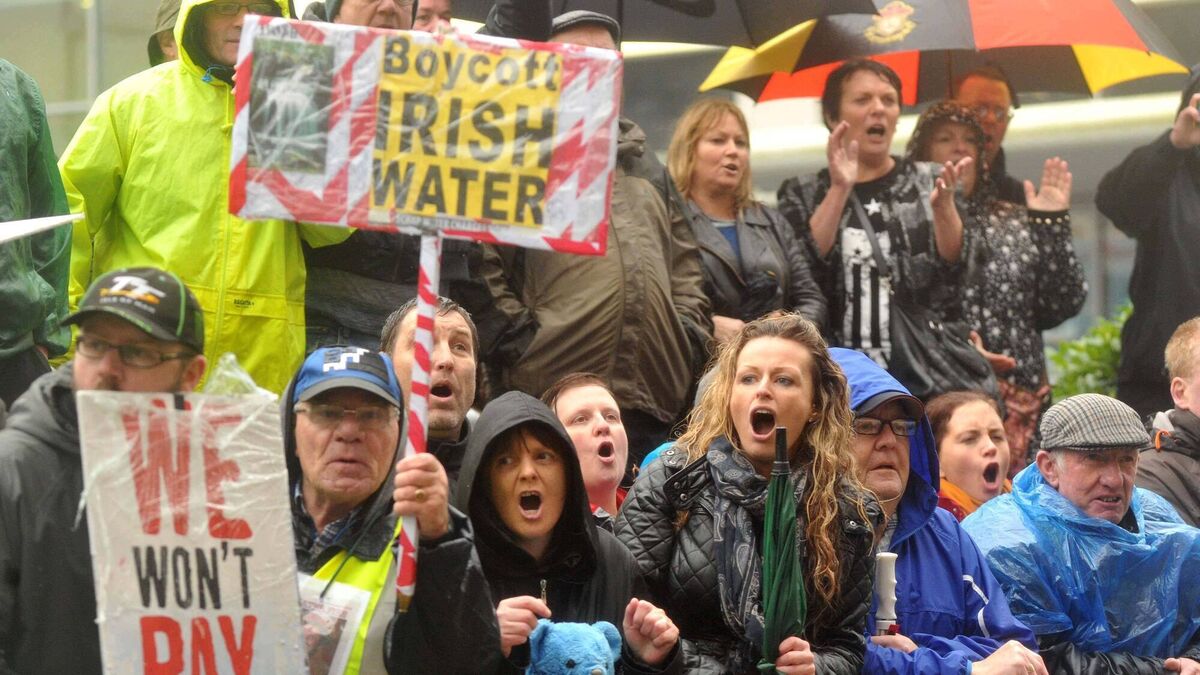
A protest against water charges during the visit of Taoiseach Enda Kenny to Blackpool Retail Park in Cork, in November, 2014. INSET: Mick Barry at another water protest

“CAN’T Pay, Won’t Pay”, “Sold Out By Our Own Government”, “You Can Stick Your Water Meters Up Your A***”. The anti-water charges protests of 2014/15 gave voice to intense working class anger after more than half a decade of capitalist austerity.

Fianna Fáil, the bankers and the developers crashed the economy in 2008 - and ordinary people had been paying ever since.

Austerity was overseen by a Troika (European Commission, European Central Bank and International Monetary Fund) and implemented by the Fine Gael/Labour Government that took power in 2011.

By the time water charges were introduced, banks had been bailed out to the tune of €64 billion and deep cuts had been made with 33,000 job losses, Universal Social Charges, 10% VAT hikes, lone parents allowance cuts, and much more besides.

Austerity had been greeted with a wave of strikes and demonstrations, but I believe the trade union leadership sold the protesters out.

The Socialist Party and other working class activists organised resistance to the newly-introduced household charge in 2012 and nearly a million households refused to pay.

But the Government replaced the household charge with a property tax to be collected by Revenue - fear trumped opposition and the tax was paid.

Crucially, however, the idea of mass non-payment had taken root. It would come back to haunt the Government.

Coming into 2014, working class resistance was seen as a beaten docket, but sometimes the darkest hour is before the dawn. A straw can break the camel’s back.

So it proved in 2014. Something began to stir - opposition to water charges. People instinctively understood that it would be privatised once profit could be made from it.

October 11 was chosen as the date for a national protest in Dublin. Organisers were hopeful - but no-one quite expected what would happen on the day.

If anyone ever tells you exactly how many people protested on the Right2Water demonstration, you’d do well not to believe them. It was so big it was impossible to count - probably more than 150,000, possibly 200,000. The floodgates opened.

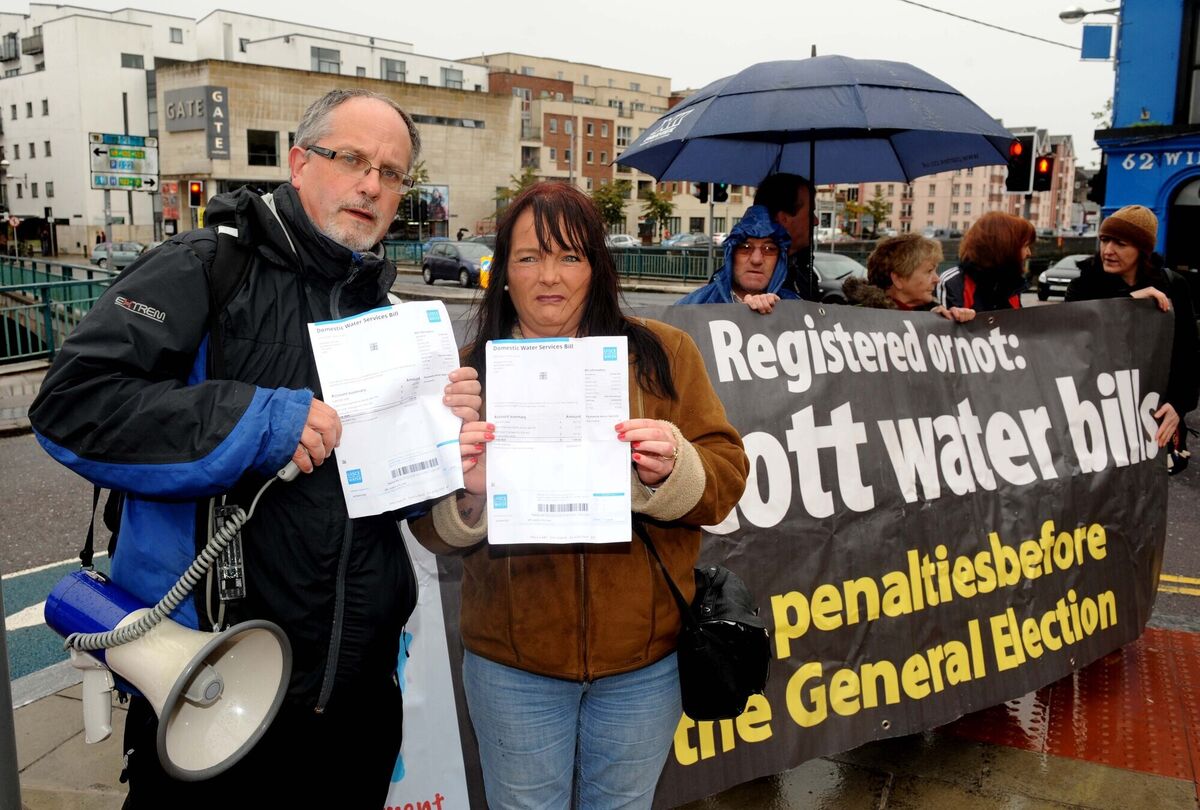
Eleanor O'Flynn and Cllr. Mick Barry at a Water Protest at the North Gate Bridge ,Cork.

Another earthquake occurred that day. Against all odds, Anti Austerity Alliance (AAA) candidate Paul Murphy won the Dublin South West by-election, defeating the hotly favoured Sinn Féin candidate.

Paul had openly campaigned for non-payment. Sinn Féin opposed the charge but opposed non-payment too. Both Mary Lou McDonald and Gerry Adams announced their intention to pay. Clearly, working class voters wanted a more militant form of anti-austerity politics.

Cork was a stronghold of the emerging campaign. On November 1, hundreds of thousands marched in cities, towns and villages across the state. Outside of Dublin, the largest protest was in Cork, where 20,000 marched in driving rain. Never before had so many umbrellas been seen in Patrick Street.

On November 15, a protest took place which is still a source of controversy in Irish politics, in Tallaght’s Jobstown, where Labour leader Joan Burton was to visit an education centre.

While that and the mass demonstrations grabbed the headlines, the bread and butter campaign work was quietly done at grassroots level.

Activists held thousands of doorstep conversations, urging householders to hold firm and not pay.

When Irish Water vans were spotted, alerts were put out via texts and Facebook and sizeable gatherings convened at short notice to block the installation of meters.

The beauty of the campaign was that thousands of people who had never before been involved in ‘politics’ stepped forward to knock on doors, distribute leaflets, picket TDs’ clinics, and look after the hundreds of details involved in a truly mass campaign.

The FG-Lab Government were rocked by the revolt but refused to give in. The struggle continued right through 2015 and up to the General Election in 2016, when Fine Gael lost a quarter of their seats and Labour were savagely punished, collapsing from 33 seats to seven.

Unfortunately, the battering the Government got was not enough to remove Fine Gael from office, as Fianna Fáil stepped in to save their bacon.

But the new Government had to recognise reality - the water charges project was dead, for now at least.

The controversial charge was dropped, people who paid were even given a refund!

As in early 2014, many people today despair of social change. Many look at issues like the housing crisis and ask whether people will ever get up off their knees and fight back.

But one of the big lessons of the water movement is that you write working class people off at your peril - there is always the potential for change.

The water revolt was about much more than water. It was about ending austerity. It was about tackling social inequality.

Much done, but much more to do!

More in this section

Throwback Thursday: I snuck out to see the Dixies...but the car crashed on the way home  Throwback Thursday: I snuck out to see the Dixies...but the car crashed on the way home 
Throwback Thursday: Emigrant’s ordeal as he left Cork for London Throwback Thursday: Emigrant’s ordeal as he left Cork for London
Throwback Thursday: The rise and fall of a North Cork dance hall Throwback Thursday: The rise and fall of a North Cork dance hall

Sponsored Content

Aisling Walsh, customer and strategy manager at ESB Networks More than 50,000 households are being rewarded for flexible electricity use
The office worker presents a document to the client across the desk. Pensions become part of the talent equation
CS ESB Networks Oct 2026 Got a smart meter? Time to unlock its value with an ESB Networks online account
Contact Us Cookie Policy Privacy Policy Terms and Conditions

© Examiner Echo Group Limited

Add Echolive.ie to your home screen - easy access to Cork news, views, sport and more