The bitter struggle is over: How the Irish Civil War ended, 100 years ago
Next Wednesday, May 24, marks the centenary of the end of Ireland's Civil War. GERRY WHITE recalls the seismic events leading up to the end of the fighting through a Cork lens
The bitter struggle is over: How the Irish Civil War ended, 100 years ago

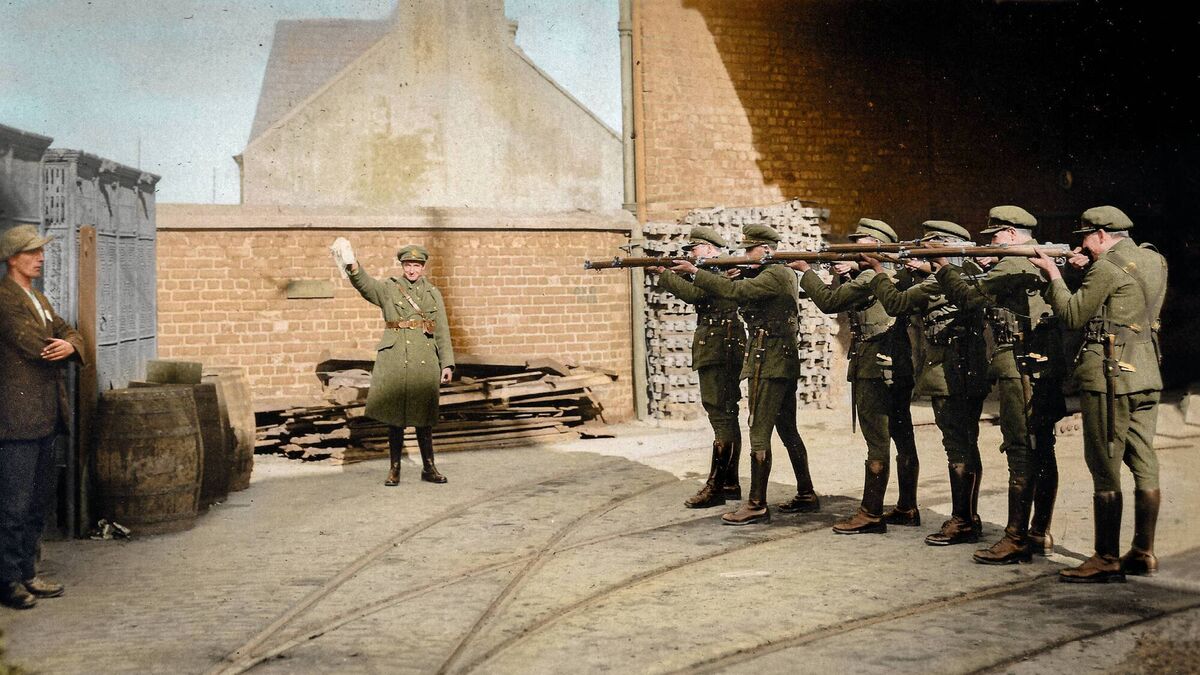
An apparent mock execution staged by Free State troops at the Cork Tramways Dept in Albert Road, some time after August, 1922. From The Irish Civil War In Colour, by Michael B. Barry and John O’Byrne, published by Gill Books.

A HUNDRED years ago next week, on May 24, 1923, Frank Aiken, Chief of Staff of the anti-Treaty IRA, issued an order: “The arms with which we fought the enemies of our country are to be dumped. The foreign and domestic enemies of the Republic have for the moment prevailed.”

That same day, Éamon de Valera issued a proclamation to the ‘Soldiers of the Republic, Legion of the Rearguard’ in which he said: “Military victory must be allowed to rest for the moment with those who have destroyed the Republic. Other means must be sought to safeguard the nation’s right.”

With these albeit defiant words, Ireland’s Civil War was finally over, after 10 months, three weeks and five days.

It was a war that had pitted brother against brother, sister against sister, and parent against sibling. Around 2,000 people are thought to have died.

Here is how the events of 1923 panned out up to that point...

******

On New Year’s Day, 1923, Saorstat Éireann, the Irish Free State, was only one month old. However, its future was in doubt as it was also facing into the seventh month of a bitter Civil War fought between the forces of the anti-Treaty Irish Republican Army (IRA) and the pro-Treaty National Army.

In his New Year’s message, William T. Cosgrave TD, President of the Executive Council of the Free State, talked of his hope of “peace, order and goodwill”. In its editorial the next day, the Cork Examiner stated “peace will assuredly come”.

Despite these words, the Civil War would last for another five months. During that time, and in the months after, people and places throughout Cork would find their way into the history books as the country moved from war to peace.

At the start of 1923, the National Army occupied most cities and towns in the Free State. It outnumbered and outgunned the IRA and had the support of the majority of the Irish people. In addition, 21 republican prisoners, including Dick Barrett from Ballineen, Co. Cork, had been executed by the National Army. While all this had an adverse impact on the IRA, it was still a force to be reckoned with.

On the night of January 4, more than 60 Volunteers stormed into Millstreet and attacked the town’s National Army positions. Though three positions were taken and a number of prisoners were captured, after six hours of fighting the IRA was forced to withdraw. Three members of the National Army were killed and a number of others were wounded in this incident.

Four days later, an IRA unit attacked National Army positions in Ballineen, but after heavy fighting, it too had to retire.

While similar operations took place in other parts of the country, some senior IRA officers now realised the war couldn’t be won. One was Liam Deasy.

Born in Bandon on May 6, 1896, he was commander of the IRA’s 1st Southern Division. On January 18, he was captured at Tincurry, Co. Tipperary. Though sentenced to death, he successfully requested a stay of execution so he could issue an appeal to the IRA leadership to end the war in order to avoid further bloodshed.
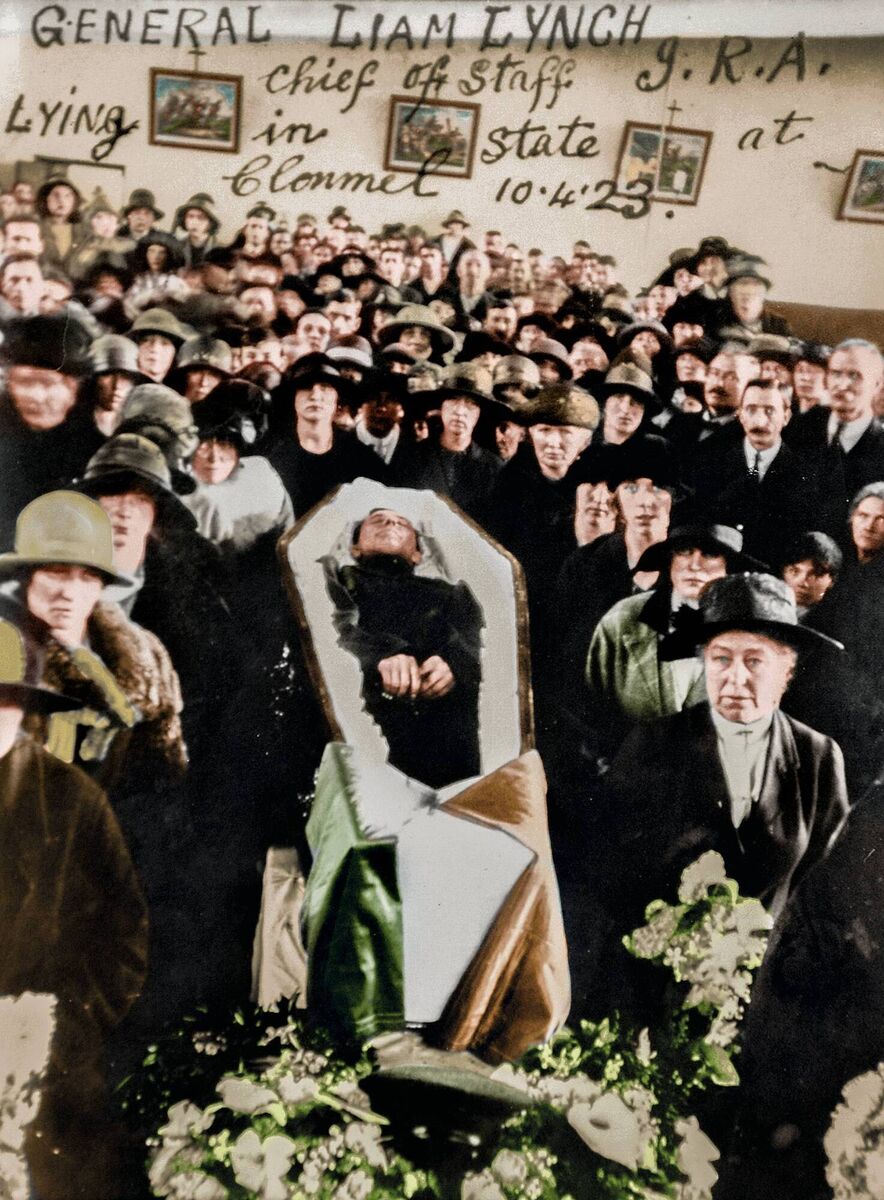
Liam Lynch in his coffin lying in state at Clonmel on April 10, 1923. From The Irish Civil War In Colour, by Michael B. Barry and John O’Byrne, published by Gill Books.

This was rejected by IRA Chief of Staff Liam Lynch, but it soon emerged other members of the organisation supported Deasy. On February 16, the Examiner published a notice from more than 600 republican prisoners held in Limerick which stated: “After many months’ waste of blood and the loss of valuable lives to the Nation, the cry to halt has gone forth.” It called on republicans to “do the big thing. Stop the fight and leave Ireland’s future in the people’s keeping”.

That very day, General Richard Mulcahy, Minister for Defence and commander of the National Army, made an amnesty offer “to all persons now in arms against the government, who, on or before Sunday, February 18, 1923, surrender with arms to any officer of the National Forces or through any intermediary”.

Another group then trying to end the war was the Neutral IRA. Formed the previous year, this consisted of members of the IRA who refused to take part in the Civil War. Among its leading members were Seán O’Hegarty, former commander of Cork No.1 Brigade, and the unit’s former adjutant, Florence O’Donoghue.

On February 16, the organisation issued a letter calling for a month’s truce so that negotiations to find a way to end the war could take place between leaders of both sides. Unfortunately, like the other initiatives, this one would also fail.

Though many IRA officers now accepted a military victory was impossible, others were determined to continue the fight for an Irish Republic. By now, however, the organisation was only able to conduct minor military operations against the National Army. At the same time, it continued its strategy of targeting prominent supporters of the Treaty and their property.

On the night of March 8, an IRA unit forced its way into the home of Mary Collins Powell, sister of Michael Collins, on Sunday’s Well in Cork, doused it with petrol and set it alight. Before the fire spread, Commandant Patrick Scott, National Army commander of the 10 Infantry Battalion in Michael (now Collins) Barracks, arrived. When he knocked at the door, the IRA unit opened fire, wounding him in the arm. A gunfight then developed between the IRA and Scott’s military escort.

While most of the IRA unit managed to escape, Volunteer William Healy, a 21-year-old native of Lackabane in Donoughmore, and a member of E Company, 1st Battalion, Cork No.1 Brigade, was captured.

That same night, an unsuccessful attempt was made to burn the home of Miss Peg Duggan in Blackpool. A prominent member of the pro-Treaty Cumann na mBan in Cork, she was one of the first to arrive at the home of Lord Mayor Tomás Mac Curtáin after he was shot dead by the Royal Irish Constabulary in March, 1920.
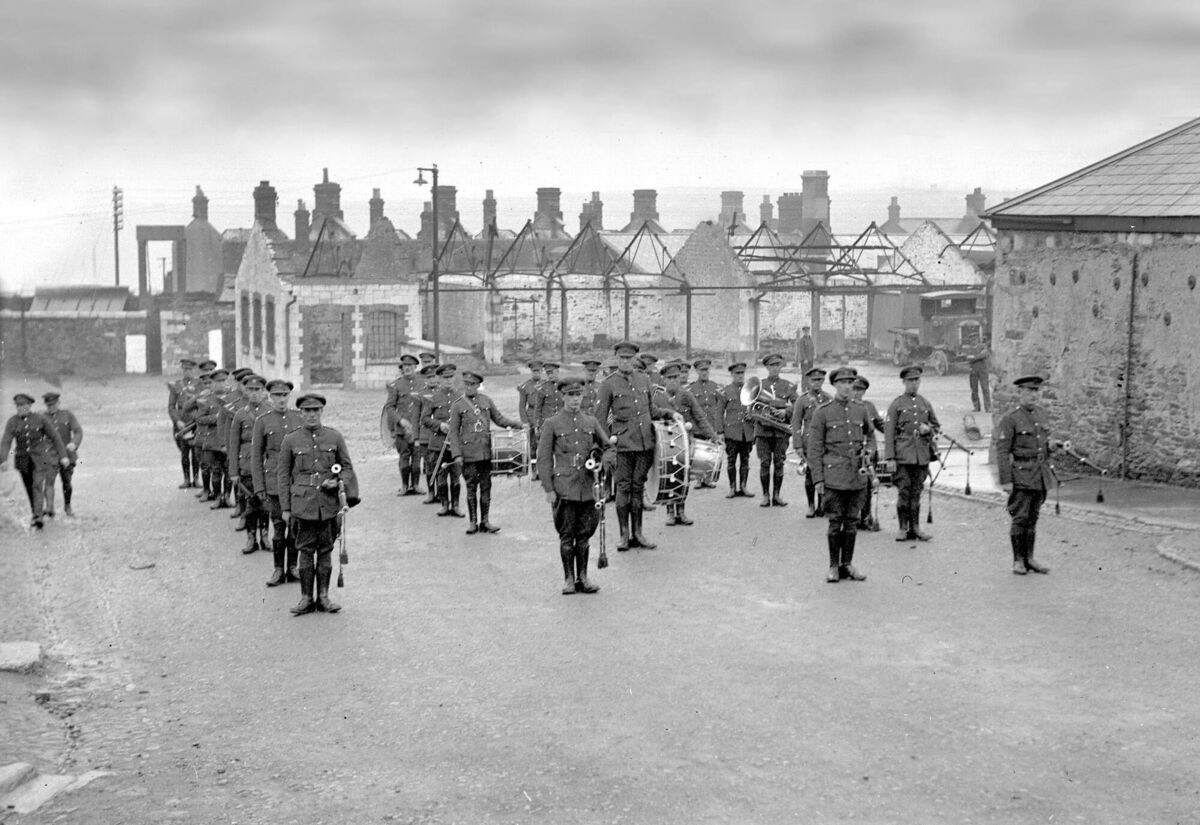
Soldiers of the Irish Free State Army take over a ruined Michael (Collins) Barracks at Old Youghal Road, Cork at the end of the Civil War in 1923

Over the next four days, Healy was tried, found guilty of conspiring to kill Commandant Scott, and sentenced to death. At 8am on March 13, he was executed in the grounds of Cork Prison.

Healy was the last man to be executed there - one of 81 republicans who suffered that fate in the Civil War. His remains were buried in the prison grounds, but in 1924, were exhumed and interred in the Republican Plot of St Finbarr’s Cemetery.

Before he died, Healy wrote a letter to his father, stating: “If I had told on one of the boys, I would not be executed, but, as you know, I would not have it said that there was a spy in our family, because, as you know, I was out for a Republic and I sincerely hope it will be got some day.” He forgave the members of the firing squad and encouraged other republicans awaiting execution to do the same.

Healy’s execution would have a bloody sequel. At around 7pm on March 16, two men shot and seriously wounded Cork businessman William Beale outside his home at Elm Grove, on the Ballyhooley Road. As they fled, one assailant was heard to say the shooting was a “reprisal for the execution”. Beale was taken to the South Infirmary and died there on March 20.
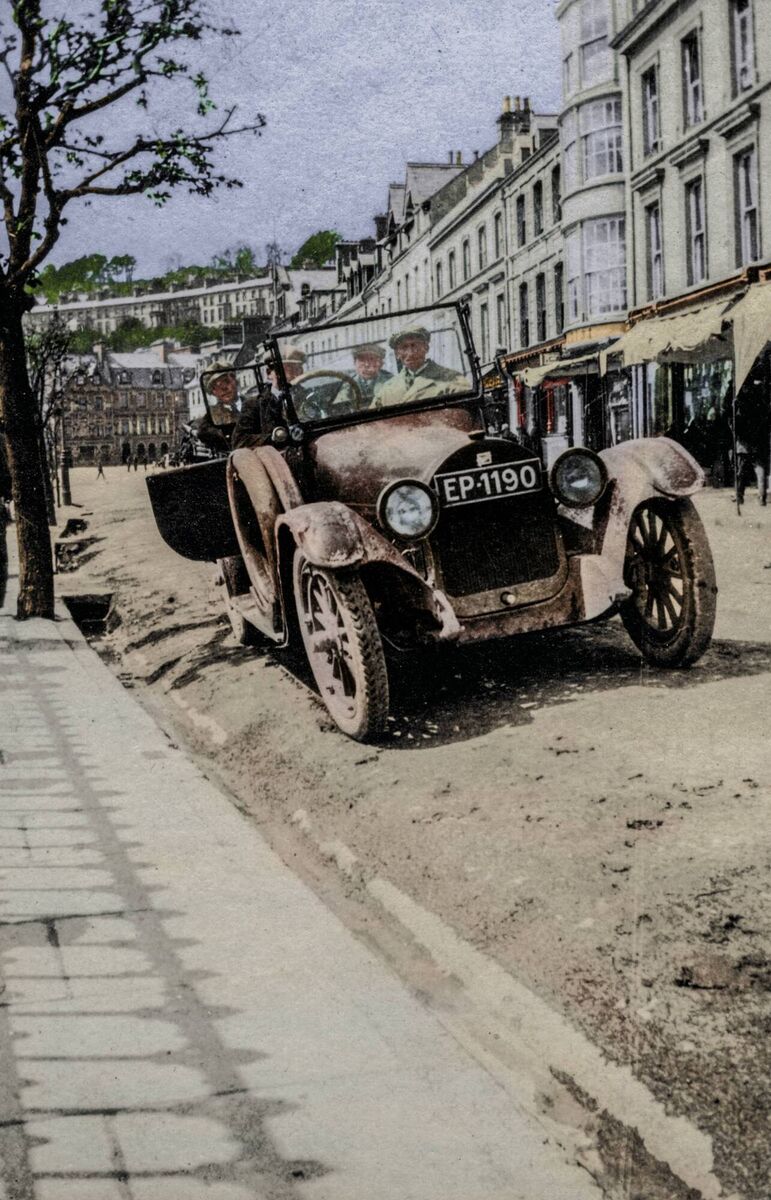
Republicans emigrating to Canada from Cobh after their defeat in the Civil War, raedy to board the SS Ausonia. From The Irish Civil War In Colour, by Michael B. Barry and John O’Byrne, published by Gill Books.

A day later, on St Patrick’s Day morning, the National Army put on a major show of strength when 600 soldiers, led by the band of the 10 Infantry Battalion, marched from Michael Barracks to the North Cathedral to attend a military Mass said by their chaplain, Fr Joseph Scannell.

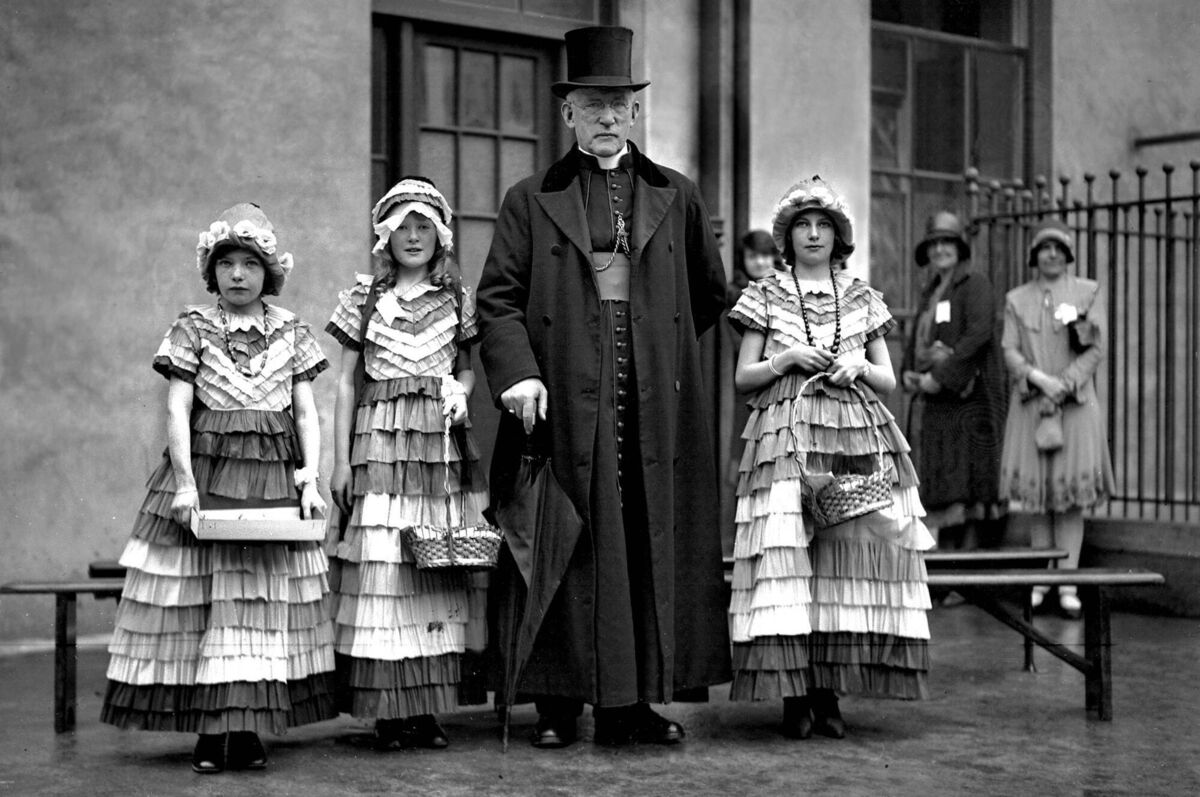
A native of Cork city, Fr Scannell served as chaplain during World War I with the Irish Guards and was awarded the Military Cross and the French Croix de Guerre. He returned to Cork after the war and was made chaplain to Michael Barracks in 1922.

When Mass finished, the troops marched back to the barracks to be presented with a new regimental colour - a tricolour flag of Irish poplin that included the symbol of the Sacred Heart. This had been made for Fr Scannell by members of La Société des Oeuvres de Sacré Coeur Lyon in France.

After the ceremony, Fr Scannell blessed a National Flag that had been placed on an altar of drums. It was then raised over the barracks by Major General David Reynolds, the General Officer Commanding the Southern Command.

While such ceremonies may have been good for morale, the National Army still had a war to fight. On April 2, the IRA attacked a National Army unit guarding the Cork Electric Power House on Albert Road. One soldier was mortally wounded.

Then, six days later, Margaret Dunne, a member of the anti-Treaty Cumann na mBan from Adrigole, was killed in a gun battle between the National Army and republicans in that locality. She was one of three members of the organisation killed by the National Army during the war.

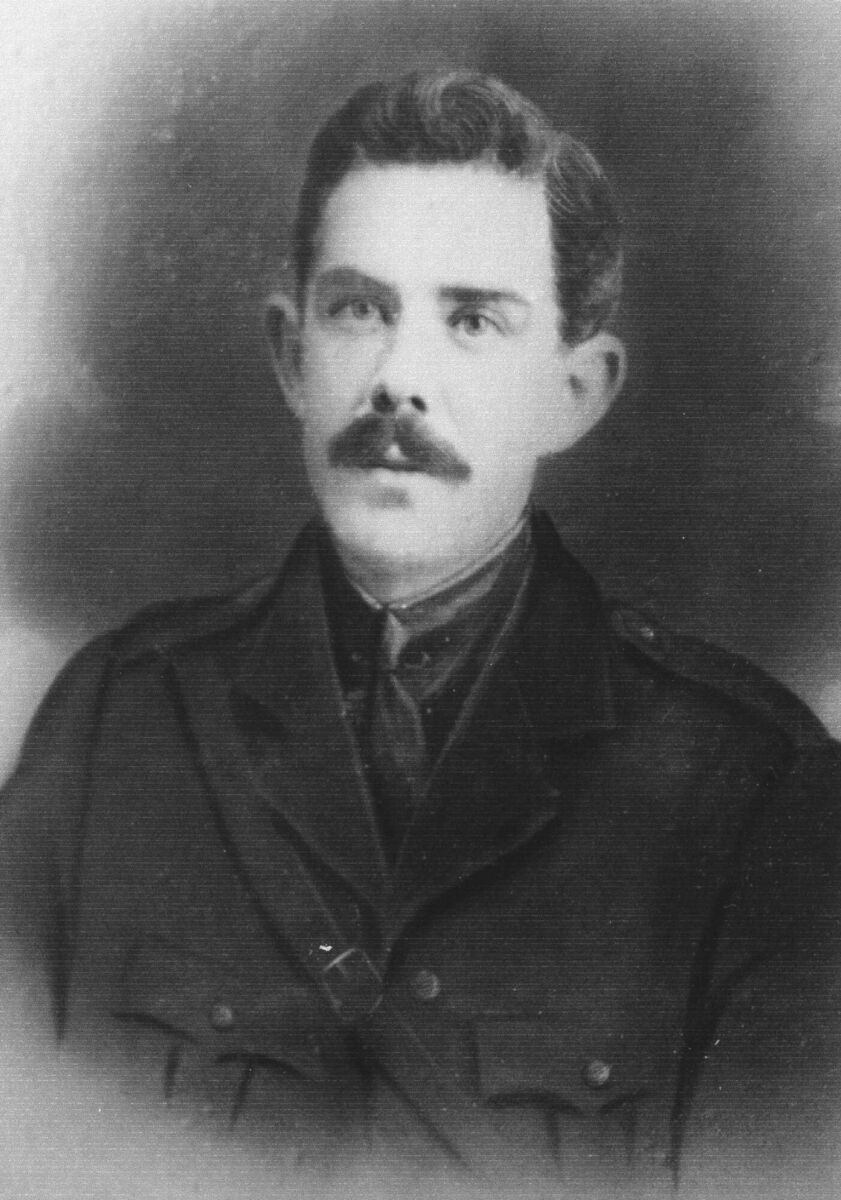
Dunne’s funeral took place on April 10. That day, Liam Lynch was meeting the IRA executive neer Goatenbridge, Co. Tipperary. In the early hours, scouts spotted a large National Army column approaching. Hearing this, Lynch and the others tried to escape up the Knockmealdown mountains but were spotted by their opponents who fired shots in their direction, one of which hit Lynch in the stomach.

In severe pain, Lynch told the other officers to leave him and make good their escape. He was taken prisoner and moved to St Joseph’s Hospital in Clonmel. Here, at 8.45pm, the man who once stated “We have declared for an Irish Republic. We will live by no other law”, passed away. Before he died, he asked to be buried close to Michael Fitzgerald, commander of the 1st Battalion, Cork No.2 Brigade of the IRA, who died on hunger strike in Cork Male Prison on October 17, 1920. His request was honoured and he was buried in Kilcrumper Cemetery, Co Cork, not far from his former comrade.
After Lynch’s death, the IRA’s will to continue the fight faded away. On April 20, the IRA executive met and elected Frank Aiken as chief of staff. It also asked Éamon de Valera, as head of the republican movement, to explore the possibility of making peace with the Free State government.

Seven days later, de Valera and Aiken ordered the IRA to suspend its operations by April 30. Negotiations for a settlement over the next two weeks failed but, as the National Army continued operations against the IRA, leaders of the republican movement met on May 13 and 14. But rather than surrender, they opted to order the IRA to cease fire and dump its arms.

On May 24 came the two announcements by Aiken and de Valera, and the Civil War was over.

******

Now the fighting had stopped, many opponents of the Treaty sought to continue the struggle for an Irish republic by political means. Although they ran on an abstentionist platform, in the general election held on August 27, republican candidates still managed to secure 29% of the vote and 44 seats (four in Cork).

Cumann na nGaedheal, the new pro-Treaty party led by William Cosgrave, would form a government after winning 41% of the popular vote and 63 seats (six in Cork). The party would go on to dominate Irish politics for nine years.

Before 1923 was out, Irish republicans also embarked on a different type of struggle. Months after the order to dump arms, thousands of republican prisoners were still interned in prisons across Ireland. In an effort to secure their own freedom, around 7,000 began a hunger strike on October 14. One of those who joined the protest was Commandant Denis Barry from Cork No. 1 Brigade.

Commandant Denis Barry

Born in 1883 at Riverstick, he was a founding member of the Cork Brigade of Irish Volunteers and commander of the Republican Police in the city. He was arrested in Courtown Harbour on October 6, 1922, and incarcerated in Newbridge Internment Camp. On November 20, 1923, he died in the Curragh Camp Military Hospital on the 34th day of his fast.

Initially, the government refused to release his remains to his family and they were interred in the Curragh. However, this decision was subsequently reversed and on November 27, they were exhumed and handed over to his family at Newbridge.

Next morning, a Mass for Barry was said in the Dominican Chapel in Newbridge and that afternoon, his remains were placed on a train to Cork. Barry’s family had hoped to have them taken to the South Parish Church for a funeral Mass before burial. But their plans were shattered when Bishop of Cork, Dr Daniel Cohalan said he would refuse Barry a Christian burial.

Thus, when his remains arrived in Cork on the night of November 28, they were taken to the Sinn Féin offices at 56, Grand Parade, where large crowds paid their respects. The next morning, thousands lined the city streets as Barry’s funeral procession made its way to the Republican Plot in St Finbarr’s Cemetery, where his remains were buried alongside Tomás Mac Curtáin and Terence MacSwiney.

Newspapers reported that members of the National Army and Civic Guard on duty saluted as Barry’s Tricolour-draped coffin passed them.

In a long statement in the Cork Examiner on November 28, Bishop Cohalan set out his case, mentioning the political situation and Canon Law, which stated anyone who took their own life should be deprived of a Christian burial. He also accused Mary MacSwiney of not being a ‘real republican’ and someone who gambled with the life of her brother Terence while he was on hunger strike. The bishop also singled out Seán O’Hegarty, as someone who told Cork TDs that if they voted for the Treaty, they would do so “at their own peril”.

These accusations were immediately refuted by MacSwiney and O’Hegarty in letters that appeared in the newspapers.

MacSwiney pointed out the bishop had no difficulty presiding at the funeral of her brother, who also died on hunger strike. She added that another republican hunger striker, Andrew O’Sullivan, had recently been given a Christian burial in Mallow.

Bishop Daniel Cohalan, who clashed with Mary MacSwiney and Seán O’Hegarty

Cavan-born O’Sullivan went to Mallow in 1915 to work as an agricultural inspector, subsequently joined the IRA, and became a captain in the 5th Battalion, Cork No. 4 Brigade. He died on November 22, after 40 days on hunger strike and a day before the protest was called off.

On November 27, large crowds turned out to pay their respects as he was buried in St Gobnait’s Cemetery in Mallow.

The day O’Sullivan died, George Bourke, of the 2nd Battalion, Cork No.1 Brigade, was released from Newbridge Internment Camp. Born at 93, Bandon Road, Cork, in 1894, he was arrested in September, 1922, and incarcerated in Newbridge, where he embarked on a 15-day hunger strike. After his release, his health deteriorated and he passed away on December 22.

Bourke’s funeral took place on Christmas Day and he was buried in the Republican Plot in St Finbarr’s Cemetery. He would be the last Cork fatality of the year who had a link to the Civil War.

As 1923 passed into the history books, the people of Cork could look back on a tumultuous nine years during which they had witnessed the Great War, the Rising, the Spanish Flu pandemic, the War of Independence, and a Civil War.

Hundreds across the county had lost a loved one as a result of those events. Countless others suffered physical and emotional wounds. Many buildings and bridges had been damaged or destroyed. But the country was now at peace, and in the years that followed, people would have the time to repair, rebuild, and perhaps most importantly, to heal.

More in this section

The man who resurrected Cork City’s library service from the ashes The man who resurrected Cork City’s library service from the ashes
Throwback Thursday: Tripe? Yuk, but dad loved his crubeens! Throwback Thursday: Tripe? Yuk, but dad loved his crubeens!
The legacy and legend of Cork's 'Yella Horse' The legacy and legend of Cork's 'Yella Horse'

Sponsored Content

Driving Growth in Munster: How property finance is powering Cork’s future Driving Growth in Munster: How property finance is powering Cork’s future
Passionate producers get a helping hand from Tesco Passionate producers get a helping hand from Tesco
Where tech meets care: At the forefront of IVF Where tech meets care: At the forefront of IVF
Contact Us Cookie Policy Privacy Policy Terms and Conditions

© Examiner Echo Group Limited

Add Echolive.ie to your home screen - easy access to Cork news, views, sport and more