Throwback Thursday: Grasshopper mystery on South Mall
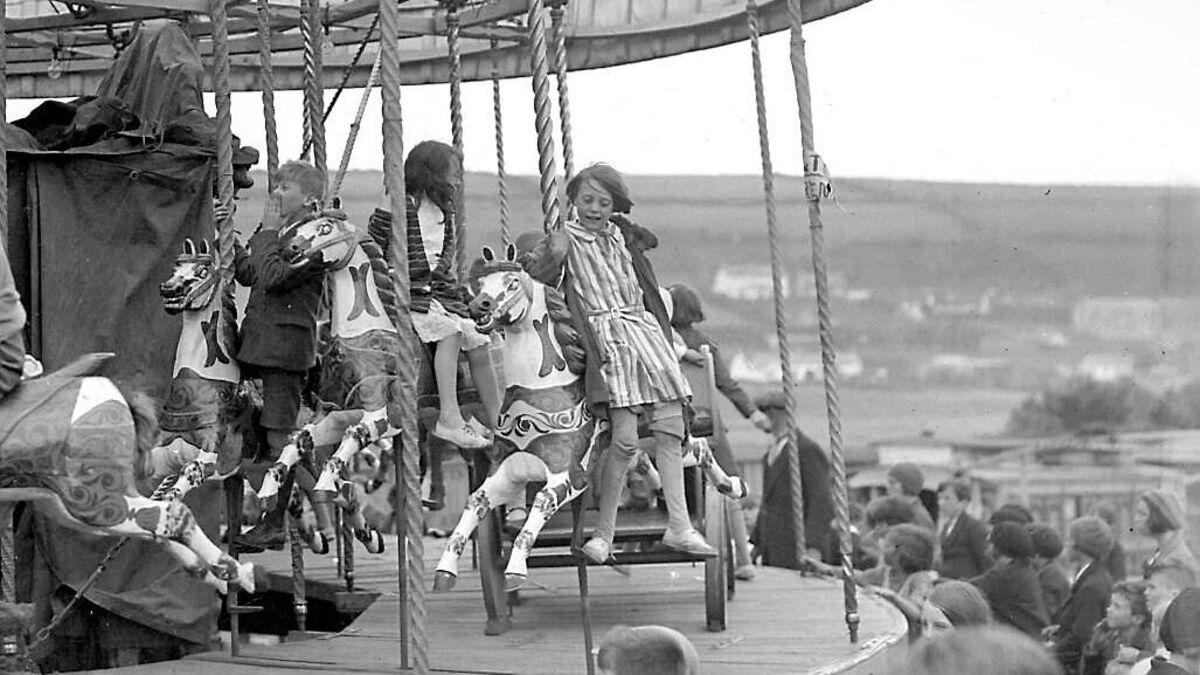
Cork schoolchildren on a summer excursion to Youghal in July, 1931 - Jim McKeon recalls childhood visits there with his father
PAT Kelly, who favoured us with details of working for Thompson’s bakery last week in Throwback Thursday, was interested to read the discussions on the Flat Bar, and proudly states that it was something he always pointed out on the heritage walks which he used to conduct.
We reported on the Flat Bar on July 7 - an actual iron bar in front of a building on the South Mall. All the rest of the bars are convex at the back, but only this one is flat at the back.
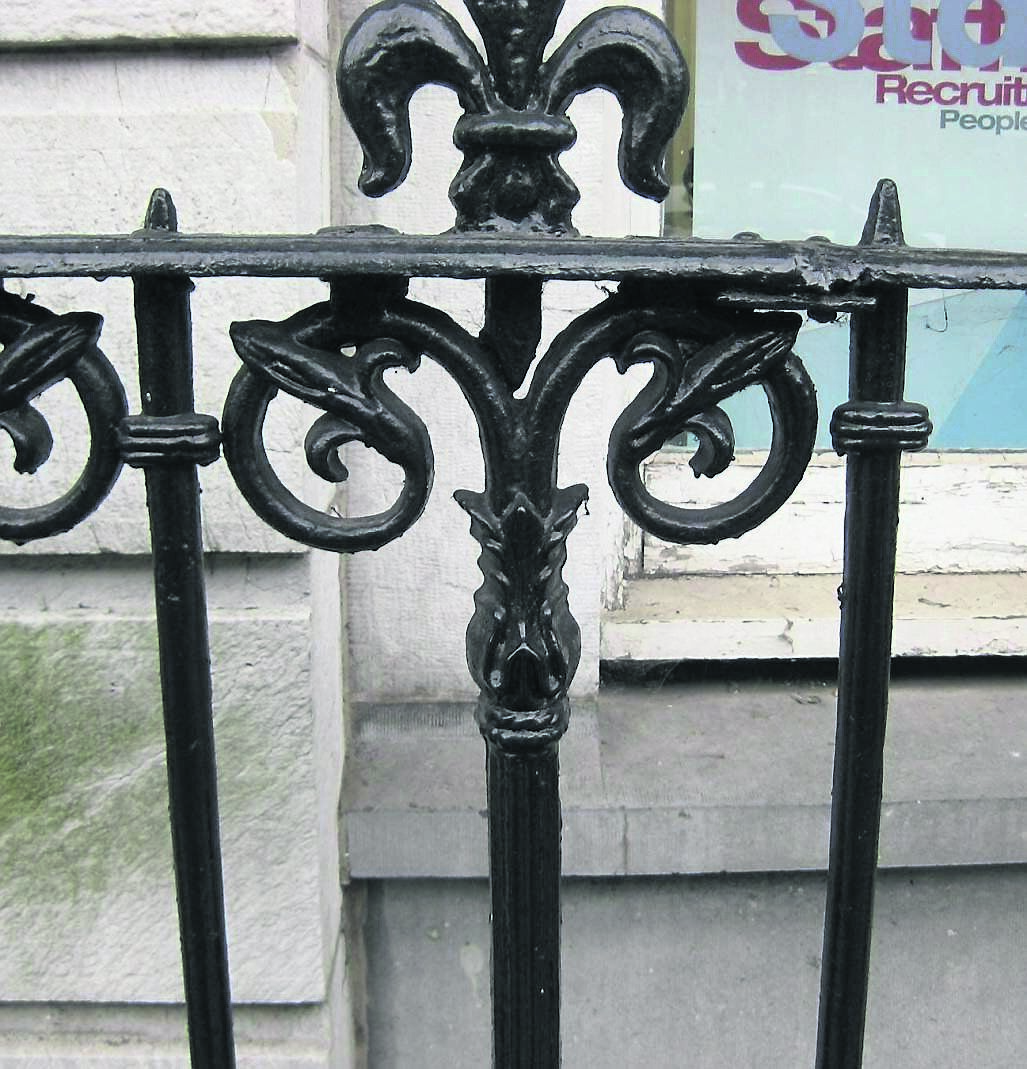
We also mentioned the story that the gun that was to be used to shot a British officer in the country club here a century ago was buried where the flat bar is.
Pat says: “My buddy Liam-o and I would walk around it, sometimes for hours, comparing our memories of times past.
“He it was who originally showed it to me and recounted the story of the officer shot. However, we were both sceptical of the story as we searched for the special location, feeling every bar until we found it.”
So, what makes Pat sceptical about this legend?
“Well, at the time of the gentlemen’s club, this building would have been the centre of the British establishment in Cork, and thus much frequented by R.I.C officers, naval bigwigs and army big-shots,” explains Pat.
“The railings are only about a foot or so from the actual building itself.
"Now, a place like that would have had to be tightly secure, and surely those railings would have been checked frequently as a matter of course.
“What was needed for the attack was a hit and run, which was what actually happened, but the hiding of the gun just doesn’t fit into the scenario.
“However, why spoil a good story with the facts!”
Pat confesses that he sorely misses those days when he and Liam-o would roam the city with their cameras and talk incessantly about the history of this corner, and that strip of pavement, and the origin of that street sign.
“It was Liam-o who encouraged me to give those walking tours for Heritage Week, and I always encouraged people to look up, at what otherwise might be missed!”
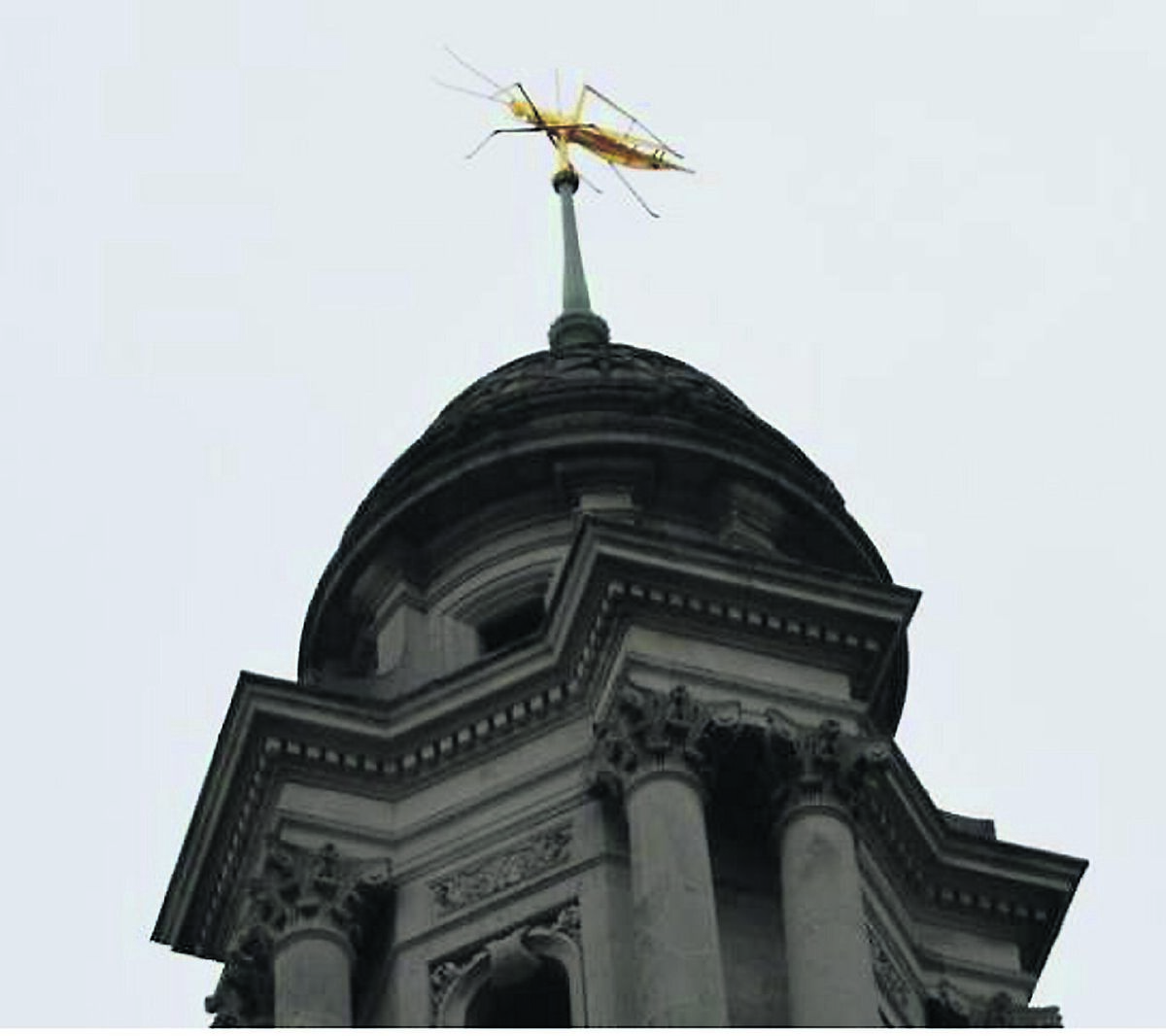
As a prime example, he enquires whether any reader of Throwback Thursday is aware of the carving of a grasshopper surmounting a coat of arms, on that same fine avenue of South Mall, once a waterway, and still recording that riverine past in the many arched entrances with steps over, leading to the ground floor.
“Almost directly across the Mall from the Flat Bar, on, I think, No.4 or 5, there is an elaborate building associated with the Gresham family,” says Pat.
“John Gresham was a merchant and financier in Tudor times when, from memory, he may have founded the Royal Exchange in London, where the building has a weathervane of a grasshopper.
“On the top floor of this building is a recess with the bust of a man in Tudor dress. The building was once the office of the Gresham Assurance company.”
Right, there’s the next mission for all of you. Out to the South Mall and find that bust - and indeed that grasshopper! Might see you there.
Ray O’Shea, who sent us that fascinating information on the Fighting Sullivan brothers for last week’s Throwback Thursday, wrote again to offer another story which we might find interesting, as Cork city is repurposing historic buildings in the docks area.
“Bill Ford, the great grandson of Henry Ford, has bought Detroit’s Michigan Central Station which has been derelict for many years and is repurposing it as a tech hub. You may know that the station is located in Detroit’s Corktown neighbourhood that was settled primarily by people from County Cork fleeing the Great Famine.
“Detroit’s historical links to Cork are thus very strong, as Henry Ford’s father, William, was born in Ballinascarty, and many Corkonians worked at Ford’s Cork City and Dagenham, London plants. Indeed, that district of Detroit is known far and wide as Corktown.
“With the huge migration of our people to the U.S and Canada during and after the Famine, groups of friends and family connections always tended to try and stay together in the same area. By the middle of the 19th century, the Irish were the largest ethnic group settling in Detroit, and the majority of the newcomers, primarily from Co. Cork, settled on the west side of the city. Thus, very shortly, the neighbourhood came to be known as Corktown.
“By the early 1850s, half of the population of the 8th Ward (which contained Corktown) were of Irish descent.
"If you know your Detroit, this would be the area roughly bounded by Third Street to the east, Grand River Avenue to the north, 12th Street to the west, and Jefferson Avenue/Detroit River to the south.
Well, that is fascinating, Ray, and thank-you so much for letting us know that “there is a corner of that foreign land that is forever Cork!”
We knew of Bandon in Oregon, of course, but Bantry in North Dakota, Fermoy in Minnesota, plus both Kinsale and Mallow, both in Virginia, shouldn’t be forgotten either. All new communities, full of hope for a better future, but still looking back longingly to the places they had left.
Jim McKeon was feeling philosophical the other day and remarked that in his young days, Ireland was a different country. “No TV, no muggings, drugs, attacks on the elderly. Mobile phones were unheard of, and there was very little money. Life was simple.
“Looking back at this playground of my youth conjures up a deluge of paradoxical memories: my forever-lingering uncertainty, the importance of religion, the priest as god, innocence, the inescapable smell of Jeyes fluid, fleas and DDT.”
Well Lane, Jim says, was a dead-end.
“At the top was an old broken-down well. The lane was made up of 27 small houses, each one with a half-door and its own birdcage, each more colourful than the next. Women usually leaned over the half-door and watched the world go by.
“The nearby quarry was packed with pigeon lofts. There was an everyday cacophony of sound: dogs, cats, canaries, and, especially, children. There seemed to be children everywhere. You’d be tripping over them.
“It was a common sight to see a passionate confrontation between two mothers, tearing the bejasus out of each other, over their beloved offspring. Yet, a genuine neighbourliness and love always prevailed.
“I still have clear memories when an elderly man died, and the old women washing the body in preparation for the funeral. Lady Poverty was an unwanted companion. She ruled with an empty fist and never seemed to lower her ugly head. Everyone was equal as they scratched and scraggled to stay above the breadline.”
In many ways, observes Jim, Cork’s poor were its royalty.
“It was just after the war, and there was a depression that went with it. There were no jobs or money, and even less education. The boat to Dagenham was always full. My strongest abiding memory growing up was poverty. No-one ever seemed to have money.
“I sometimes made a few pence by getting a box-cart and delivering bags of turf to some neighbours. These bags were bigger than myself. The turf was hosed down by the unscrupulous turf dealer to make it heavier!”
Against all that, Jim recalls, Cork was a hugely exciting place to live, bubbling with tremendous characters.
“There was never a dull moment. Nicknames were rampant: Josher Walsh, Choo Choo Kelleher who was a train driver, Dickie Glue, a handyman who’d fix anything, Born Drunk who liked a drink or two, the lovely Lizzie Maloney, in her black shawl, Tucker Twomey, who lived on spuds, Rashers Ryan, who lived on bacon, Hada O’Callaghan, who would talk a rat out of his hole, and Agoo Murphy. Agoo got his name from his pigeons. If ever one of them was reluctant to return to his loft, he’d imitate the pigeon’s mating call by repeating ‘agoo, agoo’. It worked every time, and the name stuck.
“Another man from up the hill had a thriving business. He had a big loft at the back of his house. His market was our unsuspecting English visitors. He would sell a prize pigeon for a pound note. After explaining the thoroughbred background of the bird’s family tree, the pigeon was then placed in a shoe-box full of holes so that it could breathe. The bottom of the shoe-box was layered with wet saw-dust. The pound note was exchanged.
“The visitor went away happy. By the time the boat was half a mile out of Cork harbour, the bottom of the box gave way. Naturally, the pigeon’s instinct took over and he flew straight home to his loft where he got a fine feed of corn and a cool glass of spring water.
“This transaction could be repeated several times a week.”
Each season back then had its own unique character, adds Jim.
“There was no chocolate for Easter. After a long seven weeks of fasting for Lent, a giant goose egg, smothered with salt and butter, was devoured with relish.
“Summer was everyone’s favourite: long, lazy and hazy. I loved school but I enjoyed being off even more.
“Sport was the main pastime: hurling, high-jumping, long-jumping, shot-putting with a big rock, and soccer with a worn-out tennis ball that flew around the mangel field like a ping-pong ball. These rough and tumble games went on for hours, and usually ended up in a brawl. The girls would sensibly sit on the safety of the surrounding bank; apathetic supporters waiting for a fight to break out. Sometimes they’d play their own games like picky or skipping to the timing of their sing-song rhymes.”
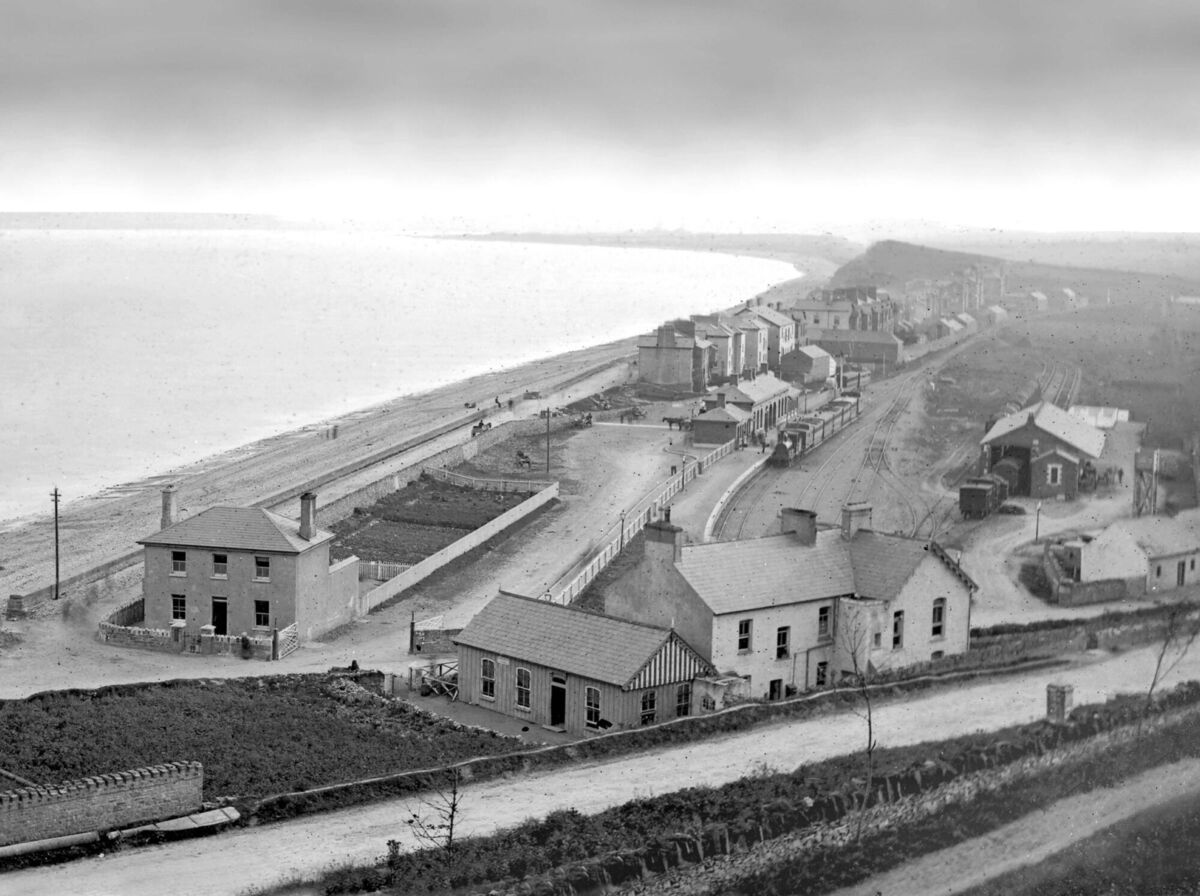
Jim’s father always made him feel special.
“Every chance we got in summer, we went to Youghal. Because he worked in the railway, the train was always free.
“Most Sundays he’d bring half the children in the lane with him. It just took a knowing wink, and the ticket checker turned a blind eye.
“My father was a powerful swimmer. He could float on his back for ages like a giant walrus with me sitting on his chest imagining I was paddling through shark-infested waters on a wooden raft escaping from a desert island. We’d play games, ride a pony or build huge sand castles on the beach.
“Whatever it was about the seaside, the sun or the sea breeze, I was always starving. My mother would bring a big bag of sandwiches. Everyone’s favourite was cold pigs’ feet. Again, I’d feel special when I was sent to buy a gallon of boiling water from a local house to make mugs of tea.
“Those sunny Sundays were great, but I couldn’t wait for Friday to arrive because that was my father’s payday. Eventually he would come home, always laughing, his face black from the dust of the job. First he’d produce a small bag of sweets.
Everyone got two sweets each. He then gave us our wages. Mine was six pence. I felt like a millionaire.”
Lovely memories, Jim. Anybody else with happy summer memories?
Tell us about them. Email jokerrigan1@gmail.com or leave a comment on our Facebook page: https://www.facebook.com/echolivecork.