Murderer’s privacy rights not breached when gardaí listened in on KFC chat, court finds
Fiona Magennis
The privacy rights of murderer Kevin Braney, the leader of the New IRA in Dublin, were not breached when gardaí used a surveillance device to listen in on him conversing with members of a criminal gang at a KFC restaurant, the Court of Appeal has found as it upheld his conviction.
Braney (49), of Glenshane Crescent, Tallaght, Dublin 24, was found guilty by the three-judge, non-jury Special Criminal Court in February 2019 of murder.
The victim, dissident republican Peter Butterly (35), was shot dead in the car park of the Huntsman Inn pub in Gormanston, Co Meath, on March 6th, 2013.
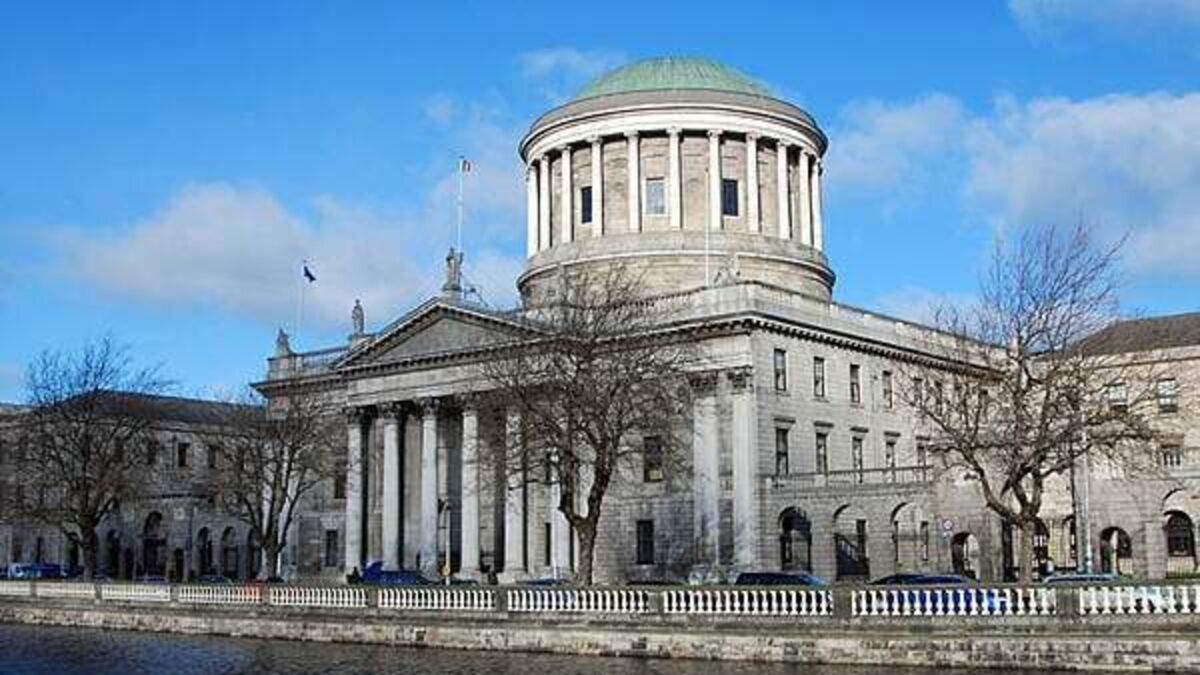
Dismissing Braney’s appeal against his murder conviction on Friday, Justice Isobel Kennedy said the court had not been persuaded that any of the grounds raised had been made out.
Justice Kennedy noted Braney had originally sought to advance 51 grounds of appeal, though several of these were abandoned during the hearing.
Part of the evidence against Braney during his murder trial was that he met five others at a KFC restaurant in Charlestown Shopping Centre, Finglas, the day after the fatal shooting.
Braney’s lawyers had argued that gardaí did not seek proper authorisation before using the device and that the trial court should not have admitted the recording as evidence.
The listening device used by gardaí recorded “audible utterances” between the men in KFC, suggesting they were concerned as to why the Huntsman Inn had been saturated with gardaí the previous day, and questioning why every move they made was being followed.
Gardaí had used legislation under the Criminal Law (Surveillance) Act 2009 that allows a superior officer to authorise the use of a listening device without making an application to a District Court judge where a delay might cause evidence to be lost.
Braney’s lawyers argued that the superintendent in Laytown who authorised the surveillance could have made an application at Balbriggan District Court, which was sitting at the time.
In delivering the judgment, Justice Kennedy said the finding of fact made by the Special Criminal Court - that the superintendent’s belief was that he was dealing with an emergency - was “impossible to upset”.
She said the detective superintendent gave evidence that he considered going to court, but felt that if he did so, the opportunity to “plant the devices in time for the meeting would be lost”.
“The acceptance by the court of that evidence is not a finding which we would reverse,” the judge said.
Sufficient quality
The court also rejected an argument that audio surveillance used at trial was not of sufficient quality to be admitted into evidence.
Justice Kennedy noted one “peculiarity” about this part of the appeal was that the court was not invited by either side to hear some or all of the disputed recordings and that they were instead described to the judges.
She said, having considered the relevant transcripts, and without having heard the recordings, the court could not disagree with the Special Criminal Court’s findings that key words, phrases and passages in the recording were clearly audible and intelligible.
The court also dismissed the suggestion that the evidence of David Cullen, an accomplice who was charged with Butterly’s murder before turning State’s witness, should have been excluded by the trial court.
Cullen pleaded guilty to a firearms offence and received a sentence of three years and six months. He was also admitted into the witness security programme.
Bernard Condon, for Braney, said the court should not have relied in any way on the evidence of Cullen, a perjurer and liar “of monumental proportion” who accepted that he would happily lie in his own interests.
Cullen’s evidence at the trial was that members of the murder gang, including Braney, met at his home in Brackenwood, Balbriggan, the night before the murder.
Cullen said he overheard Braney tell another member of the gang: “Make sure this is done right and he [Butterly] doesn’t get away.”
Justice Kennedy noted that Cullen’s evidence contained “many inconsistencies”, that he had lied on numerous occasions and that he had accepted that he was “prepared to lie through his teeth in order to avoid being convicted of murder”.
However, she said the appeal court was not satisfied that Cullen’s evidence was “so inconsistent” in relation to the subject matter of the charge to render it an exceptional or rare case which would have compelled the trial court to conclude that any subsequent conviction would be unsafe.
“In our view, no error in principle or law has been demonstrated,” she said.
She also rejected arguments that the trial judges were wrong in refusing to disclose the identity of eight members of the National Surveillance Unit (NSU) to the appellant’s legal team and that the Special Criminal Court erred in upholding a claim of privilege in respect of these members.
“In our view, the trial court was correct both in its approach and its decision,” she said.
The court heard anonymity was required for the success of the NSU’s operations and that no evidence naming the officers would afford a material benefit to Braney.
Justice Kennedy said an assertion that the refusal to disclose the identity of the NSU members limited the appellant’s capacity to explore these matters in cross-examination was “entirely speculative”.
In a lengthy judgment running to almost 200 pages, Justice Kennedy, sitting with Justice Brian O’Moore and Justice Michael MacGrath, dismissed further grounds relating to a motion to adduce new evidence, arguments that the court’s judgment was perverse and was not supported by the evidence and a refusal of the court to direct a not guilty verdict.
Butterly was lured to a meeting at the Huntsman Inn on March 6th, 2013, where he was chased and shot dead in the car park in view of students waiting for their school bus. The father of three died from gunshot wounds to his neck and upper back.
Before his conviction, Braney was sentenced in 2018 to four years and six months after he was found guilty of IRA membership by the Special Criminal Court.
Edward McGrath (42), of Land Dale Lawns, Springfield, Tallaght, Sharif Kelly (54), of Pinewood Green Road, Balbriggan, and Dean Evans (32), of Grange Park Rise, Raheny, all Dublin, received life sentences at the Special Criminal Court for Butterly’s murder.
Evans and McGrath were the gunmen who ambushed Butterly, but the Special Criminal Court heard it was Evans who fired the three fatal shots. Kelly was to be the driver of the getaway car, but was caught by gardaí when he arrived at the meet-up point.