TD says Fianna Fáil 'needs new leadership and new direction'
Vivienne Clarke
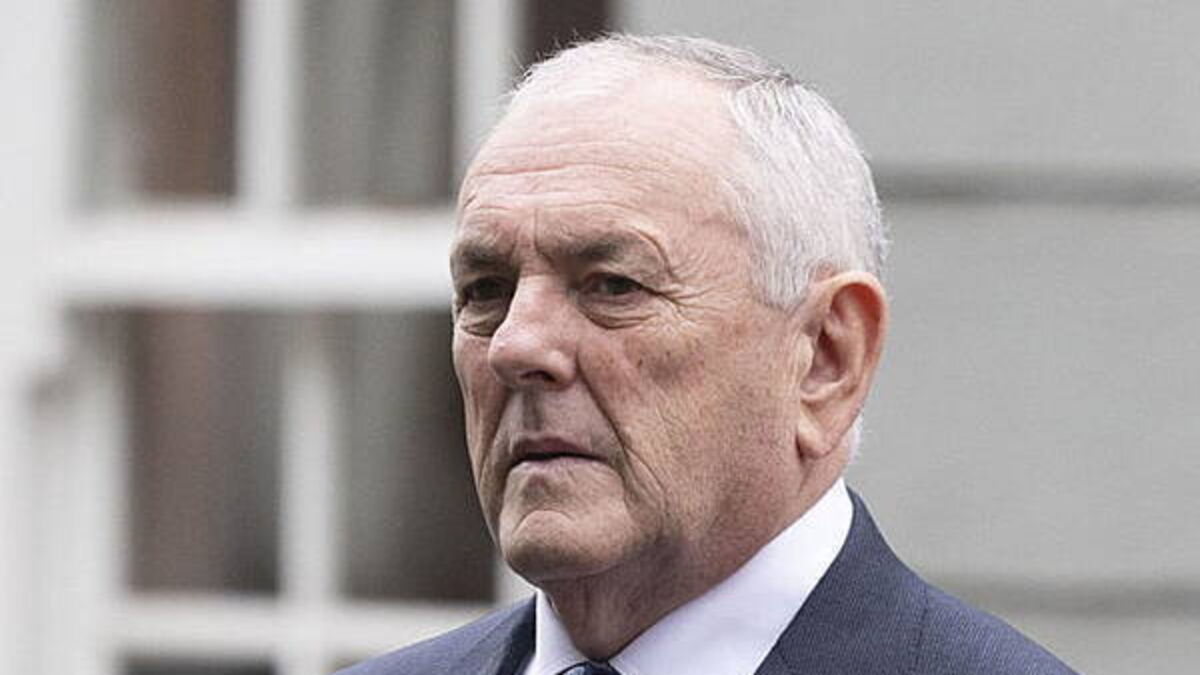
Leas Ceann Comhairle John McGuinness has said the Fianna Fáil party needs new leadership and a new direction.
“We need new leadership, quite frankly, and we need a new direction focused on the social issues of our day and based on the old values of the Fianna Fáil party, which essentially means you listen to the people, you examine their issues, and you then try to assist them by way of maybe the budget or some other measures that will support them,” he told Newstalk’s Claire Byrne show.
“But you don't leave marginalised and older people cold in their homes because of the cost of heating oil. That would not have happened in the past.”
McGuinness' comments come amid mounting pressure on Taoiseach Micheál Martin following the fuel protests.
We failed the public, we failed the protesters.
The parliamentary party should meet to discuss what had happened over the past few weeks, he said. “We need to look at the policies and how we presented ourselves. We failed the public, we failed the protesters, and the language used to describe them as far-left and far-right was simply not acceptable.
“I was on that protest and I met with many community leaders, businesses whose backs are to the wall, and who wanted support from government, understanding from government, and we were not, and when I say we, the arliamentary party was not given the opportunity to have a direct input into how matters were dealt with."
McGuinness said that since Micheál Martin became leader in 2011 there had been a “growing centralised administration, where decisions are taken, and then where the parliamentary party is told about those decisions. That is not the way democracy works, and it's not the way a party should work.
“Having a meeting on Monday morning at 11 o'clock when so much damage had been done to the party was too little, too late.”
The ”finger of blame” was pointed “fairly and squarely” at the Cabinet, he said. “Those that represented the cabinet in public discourse did not do so in a way that recognised the legitimate efforts of people at a local level to get their point across.
“There was no real attempt to get the message across to the public that it was understood. And I'm not talking about the extreme elements of the protest group. I'm talking about the people who are in business that wanted to get some form of relief, and business in the country is contractors, farmers, even small businesses and suppliers to those businesses, and they are suffering badly. And we were not able, as a party, to reflect the views of our local communities and therefore have an input. And then, when the Taoiseach was interviewed, his language did not recognise the very genuine people that were out on the picket line”
There was an issue within Fianna Fáil where there was no input from representatives “in an open and transparent way” to the budgets and policies that affect the country, he said.
“All of us might have a different view, but when you sit down and discuss these issues, you learn very quickly which issue needs to be addressed immediately.
“And Fianna Fáil, at parliamentary party level, has moved away from that model of management, and now we have a management by a small number of people of what's happening within the party. And quite frankly, I've spoken about this for years, and it's not acceptable. Now the younger members of the parliamentary party are saying the same thing that I would have said over the last ten years.”
'Out of touch'
Veteran Fianna Fáil TD Éamon Ó Cuív has said the fuel protests must make Fianna Fáil “sit up” and realise how out of touch it is with people.
The former deputy leader told Newstalk Breakfast that politics has changed, but that the party had not “compensated” for those changes in terms of structures.
The party had been much more of a “movement” when he started out in politics. “In my constituency, there would have been 80 or 90 cumainn, depending on the size of the constituency at various times. And they were a great sounding board, and they left you in no doubt as to what their views were - and they represented a wide swathe of local communities.”
In his three decades representing Galway West he had received “constant feedback” about policy and local issues, he said.
Ó Cuív, who served as TD for Galway West for over three decades, said this meant he received “constant feedback” about policy and local issues. “I think it is fair to say that politics has changed, but we haven't compensated for those changes in terms of the structures.”
When asked about the recent fuel protests Ó Cuív said that many people taking part had “never been involved in a protest in their life”. Most wer“really hardworking people” who were struggling to do their jobs.
“These people were largely representative of the indigenous economy. So, you had agriculture, forestry, fishing, construction, retail, all the distributors who are key there and have a big input into those industries.
“Because if you're transporting microchips, transport is a very, very small percentage of your costs. If you're transporting agricultural goods, livestock, forestry, timber, or whatever, transport forms a very big part of your operation.”
Martin's leadership
On the issue of Micheál Martin’s leadership of Fianna Fáil, Ó Cuív said he would not seek to advise the parliamentary party, but said debate as a healthy” thing.
“There is a wider issue, of course, about the organisation of the party and whether it is possible to create a new form of communications that means that you are getting the feedback from the ground.
“Because I've never seen in my time in politics - and I've been through an awful lot - I was through the whole downturn as a Minister, but I never saw such a concentrated, continuous protest amongst Middle Ireland. And I think that that is what must make us sit up.”
Wicklow-Wexford Fianna Fáil TD Malcolm Byrne has said that he had not signed and would not be signing any motion of no confidence in Micheál Martin’s leadership of the party.
Byrne told RTÉ radio’s Morning Ireland that , “in hindsight” the Government could have done things differently during the recent fuel protests.
The Taoiseach understood the pain and pressure that people were facing, he said. And while he was “very conscious” of the statement by his colleagues James O’Connor, Albert Dolan and Ryan O’Meara, there were times that “I get really annoyed over the fact that I'm sort of sent the statement, this is the government statement, this is the message that you have to deliver, and I don't think that I've had an input into it.”

There had been some concern “from a Fianna Fáil perspective, we didn't feel we had enough input into some of the discussion around that, and I think some of the tone and some of the language that was used last week didn't help matters.
“I think in terms of the tone from, and I certainly don't want to personalise it, but the Taoiseach and some of the ministers, I think it could have been a case of more empathy being shown and more understanding, because I do know that they get it.”
The bigger question now was “where do we go from here?”. There was a very good Programme for Government that had been agreed.
“If we are able to deliver on that Programme for Government, then I think the electorate will start to say, yes, this government has got stuff done.
"I think sometimes there's a need for hands up, you know, we got certain things wrong, not everything, but we got certain things wrong in terms of our approach that happened last week.”
When asked if Micheál Martin should resign as leader, Byrne said the Taoiseach was a very experienced and skilled politician who had represented the party and country well on the international stage. He would know when it was time to go.
Last thing we need
Fianna Fáil MEP Cynthia Ní Mhurchú has said that a change of leadership of the party “is the last thing we need. We don’t need a heave.”
There was no need for a change in leadership, but there was a need for a “meaningful change” in the methods of communications within the party, she told RTÉ radio’s Today with David McCullagh show.
“I think it's time for change and quick change but I don't mean change in terms of the leadership. I haven't lost confidence in Micheál Martin but there's room for improvement and more so now because we've had it before over the presidential debacle and we now see it again.
“So I want to see change. I share the views of those three young gentlemen that I admire so deeply. We're lucky to have the talent in the party. We need more of them and by the way we need more women as well, young women particularly.
“But I do think that the message was mixed and uncertain last week and of course uncertainty spreads like a virus faster than the problem itself and when leaders don't talk and communicate decisively then people assume the worst and then when leaders do communicate at a time of crisis words really matter and the message has to be not from the world of the bubble or the perspective of the leader or the person giving direction but it has to be using words that the people who are affected on the side of the road and protesting peacefully or protesting democratically understand.
“So we don't need preaching, we don't need teaching, we don't need talking down to people, and we don't need moral authority platitudes.”
Unfortunately, the communication piece during the fuel protests was defective, said Ní Mhurchú.
“It was defective in terms of the words but it was also defective in terms of it being rolled out to the people who were standing and sitting and sleeping at the side of the road peacefully protesting and who needed to know that not only was there active listening and empathetic listening which I repeat women and mothers are particularly good at but that they were given a sign of hope”
The Taoiseach had failed to show vulnerability during his dealings with the protests, she added and the leadership he had displayed had been “lopsided.”
"They want, they're looking for something real to hold on to, to hope for, to believe in and to make sure that they're listened to at the appropriate time.
"Well, Micheál Martin may well feel that he did give leadership last week that he did call out people who were imposing a blockade on fuel depots and causing serious problems for everyone in the country, not just the government. I liked the leadership he showed but the leadership unfortunately was lopsided.
“Vulnerability means that a leader comes out at a time of crisis and says do you know what we know? Some things in the government, but we don't know everything, so we're actively listening and we are going to have targeted meetings. “
“People need to hope and hold on to something, and they need a listening ear and I think the government have a problem and the leadership have a problem with communicating the fact that they're doing all this hard work in the background and unknown, and that's what they're doing.
“I've worked with Micheál Martin. He works night and day. The cabinet do likewise. They need to let the people know that that's what they're doing and speak more frequently about that.”
Ní Mhurchú said she had not been approached about a motion of no confidence.
“If there is going to be a heave, and of course it's hypothetical at the moment, we don't need a heave. I don't want a leadership challenge. We don't need to be navel-gazing in Fianna Fáil.
“We have a cost-of-living crisis, a fuel crisis, we have wars going on everywhere. Don't forget about Ukraine. Don't forget about Palestine. This is the last thing we need. “
Ireland now needed to focus on the EU Presidency. “We need to win back friends in Europe. And we need Micheál Martin to be the leader of Fianna Fáil and to be the Taoiseach during that period.”