Galway United to appeal decision after elite training facility refused planning permission
Seán McCárthaigh
Galway United is to appeal a decision to refuse planning permission for a new multi-million-euro elite sports facility outside Athenry, Co Galway.
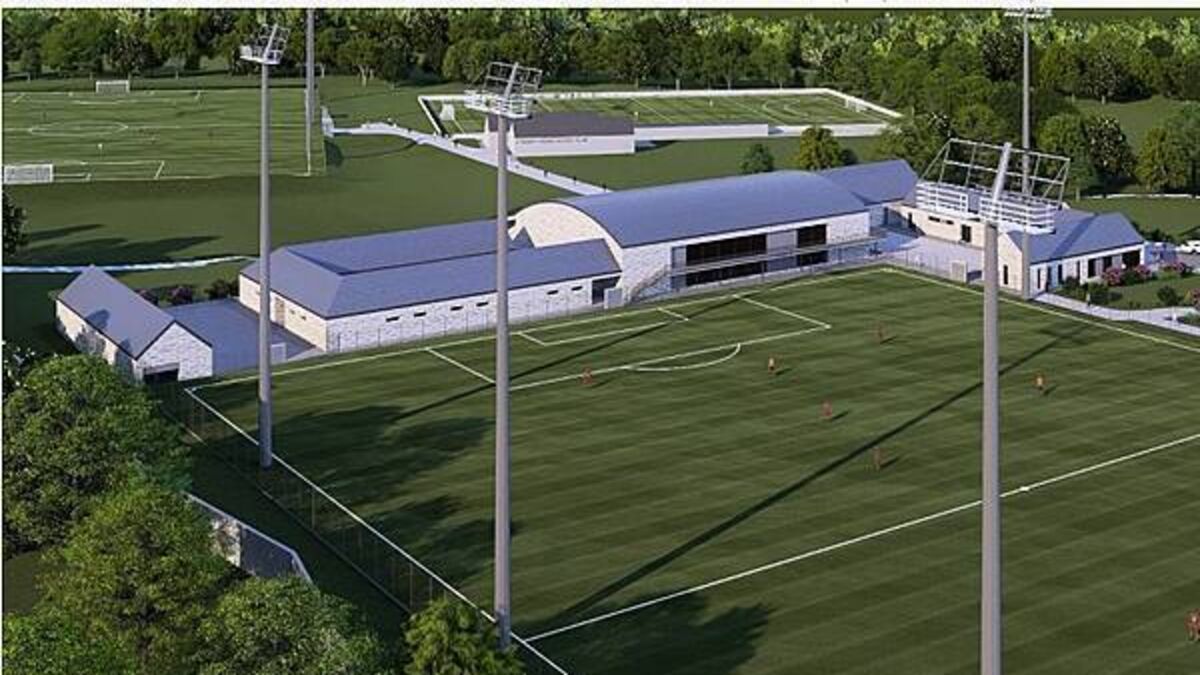
The League of Ireland club has lodged an appeal with An Coimisiún Pleanála over a ruling by Galway County Council to reject its proposed construction of “a new provincial training facility” for both Galway United and Connacht Hockey Association on a 6.3-hectare greenfield site approximately 1.5km south of Athenry.
The lands are owned by a company associated with the well-known property developers, brothers Luke and Brian Comer, who are also majority shareholders in Galway United.
The plans provide for two full-size football pitches – one grass and one astroturf – and a full-size hockey pitch, along with floodlighting, changing facilities, offices, meeting rooms and a gym.
In its ruling, Galway County Council said the proposed Mountain South Centre of Excellence would constitute “a disorderly and haphazard development which fails to integrate sensitively into the existing environment.”
The council claimed it would seriously injure existing amenities in the vicinity as well as endangering public safety because of poor sightlines from the access point to the facility.
It also refused planning permission on the grounds that there had not been a full assessment of the impact of the proposed development on the archaeology of the area.
The council further rejected the plans as it could pose a serious risk to public health due to the lack of satisfactory details about how the facility would connect to public water mains.
Council planners also deemed the plans excessive and not in keeping with the character of the rural area.
They claimed allowing the project to go ahead would set an undesirable precedent for similar types of development in unzoned and unserviced locations.
In its appeal, however, Galway United claimed the local authority’s ruling was based “on a flawed interpretation of policy and a mistaken characterisation of the development.”
The club also maintained that council planners had made an “incomplete assessment” of transport, archaeological and servicing issues.
Galway United stressed that the proposed facility was “a regionally significant sports enterprise” which was designed to serve a multi-county catchment in the West and Midlands.
“The proposed development is appropriately located, sensitively designed, policy compliant and strategically necessary in light of national changes to youth player development pathways following Brexit,” the club explained.
The club claimed the development of the training complex outside Athenry would help fill the current void by providing full-time, high-performance facilities for the region’s youth.
It justified the rural location for the complex based on the geographically dispersed player base and the need for expansive, adaptable facilities, as well as its unsuitability for an urban site.
Although planning permission for a similar proposal had also been refused in April 2022, Galway United said it had carefully re-evaluated the design, scale and access to address issues highlighted in that decision.
The club said the facility had been significantly reduced in scale, including the removal of spectator stands, while the site entrance had been changed to optimise visibility and road safety.
Galway United claimed that a planning precedent for sports-related development in the area had been set when the Galway GAA Hurling Board secured planning permission on an adjacent site in 2008 for a new centre of excellence, although the grant lapsed without any construction taking place.
The club said the complex would also be available for use by schools in the area during the day.
A group of over 30 residents from Mountain South expressed concern about the scale and proximity of the development to existing residential properties and the lack of consultation about the project.
Other issues raised by them included the potential for noise, light and environmental pollution as well as road safety concerns.
The group said the proposed development was “unsatisfactory” and there were no remedies available to address its “more fundamental shortcomings.”
The plans by Galway United received support from both Connacht Hockey Ireland and Hockey Ireland as well as local Fianna Fáil TD, John Connolly.
The Galway West TD said it was regrettable that Galway United had been competing in the League of Ireland since the late 1970s without having a training facility to meet their needs.
Mr Connolly said the lack of such a facility was clearly an impediment to the club’s potential for “on-the-field success.”
The president of Connacht Hockey Association, Adil Kurt-Elli, said its players currently had to travel to Dublin or Ulster to train in appropriate environments, which was not feasible.
Mr Kurt-Elli said talent development in Connacht was “severely restricted by geography alone” while the proposed centre in Athenry would fill a long-standing gap in facilities in the west of Ireland.
A ruling by An Coimisiún Pleanála on the appeal by Galway United is expected to be made before the end of April 2026.