Cork Views: My experience led me to create inclusive dance programme
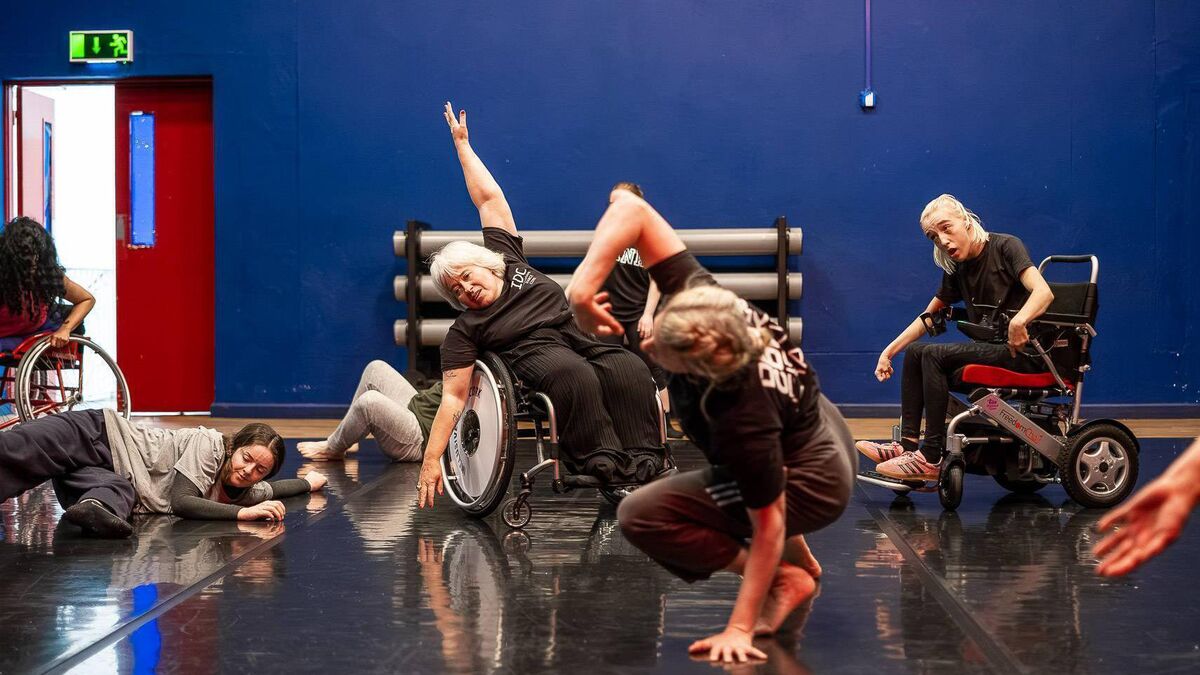
An Inclusive Dance Cork workshop at Dance Cork Firkin Crane in 2025. Picture: Marcin Lewandowski
When I was a teenager, a dance teacher came to my school and invited my classmates to take part in a performance. I was the only student with a disability, and I was the only one who wasn’t invited to participate.
While the rejection hurt, the experience only strengthened my determination to dance and led to the creation of Inclusive Dance Cork.
Inclusive Dance Cork (IDC) is a training programme for people with and without disabilities who are interested in learning, exploring, and developing inclusive dance practices. At its heart is a simple but powerful belief: everybody can dance, and everybody should have the opportunity to explore movement, creativity and self-expression in an environment where they feel welcomed, respected, and valued.
Rather than viewing disability as a limitation, inclusive dance recognises that every person brings their own body, experiences, movement vocabulary and creativity into the dance space. This approach reflects our belief that difference is a source of artistic possibility.
The programme rethinks how dance is taught, created and experienced. We question what a dancer should look like, how a dancer should move, and who gets to participate in artistic spaces.
By doing so, opportunities are created for new forms of movement, communication, and collaboration.
Originally conceived by Yvonne Coughlan, Chairperson of Dance Cork Firkin Crane, this ambitious programme has been made possible through the dedication and collaboration of its many partners, supporters, and participants.
In our home at Dance Cork Firkin Crane, I proudly lead the programme as a disabled dancer, alongside our Project Co-ordinator, Louisa Sloan.
Diversity is central to the programme’s strength. Among our participants, I see people with a wide range of experiences. Some may have previous dance training, others may be approaching dance for the first time, there are those who may identify as disabled, while others may not - all are welcome.
Inclusion is most powerful when it is not simply about bringing people into an existing space, but about allowing everybody in that space to influence and shape it.
I often find our participants are the ones teaching us, as one of our core beliefs is that participants should contribute their own ideas, experiences and perspectives. This shared learning ensures that the creative process is enriched by the diversity of perspectives in the room.
Opportunities for disabled dancers have historically been unavailable or difficult to access. Traditional dance environments have often been shaped around narrow ideas of physical ability and technical achievement, leaving disabled people feeling excluded from training, performance, and creative development.
We challenge these barriers by recognising the creative potential of everybody - creating opportunities for disabled dancers to develop confidence in their own movement, discover new ways of expressing themselves, and participate as artists rather than being defined by assumptions about what they can or cannot do.
Read More
The impact of inclusive dance can extend far beyond the studio. It provides a space where people can express thoughts and emotions that may be difficult to communicate through words, while building confidence, trust and friendships. In everyday life, disabled people can too often be viewed primarily through the lens of disability, support needs or perceived limitations. In the dance studio, the focus shifts to what each person brings creatively, their ideas, their movement and their individuality.
The impact of inclusive dance extends beyond individual participants. When disabled and non-disabled people dance, train and create together, shared experiences can challenge assumptions and encourage people to see one another beyond labels. Dance becomes a shared language through which people communicate, collaborate and learn from each other. Difference is no longer something that separates people; it becomes part of what makes the creative experience richer.
Partnerships and collaboration are central to Inclusive Dance Cork. Our partners provide essential support, expertise and opportunities that strengthen the programme and create pathways for learning, creative development and participation.
None of this happens in isolation. Inclusive practice needs sustained investment, collaboration and organisations willing to recognise its value. Support from the Disability Participation and Awareness Fund (DPAF), a fund from the Department of Children, Disability and Equality (DCDE) managed by Rethink Ireland, alongside our growing network of partners and funders, has helped strengthen the programme, build our capacity and create more opportunities for disabled and non-disabled people to learn and create together.
That investment matters because accessibility should not be an optional addition to the arts; it should be a key part of how we think about their future.
Ultimately, Inclusive Dance Cork is about more than dance. It is about creating a space where difference is welcomed, creativity is shared and people can learn from one another. It challenges ideas of who belongs in the dance studio and recognises that diversity can strengthen artistic practice.
By bringing disabled and non-disabled people together through movement, IDC is helping to create a future in which dance is more accessible, representative and imaginative.
Through training, creativity and collaboration, IDC is working towards a future in which everyone has the opportunity not only to participate in dance, but to contribute to and shape its development.
 App?
App?


