Cork Views: Why give e-scooter users such a rough ride?
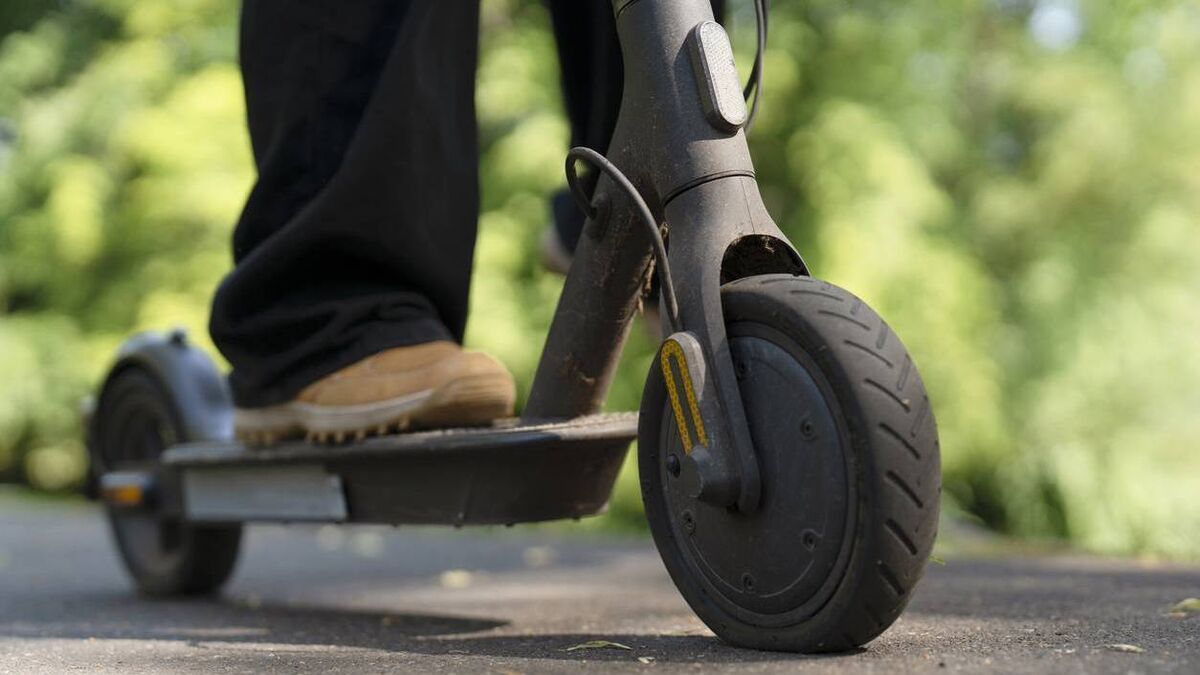
E-scooter users must now wear high-viz vests when out and about
Under new regulations, the government now requires e-scooter riders to wear high-viz vests.
Think about this: The fine for riding an e-scooter without a high-viz vest is €100. That’s higher than the fine for a motorist stopped by gardaí for driving without reasonable consideration, which is €80, as well as a raft of other offences, including driving on the wrong side of the road, which is just €60.
Now, I’m no great fan of e-scooters. I walk, cycle, take the bus, and drive. They are the only common form of transport I don’t actually use. I see e-scooter riders, like all road users, do irresponsible things, but I don’t begrudge them a place on the road.
For 5% of commuters, more than 150,000 people in Ireland, that’s how they get about. The attractiveness is that they are cheap, easy, and climate-friendly. For some, like people with epilepsy, they offer motorised transport when they otherwise aren’t allowed to drive.
These are the only options for many when faced with a government that’s determined to increase public transport fares, even while also announcing that they won’t be adding any new bus services this year.
So, I feel aggrieved when people who have done nothing wrong, suddenly find themselves on the wrong side of the law. More so when those who do more wrong and pose more of a risk are given a free ride.
The starting point for the crackdown on e-scooter users was a spike in cases of serious head injuries to children from falls off e-scooters. There was no pause to ask how children came to be riding them - they are illegal for under 16s.
I don’t know if any government minister did like I did and walked into a main street toy shop. They would have seen e-scooters being openly sold to children. There was no crackdown on retailers, no rush to legislate against something obviously wrong. Many toy stores have since voluntarily withdrawn them from their shelves, but that was in response to public opinion, not any change in the law.
By law, an e-scooter must not go faster than 20km/h, but take a quick look around town and that’s clearly not happening. For an ordinary person, there’s surely a commonsense expectation that what we buy will be legal to use.
This is increasingly a problem for electric bicycles too, where an unsuspecting publicmay be sold over-powered electric bikes, actually classified as ‘e-mopeds’, that require tax and registration and may not be allowed in cycle lanes.
Instead of measures that would actually enforce laws already in place and protect consumers, the government leaped on high-viz vests for adults, as if they were the problem.
That was followed by public announcements by the government that e-scooter riders would soon need third-party insurance, without even the common sense of checking if that’s a thing you can get in Ireland.
It’s not - for the same reason you can’t get this kind of insurance for a bicycle. The administrative costs exceed the low actuarial risk, meaning it’s not a commercial product.
Across Europe in 2024, 10 pedestrians were killed in collisions with e-scooters, compared to 2,302 killed by motorists, counting cars only.
Here in Ireland, three out of the 185 people killed on our roads in 2025 were e-scooter users, 14 were cyclists, and 41 were pedestrians. Two-thirds (127) of those killed were in fact motorists, or their passengers, including 30 motorcyclists. Yet, somehow it’s ‘common sense’ to want to raise the age at which someone can ride an e-scooter to 18, but keep the age at which they can ride a motorbike at 16, and a car at 17? Never mind that a teenager can drive a tractor at 16, in the most dangerous of professions for workplace-related deaths.
An RSA survey of motorists found one-in-eight admit drink driving in the last 12 months. A quarter think it’s OK to drive short distances after having a drink. Three-quarters regularly speed on urban roads, a third of those by more than 10km/h.
Of those motorists killed on our roads, a third test positive afterwards for alcohol and one-in-seven for cocaine. One-in-five motorists tell the RSA they have nodded off while driving, rising to nearly half among those who admit to drink-driving in the last 12 months.
You would imagine statistics like these would provoke the kind of response we’ve seen aimed at e-scooter users — or for scramblers, which were completely banned at the start of the year, like the government first wanted to do with e-scooters.
Yet, unless someone is actually killed or injured, the gardaí categorise motoring offences alongside ‘non-crime’. I’m not joking. That’s straight from a presentation given to local authorities at the Local Community Safety Partnership. When I challenged the categorisation, I was told in a ‘common sense’ way that if no-one is killed or injured then it’s not really a crime. It’s victimless.
Last summer, the Crowe Report into the Roads Policing Unit found “a minority [in the unit] are disinterested in being productive and effective, and are able to get away with such behaviour… and that the overall strength is 40% less than the numbers in post in 2009”.
A pilot of bus-mounted cameras in Cork found 7,610 motorists blocking bus lanes, yellowbox junctions and other offences over the course of 11 weeks in 2024. No fines or prosecutions followed. There was no hurry to ensure motorists are caught or punished, regardless of the effect on public transport users.
The rollout of red light cameras in Dublin is on hold. There’s no hint of them anywhere else in the country. TDs are complaining about speed cameras that catch too many motorists.
The effects of this kind of priority are visible. We’ve already driven schoolchildren off the road, just 2% at primary school and 3% at secondary school cycle to school. When the RSA visits schools, it’s to lecture children about how it’s their responsibility to ‘be safe, be seen’ by grown-ups in cars and, like e-scooter riders, they get told the answer, no matter the question, is that they must wear high-viz too.







 App?
App?


