Trevor Laffan: From phone booths to calls to our grandson, aged 12, in Oz
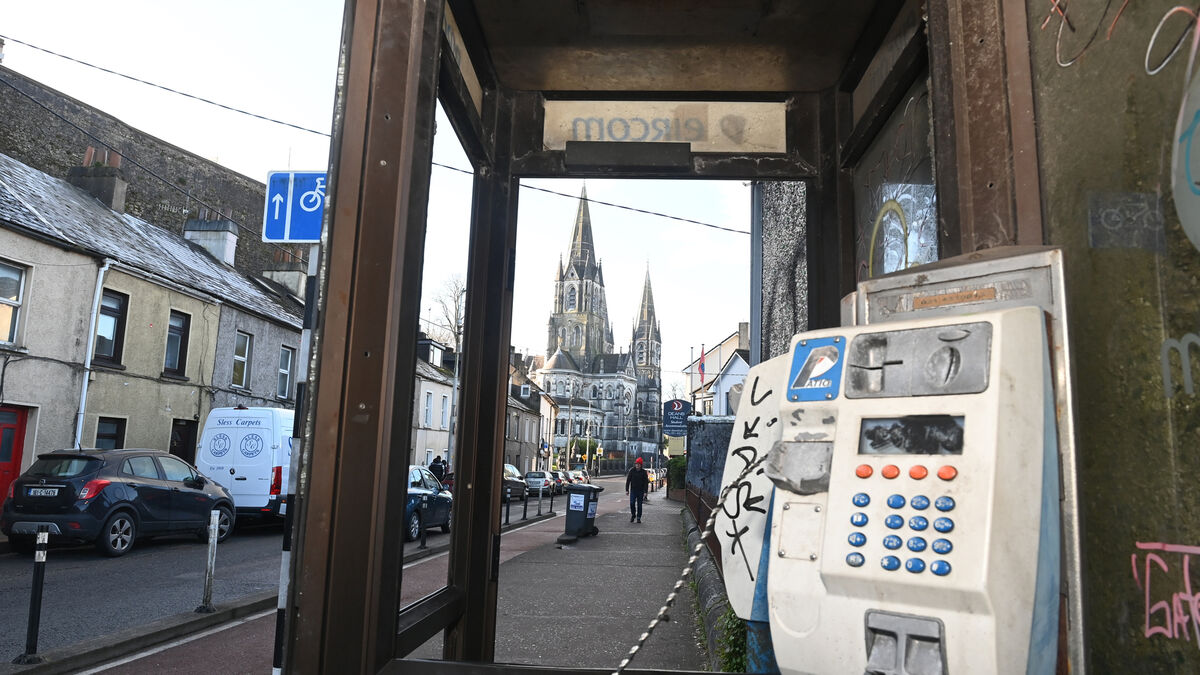
Phone boxes that used to stand on Proby’s Quay in Cork city, near St Fin Barre’s Cathedral. Picture: Larry Cummins
He answered, and they had a brief chat before he handed the phone to his mam. My wife, Gaye, told Cooper how exciting it was that he had his own telephone, and she’d be able to contact him anytime she wanted.
As he passed the phone to his mam, Cooper threw his eyes to heaven and shook his head. “Nana is calling this a telephone,” he said.
His younger brother, Toby, was sitting at the table minding his own business when he suddenly piped up, “Is that from the old days?”
He was spot on of course. It was from the old days, and so are we.
It was another reminder, if one was needed, that we are getting older. Our grandchildren see us as we saw our own grandparents when we were children. Just like Bart’s grampa in The Simpsons. Old, bothered, forgetful, and cranky, and it still surprises me at how quickly we got to this point.
But the grandchildren don’t know the half of it. There was a time, and it really doesn’t seem that long ago, when to make a phone call, we had to leave the house and go to the nearest telephone box with a fistful of coins.
The misery didn’t always end there either. There were usually a few panes of glass missing in the phone booths and the doors often didn’t close properly so they were cold and draughty places in the winter.
Once you got in, there was still no guarantee you could make a call. It often happened that the box holding the money was so full of coins, it couldn’t accept any more, so when you put your coin in the slot it went straight through the machine and came out the other end.
At that stage, there was nothing for it but to run to the next booth, which could be at the other end of town. It wasn’t unusual either to find the phone booths vandalised and the receiver had been ripped from the wall.
Those booths weren’t the most hygienic of places either. Everybody used the same mouthpiece, so God only knows what germs were housed in there.
There was graffiti too, and telephone numbers scribbled on the walls advertising various services, often of the nefarious kind, for men who might feel lonely.
So, it should come as no surprise that there was great excitement in our house when we got our own private phone.
Getting a call in those early days was a big event. As kids, we would all rush to answer it when it rang. It was safe for kids then because the caller was almost always known, and scammers had yet to be invented.
Making a call from the comfort of your own home was pure luxury. The phones were nearly always in the hall. I suppose that was to allow for a little privacy while having a conversation.
It usually sat on its own little table with a directory placed next to it along with a pen and paper for taking messages.
Surely life couldn’t get much better than this, but little did we know that in a relatively short period of time, things would change dramatically in the world of telecommunications.
Technology is advancing so fast, it’s hard to keep up. Phones are no longer on the hall table, and there are times I wish they were.
There’s a mobile in your face now wherever you go and privacy is no longer an issue.
Having the phone on speaker is trendy and shouting into the device seems to be attractive for some.
They have become an essential item for all of us. They’re not only phones, they’re minicomputers, sat navs, diaries, time pieces, cameras, torches, and more - so surely, they can’t improve anymore.
Or can they?
Well, according to the website Scienceinsights, we haven’t seen anything yet. They reckon phones in 10 years’ time will still be recognisable as phones, but they’ll be thinner, smarter, and far more connected to the world around us.
The biggest shifts won’t come from a single breakthrough, but from several technologies maturing at once and other things I don’t even understand.
In short, the phone you carry in 2036 will likely be a thin, flexible device with a screen that expands when you need more space and contracts for portability.
Its surface will shrug off minor scratches overnight. A powerful AI chip will handle translation, writing, photo editing, and personal assistance without an internet connection.
A solid-state battery will last two to three days between charges, and you may not need to think about charging at all if spatial wireless chargers become common in public spaces.
The biggest change might be behavioural rather than physical. With lightweight AR (augmented reality) glasses handling notifications, navigation, and quick interactions, you’ll reach for your phone less often.
The glass rectangle isn’t going away, but its role in your daily life is about to get a lot quieter.
I’m all for the quieter option, but by the time that comes around I’ll be in my late seventies and I probably won’t hear too much anyway.
Until then, I’ll keep my old Nokia and give the grandchildren something else to talk about.







 App?
App?


