Cork Views: Women can drive change in transport system
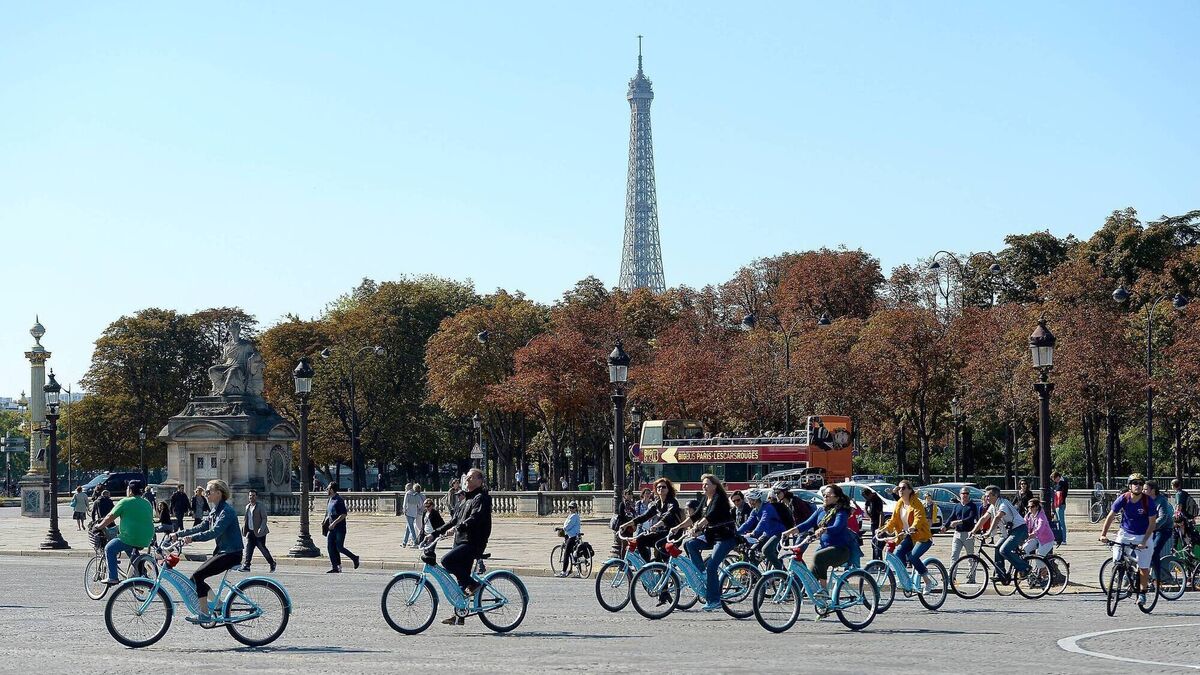
A car-free day in Paris, an event conceived by former Mayor of the city, Anne Hidalgo. Picture: Aurelien Meunier/Getty Images
Those of us who were children in the 1970s remember the freedom of being able to roam, cycle around our neighbourhood and to and from school, spending hours free of adult supervision.
As road deaths keep spiralling, the stark reality is clear – roads are congested with weighty vehicles, separated by a strip of paint from cyclists who are frantically trying to avoid them. Meanwhile, cycle lanes are blocked by parked cars while cyclists get squeezed off the road.
There is evidence that some of the most transformative changes in movement across cities have happened when women are in charge. Has their experience in navigating cities that are congested, dangerous and unsafe – particularly for women - left them with a greater understanding of what is needed to make cities work for everyone – not just those with the deepest pockets and loudest voice?
Peter Horgan, Cork City Councillor, agrees that change is needed while highlighting the latest stark findings from Cycling Ireland.
“Over half of cyclists report experiencing dangerously close passes on most rides, and a similar proportion have been involved in collisions or serious near misses in the past year. A clear majority believe conditions on Irish roads are getting worse, not better. These are not marginal concerns - they reflect a system where people feel exposed and unprotected.”
Cllr Horgan outlines that reality stands in contrast to what we know works elsewhere.
“Cities that have invested in segregated cycleways have seen consistent improvements in safety. In the Netherlands, where protected cycling networks are the norm rather than the exception, cycling is one of the safest modes of transport per kilometre travelled. The lesson is simple: when you design roads that physically separate people from danger, you reduce that danger, for everyone.”
Cllr Horgan explained that under its Vision Zero programme, Transport for London has also expanded protected cycleways as part of a wider strategy to eliminate deaths and injuries. The approach is grounded in the ‘Safe System’ principle - that human error is inevitable, but infrastructure should ensure those are not fatal. The expansion of high-quality, segregated routes in London has supported both increased cycling and improved safety outcomes.
"Studies across Europe and North America consistently find that protected cycle lanes lead to significant increases in cycling uptake, particularly among groups who are currently underrepresented, including women, older people, and children,” said Cllr Horgan.
“And yet in Ireland, we continue to deliver cycling infrastructure in fragments - short stretches of painted lanes, inconsistent designs, and protection that disappears at the most dangerous junctions.”
Data from Cycling Ireland and the National Transport Authority walking and cycling indexes graphically describes what that feels like on the ground: unsafe, unpredictable, and increasingly untenable.
The international evidence tells us investment in active travel infrastructure translates into safer streets, more people cycling, healthier populations, and more liveable cities.
Other cities have demonstrated clearly the metamorphosis that can occur when politicians put their weight behind change. In many cases, it is female politicians who have succeeded when it comes to the physical transformation of cities.
Barcelona, under the mayoralty of Ada Colau, reclaimed a million square metres of pedestrian space, tripled cycle lanes to 273km, and put the majority of the population within 300 metres of at least one route. The city has created 80 new hectares of green space, halved car traffic and cut air pollution by a fifth - all in just four years from 2019 to 2023.
Another recent lady mayor, Anne Hidalgo, transformed Paris despite a ferocious backlash back from vested interests. She invested in 1,000 km of cycling routes, over a third (350) of which are protected from traffic; the pedestrianisation of 300 school streets near schools; the removal of 70,000 car parking spaces and replacement with green spaces; and the planting of 145,000 trees and 45km of parks.
Mayor of Montréal, Canada, from 2017 to 2025, Valérie Plante delivered the most ambitious car-free scheme in North and South America. She invested in the city’s Réseau espress vélo (express cycling) – 17 routes comprising 191km of protected lanes; and the summertime pedestrianisation of 11 commercial arteries that improved the sales of over 2,000 local businesses. Added to that, Plante created permeable and absorbent surfaces, ‘sponge streets’, to offset flooding by replacing asphalt with green spaces.
And it’s not just safety and convenience. Investment in protected cycle lanes and green spaces is critical for mental health and wellbeing – particularly of young people.
The research indicates that play is a direct source of children’s happiness, with children repeatedly pointing to play as the activity they most enjoy. Critically, children appear to be happiest when their play occurs away from adult oversight and intervention – that means independence with access to public green spaces or active travel on streets.
Canadian cycling advocates, now living in Delft, Netherlands, and authors of Women Changing Cities, Melissa and Chris Bruntlett suggest these successful transformations of cities are the result of trailblazers seeking to meet the needs of everyone, not just those with the greatest means or the loudest voices.
“The qualities shared by these changemakers suggest a commonality in how women approach their roles: practising the role of care in the daily functions of their cities, building broad coalitions and the need for a firm grip over them to retain power,” they say.
The Bruntletts suggest we need is a shift in how governments approach infrastructure and policy. “But in the vast majority of cities, small pockets of vested interests are digging in loudly to defend a system that works for them. Many city or local politicians mistake the volume of defiance as being representative of the larger community and fall back on empty rhetoric, and ultimately inaction.”
Perhaps a woman in charge of transport would demonstrate the vision and the political commitment needed to ensure green spaces, pedestrianisation and protected cycle lanes are rolled out across Irish towns and cities, similar to what has happened in other cities across Europe and Canada - that benefits the lives of everyone.






 App?
App?


