We need to make Cork city walkable
- 1. Start with a Plan. Cycling networks should be carefully planned as a fine-grained mesh, making it possible to cycle “from anywhere to everywhere”. These grids connect where people live, shop, and play - offering a truly practical alternative to driving.
- 2. Don’t give up at the intersection. Protected intersections are designed to slow down cars and prioritise vulnerable users. This ensures people of all ages and abilities can happily navigate exchanges, trusting fellow users to act in a way that is anticipated.
- What it does not mean is that cycle lanes disappear at an intersection or a roundabout leaving cyclists stranded or vulnerable.
- 3. Every mobility plan needs a car plan. Offering an attractive alternative must be complemented with efforts to make driving indirect and inconvenient. By pushing traffic to other arterials, cities prevent cars cutting through residential areas, giving cyclists safer, direct routes. In recent years in Cork, car parking has become increasingly difficult, making the prospect of driving into town far less attractive than the alternative - hopping on a bus or a bike with most parts of the cities within a ‘stone’s throw’ of the suburbs.
- 4. Design for the behaviour you want. The desired speed is achieved not via education or enforcement, but actively engineering means that force drivers to slow down and pay attention. If a street has too much misbehaving it’s seen as a design failure and reengineered to be safer.
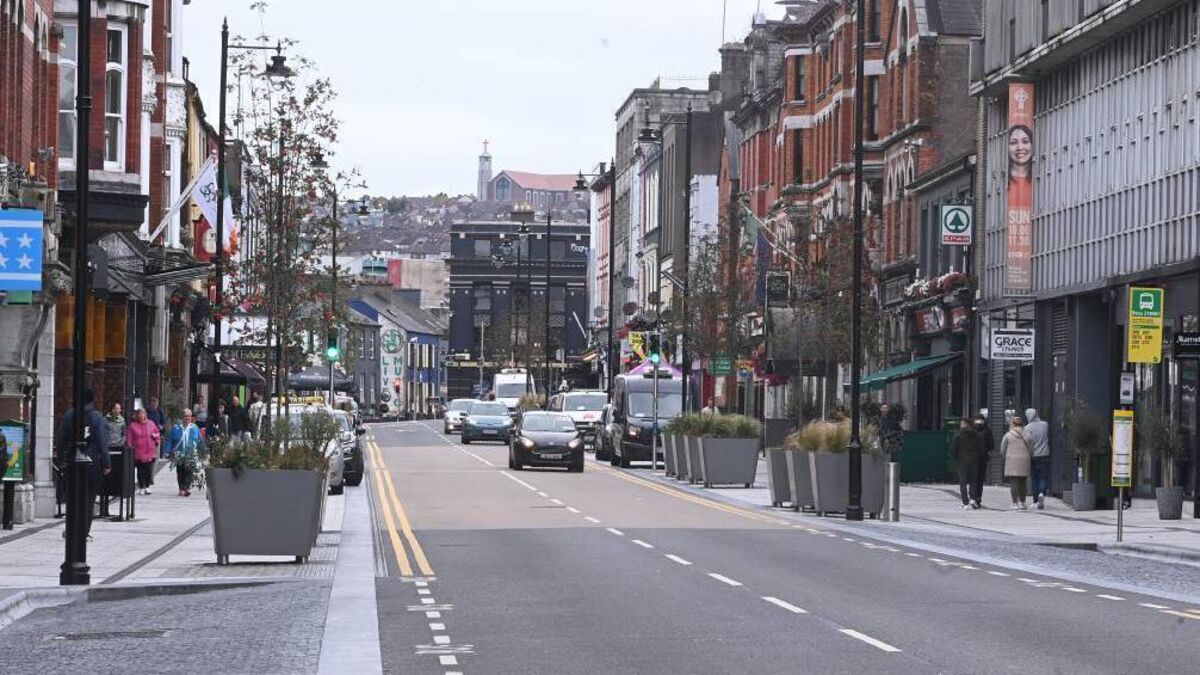
- Cork’s newly refurbished Victorian Quarter, is an example of an area designed to minimise traffic and maximise an urban experience focused on liveability, where the well- preserved 19th century architecture and rich heritage can be appreciated and enjoyed. It is a living breathing community with a heart.
- 5. Use cycling to feed transit. By connecting infrastructure networks to bus, train and tram stations providing secure and free bike parking, the bike-train combination acts as one seamless mobility option.



 App?
App?


