Keane edge: New book argues Roy's influence is stronger than ever
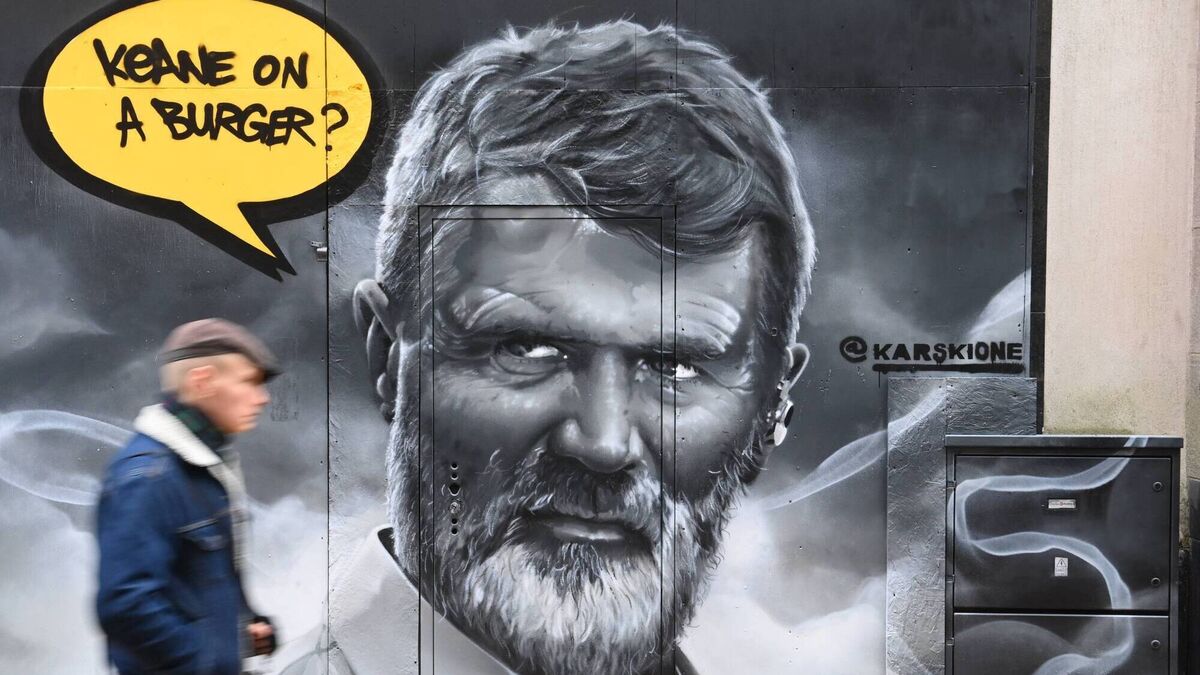
A pedestrian passes a mural of Roy Keane, by Dutch street artist @karskione, on Cook Street in Cork City ahead of the opening of a Fat Phill's smashed burger diner in the city. Picture: Larry Cummins
We’re not short of books on Roy Keane.
The man himself has his name on two autobiographies, one by Eamon Dunphy and the other by Roddy Doyle, while Corkman Eoin O’Callaghan dealt with his early days at Nottingham Forest in Keane: Origins. His dog Triggs even had an autobiography.
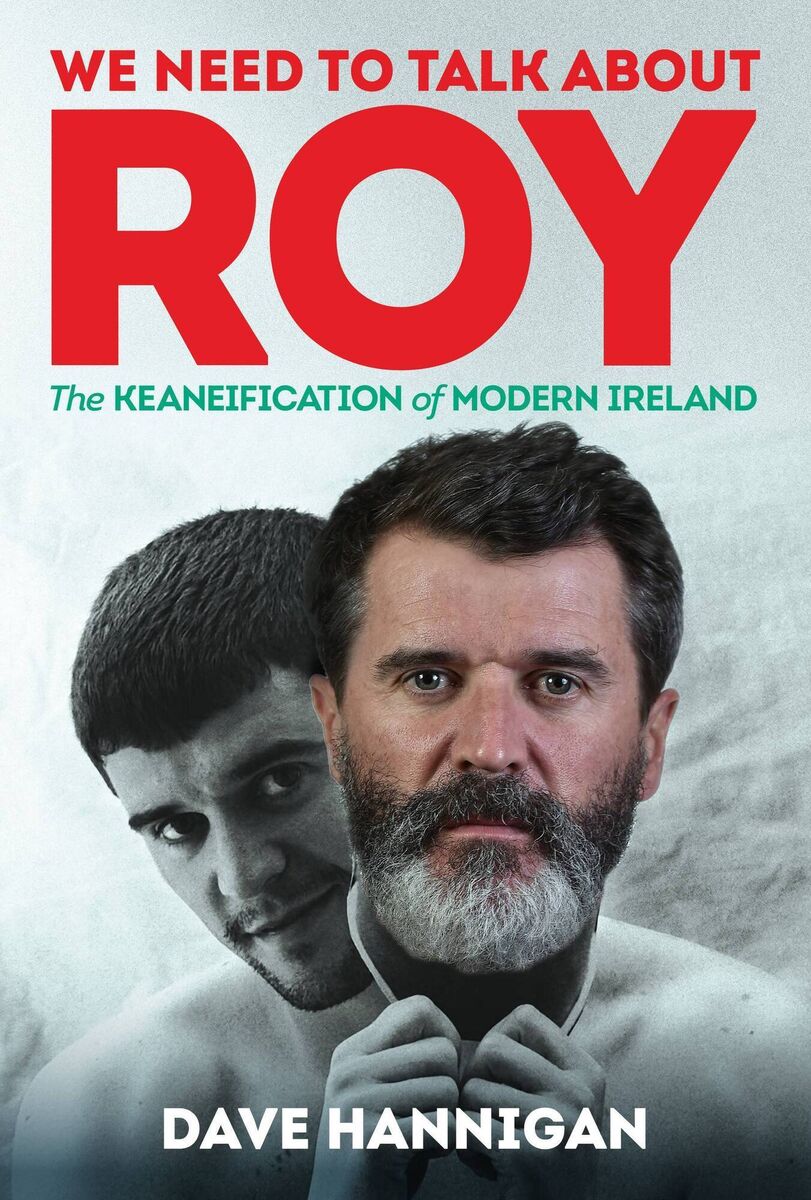
You might think we don’t need another, but it’s likely you’d feel different after reading We Need to Talk About Roy: The Keaneification of Modern Ireland by Dave Hannigan.
Born in Cork in 1971, the same year as the future Manchester United and Ireland captain, Hannigan found that, if anything, Keane’s influence has grown since he ceased to be a footballer.
“The interesting thing is that I had this idea for a book like this about Roy Keane more than ten years ago,” he says, “the idea that he embodies the history of Ireland while changing it along the way.
“I revisited it about 18 months ago and I was thinking, ‘Jeez, even though he retired in 2006, he’s a bigger star, a bigger headline-grabber now.
“An influencer, a content-creator, a viral king – that iteration of Roy Keane, which none of us could have seen coming, made him even more relevant.
“As you watch his career from his childhood right up to the present day, the mutations, the transformations along the way, are so interesting, wrapped up in the different time periods as well.”
A word to describe Keane’s impact across different aspects of Irish culture is transcendent – so much so that Hannigan found himself surprised by things he discovered.
“I always find that the book that was in your head is a lot different to the one that’s published,” he says.
“For instance, there's a whole chapter about his influence on rugby and Irish rugby in the last 20 years.
“I'd heard and I'd read a couple of things like about rugby players and paying tribute to Roy Keane but, when I got into it, I realised it was actually a bigger thing than I thought, because [Jonathan] Sexton, Donncha O’Callaghan, you know, all these people, [Ronan] O'Gara, Alan Quinlan, all these people have spoken about him in the most glowing terms and substantive terms in terms of he has changed their mindset and affected how they approach their own sport.
“That, to me, was remarkable. I know Roy Keane has become a huge rugby fan, as have lots of people in Ireland have in the last 20 years, but that didn't exist for us in the 1970s and 1980s. Like, rugby was literally a sport that belonged to another demographic that was not us.”
Of course, demographics have changed.
“If you look at the Evening Echo, which I did, for August 1971 – the month he was born – if you just look at the ads, everything was for rent, they couldn't afford to buy anything,” Hannigan says.
“Four percent of people in the 1970s has a college degree and when we look at his life, he's intertwined with all that change.
“He came out of the grim 1970s, he was unemployed in the 1980s, like hundreds of thousands of Irish people of all ages were, and then he got rich in the 1990s. Not everybody in Ireland got rich in the 1990s, but the circumstances for a lot of people changed.
“His circumstances improved a lot more than all the rest of us, but again, that was down to hard work. He had this incredible work ethic and still has – even though he's in his mid-50s, and has enormous sums of money made that he worked very hard for, he's still out there doing work.
“He could sit back by the pool at this stage of his life.”
And so what lies in Keane’s future? Nothing would be a shock, Hannigan feels.
“Like, would any of us be surprised if Keane one day just took off the headphones and walked off the set, never featured in the media again?” he says.
“It would be about as likely as anything else, really. And I think, you know, a lot of people criticise what he has become today but we have to forget that none of us in our 50s are what we were in our 20s. Priorities change, interests change and we approach opportunities in a different way.
“He certainly has evolved, perhaps in a more drastic direction than most people. Nobody would be shocked for him to go on and do something different, but he does seem to be enjoying this phase.”
·










 App?
App?


