Puckout supremacy sets Cork apart in Waterford rout
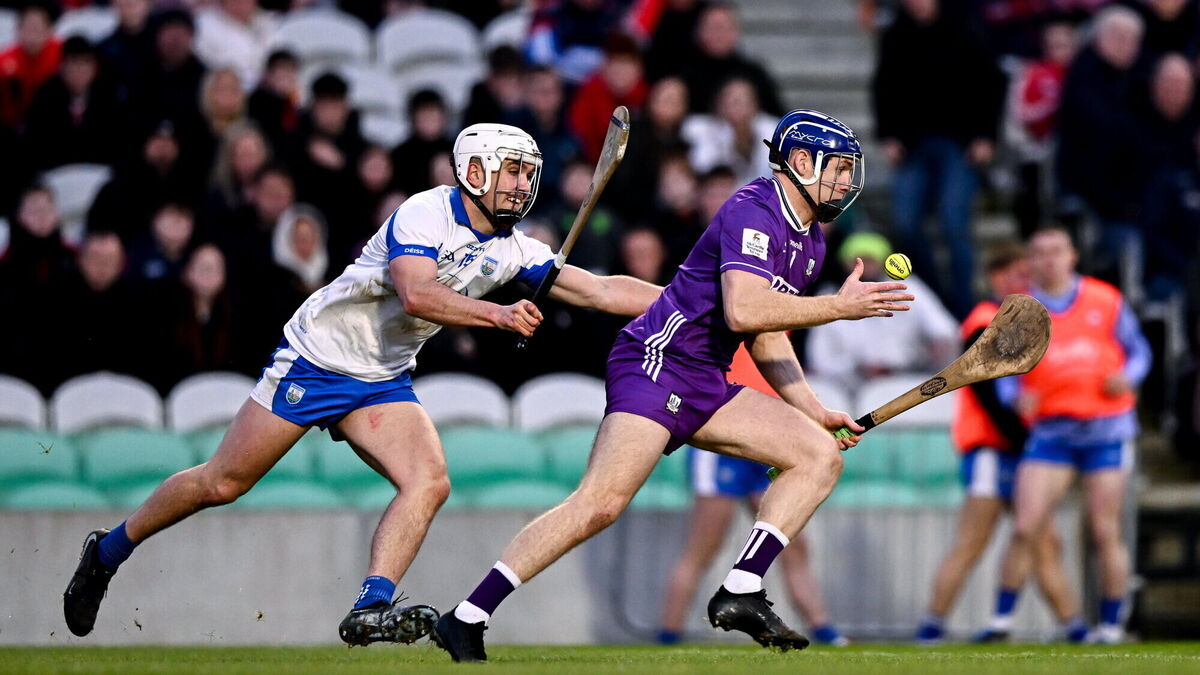
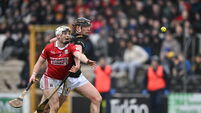
Cork goalkeeper Patrick Collins in action against Charlie Treen of Waterford during the Allianz Hurling League Division 1A match between Cork and Waterford at SuperValu Páirc Uí Chaoimh in Cork. Picture: Ben McShane/Sportsfile
As Cork eased to a comfortable 14-point win over Waterford at SuperValu Páirc Uí Chaoimh on Sunday, the damage was obvious on the scoreboard.
Less obvious, but no less decisive, was how completely Cork controlled the puckout battle.
And the numbers are concrete proof of it.
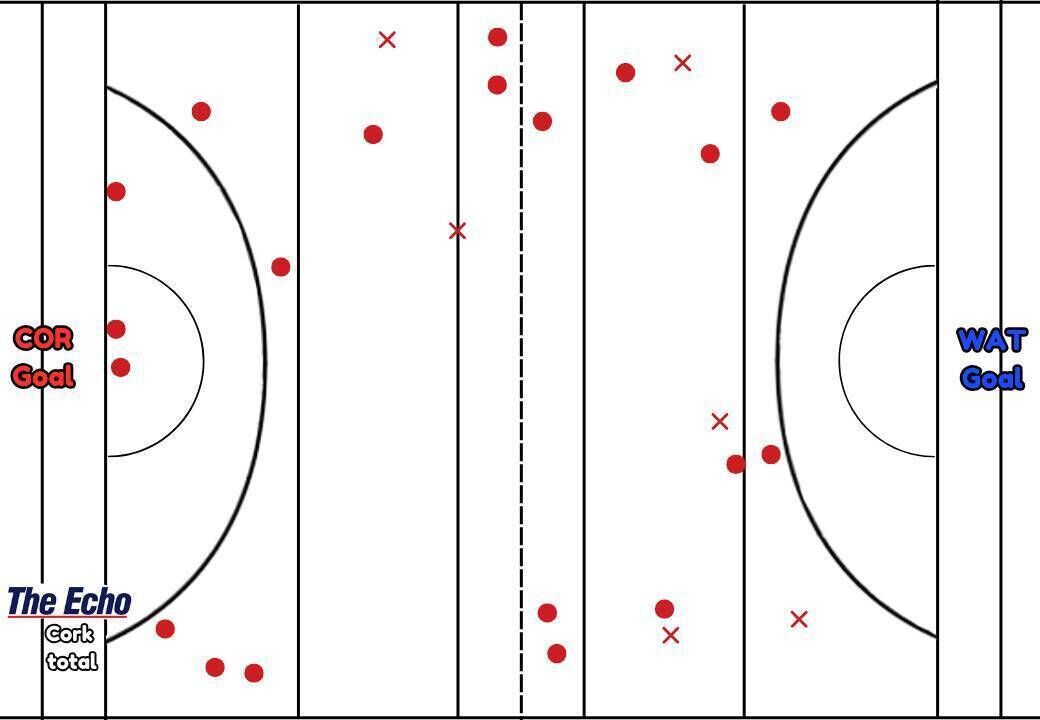
Cork won 20 of their 26 puckouts across the 70 minutes, a very healthy 77% success rate. Cork were rarely scrambling defensively off restarts and were able to build attacks with ease all throughout. Of course, Waterford’s long list of absentees and struggles on the day are key factors, but Cork were sharp. So sharp.
When looking at Cork’s entire puckout spread across both halves, there’s a healthy mix of long, medium and short range puckouts, and in all areas the hosts did well.
It was a huge factor in why they were so ruthless from the start too, and why the Rebels were able to create so many scoring opportunities in that blitz. Ben O’Connor’s team lost just one of their 10 short range restarts.
Of the mid to long range, they retained 11 of 16. Puckout returns like that won’t come around too often and Cork are almost certainly not going to enjoy that level of control at any stage during the championship. Nonetheless, it’s a positive, and a healthy place to kick off the season.
Waterford may have been off the pace but Cork punished them in spades across every facet of the game.
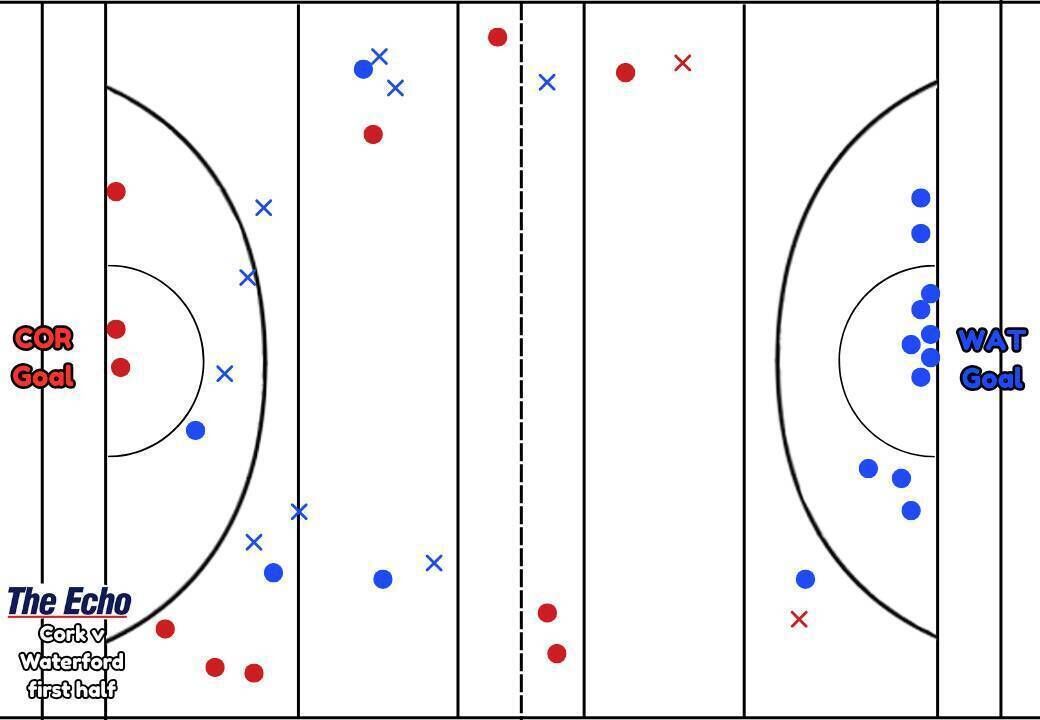
Waterford’s raw totals don’t look that awful by the numbers – 26 of 39 puckouts retained isn’t woeful – but it requires context that the puckout maps give us.
When the game was quickly slipping away and the Déise were under intense Cork pressure, the vast majority of those restarts from Billy Nolan went short. Any ambition to go long had already been abandoned by the time Cork had raced 0-9 to 0-1 in front. Waterford finished the first half having retained just four of their 13 restarts to go beyond the 65.
Twelve of their first half restarts were short, and the latter act followed a similar pattern as they had no answer for Cork’s aerial dominance and middle third control.
Three of seven restarts beyond Waterford’s own 65 were retained. The remaining seven struck by Nolan in the second half went short.
Waterford’s conservative strategy was a symptom of the imbalance between the teams rather than any solution to combat it, such was Cork’s control.
The first half set the tone, especially as Cork turned almost every possession into a converted scoring chance in those opening 12 minutes.
After the break, Cork tightened the vice further. Waterford dropped to 10 from 14 on their own restarts – still short by necessity – and still contained by Cork’s shape and pressure.
Cork, meanwhile, continued to secure their own ball efficiently, Patrick Collins as close to perfect as you’ll get not only for the quality of his deliveries, but for his decision making and which option to take.
He made several decent saves, too.
Certainly, Collins was not far off the man of the match award that William Buckley received.
Credit too to Cork’s half back line – Mark Coleman in particular – as well as Darragh Fitzgibbon in midfield, for continuously finding space and giving Collins a plethora of options to choose from.
Waterford’s short puckouts may have boosted their retention figures, but they came at a cost of almost no forward momentum and minimal chance creation. The majority of their scores came from placed balls.
It may only be the tail end of January, it may have been a complete mismatch, but take nothing away from how Cork conducted themselves on the puckout front.
We’ll wait and see how the next couple of months play out, but, either way, it’s a promising start.








 App?
App?


