What if inter-county hurling had an NFL style draft?
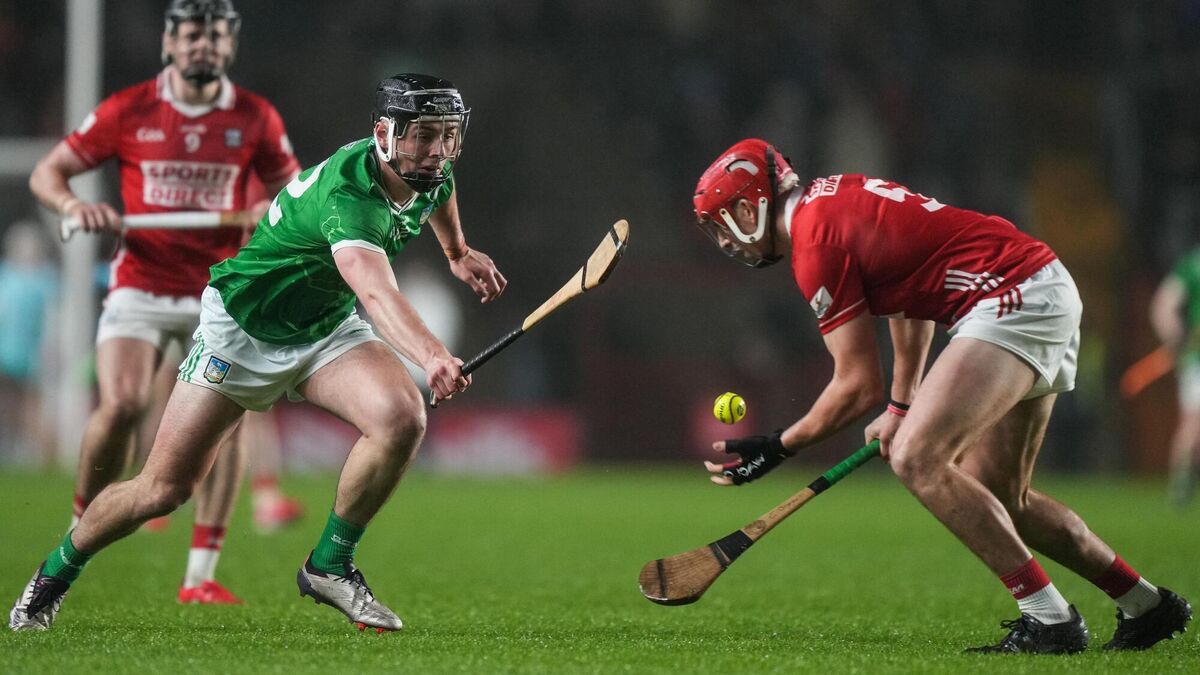
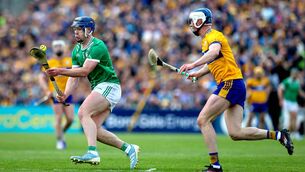
Aidan O’Connor of Limerick battles with Ciaran Joyce of Cork during their Division 1A Hurling League fixture in 2025. Picture: ©Inpho/James Lawlor
Imagine an inter-county hurling landscape stripped of birthright and geography.
A fully professional game. Squads constrained by wage caps. Counties no longer inheriting talent, but instead, acquiring it through scouting, trading and getting their draft calls right.
Obviously, this is utterly sacrilegious for the GAA and would decimate clubs, the foundation and bedrock of the games we hold dear. But nonetheless, it is an intriguing though experiment.
And if you were to build a professional GAA from scratch, there is one model that fits far more neatly than European football’s free-market chaos.
The NFL.
You could model a professional hurling scene on soccer, with transfer fees spiralling and underage structures acting as county academies. But that only retains the existing pecking order, until such a time when a billionaire decides to parachute into a weaker county and bankroll success.
That problem doesn’t exist in the NFL, though. Instead, competitiveness is completely manufactured.
There are 32 teams in the NFL. There are 32 counties in Ireland. All 32 already contest hurling competitions. Fitting, one might say.
For the sake of the exercise, London, Warwickshire and Lancashire fall away. In a fully professional landscape, they wouldn’t be required, anyway.
Player movement would happen in three ways – free agency, the draft, and trades. Counties could sign players whose contracts had expired, draft incoming talent, or trade players and draft picks with one another.
Trades are where the strategy comes in.
A county close to contention might sacrifice future draft picks to land an established star. A county staring at a rebuild might do the opposite, trading away elite talent to stockpile picks and reset.
Strong counties could not hoard indefinitely. Weak counties would be given mechanisms to rise, leaving dominance much more scarce.
The salary cap is the keystone.
Every county operates under the same fixed limit. Spend too much on one position, and something else suffers. Let sentiment cloud judgement, and the numbers punish you.
The cap forces hard calls. And over time, it pulls the entire competition back towards equilibrium.
The draft itself is simple. Finish bottom, pick first. Finish top, pick last.
Struggling counties get first access to the best talent. Successful counties must live with the consequences of that success. If you wanted true balance, you could even scrap the tiered championship system entirely, 32 counties, eight groups of four, top two through to the knockouts.
As for the talent pool, the U20 championship fits perfectly. One final chance for players to represent their native county, before entering the professional marketplace.
So take 2021 as a test case.
Cork were U20 champions, having beaten Galway in the All-Ireland final after overcoming Limerick in Munster. With hindsight, we know which U20s from that season would go on to thrive, and who wouldn’t.
Draft order would follow senior results. Monaghan, bottom of the Lory Meagher Cup, would pick first. All-Ireland champions Limerick would pick 32nd. Then the cycle repeats.
And suddenly, the first round looks something like this.
Ciaran Joyce (Cork) –
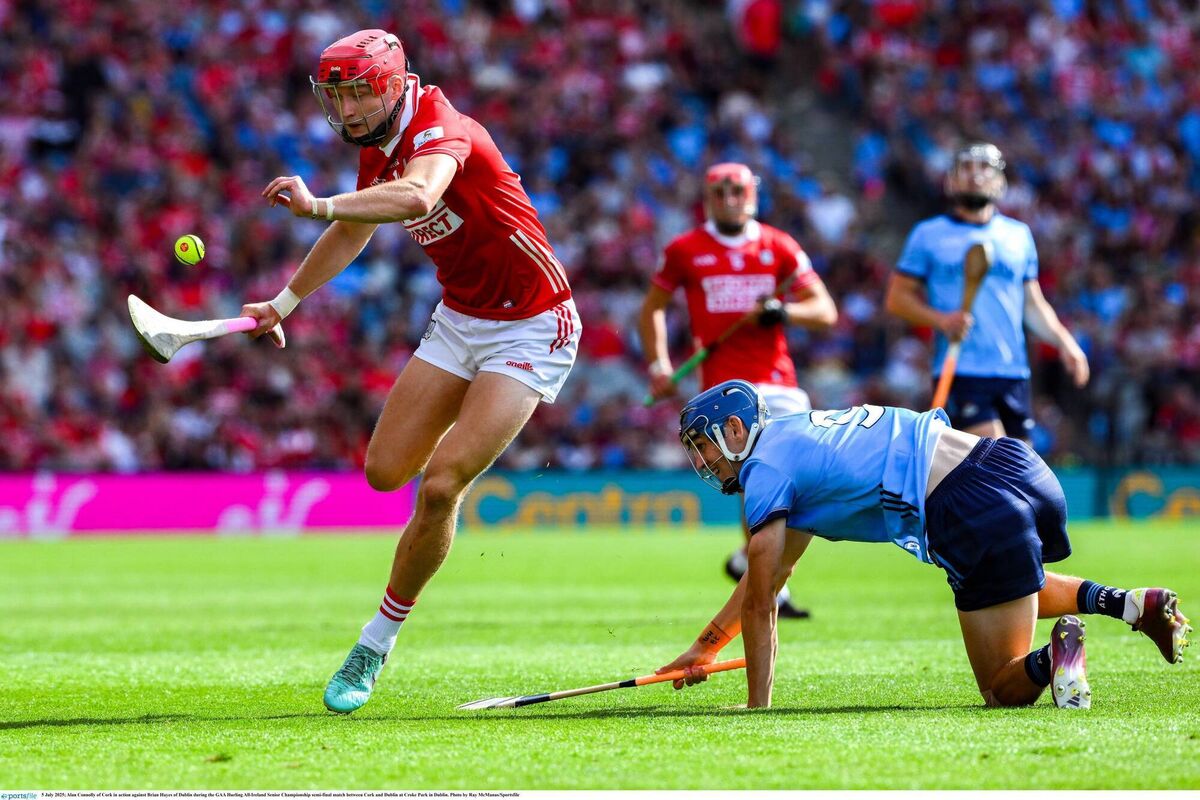
Alan Connolly (Cork) –
Shane Barrett (Cork) –
Cathal O’Neill (Limerick) –
Padraig Power (Cork) –
Adam English (Limerick) –
Sean Neary (Galway) –
Michael Kiely (Waterford) –
Darragh Flynn (Cork) –
Kevin Maher (Tipperary) –
Donal O’Shea (Galway) –
Sam Quirke (Cork) –
Devon Ryan (Tipperary) –
Diarmuid Hegarty (Limerick) –
Max Hackett (Tipperary) –
Brian Hayes (Cork) –
Jack Cahalane (Cork) –
Diarmuid Kilcommins (Galway) –
Ethan Twomey (Cork) –
Adam Hogan (Clare) –
Brian O’Sullivan (Cork) –
James Duggan (Laois) –
Robbie Cotter (Cork) –
Cormac O’Brien (Cork) –
John Cooney (Galway) –
Daire O’Leary (Cork) –
Aidan O’Connor (Limerick) –
Jack Leamy (Tipperary) –
Kevin Moynihan (Cork) –
John Campion (Tipperary) –
Dara Purcell (Dublin) –
Paddy Rabbitte (Galway) –
The top six picks would turn out to be great choices, of course. But as the round wears on, luck creeps in. Development, environment and injuries all begin to matter.
Kerry and Kildare, in particular, would certainly be pleased with how things turned out by the end of 2025.
Although, Ciaran Joyce, Alan Connolly and Shane Barrett may not be too happy with their arrangements.
But, if their teams continue to struggle for say, three or four years, suddenly they’re joined by the top draft picks over the next few seasons. The likes of Billy Drennan, Ben Cunningham, Shane O’Brien, Adam Screeney, William Buckley, Diarmuid Healy and so on.
And like in the NFL, the second round of draft picks would be crucial, plenty of gems can be found there, too.
The likes of Tipp's Kian O'Kelly and Clare duo Shane Punch and Conner Hegarty would probably find themselves selected by the weakest teams early in the second round after their 2021 perforamnces.
Rory Furlong, half-back with Waterford's U20s that season and a Fitzgibbon winner with UL in2023, would turn out to be a second round steal for whoever acquired him. As would Daniel Hogan of Sars and Charlie Mitchell of Offaly, for teams like Fermanagh or Cavan.
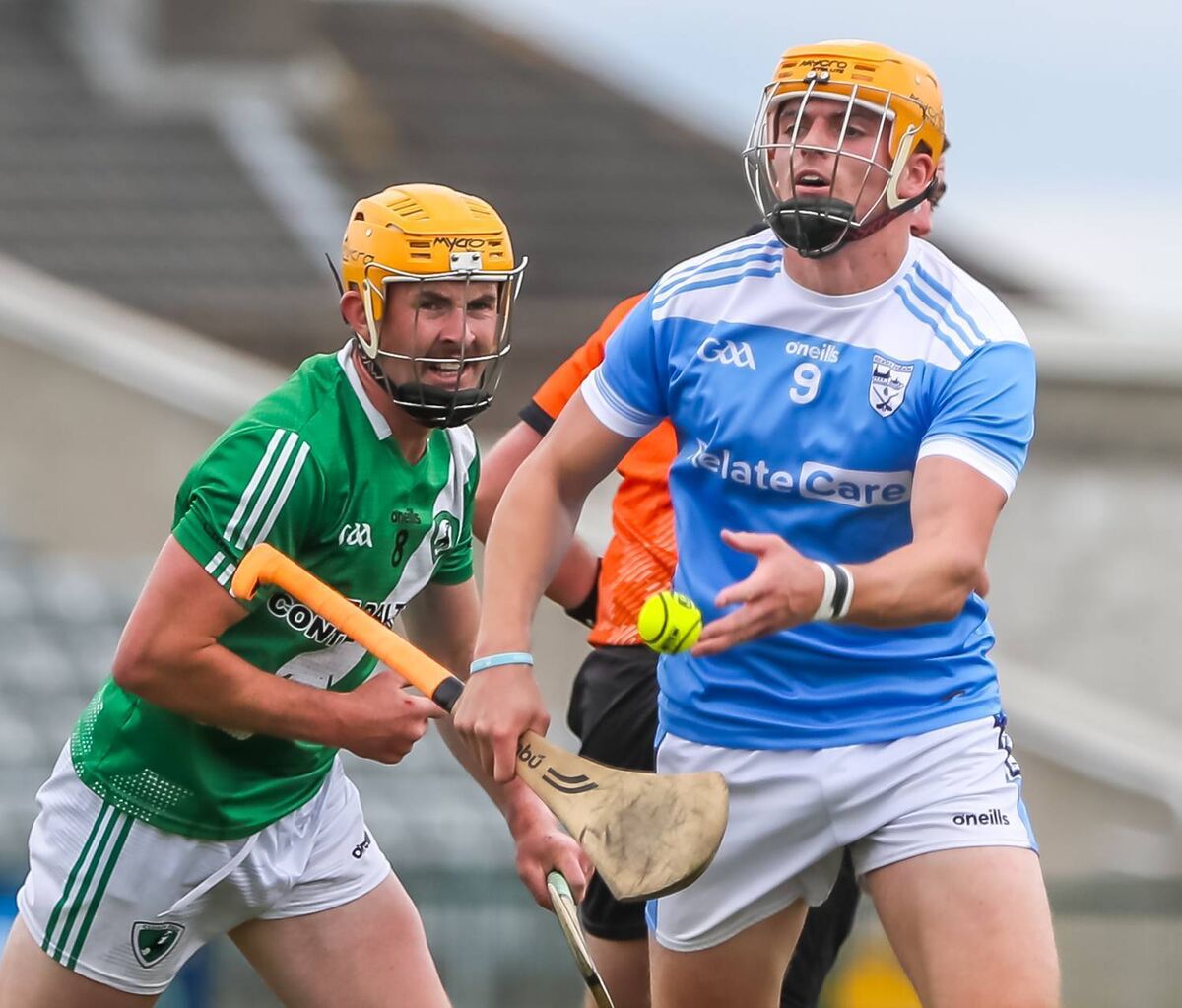
Suddenly, they're contending alongside Monaghan and Leitrim.
And that, perhaps, is the point.
Not to imagine a GAA without clubs or counties, but what potential exists in some strange – possibly even ugly – alternate universe.




 App?
App?


