Squad depth key for Jamie Wall as another Fitzgibbon Cup campaign looms

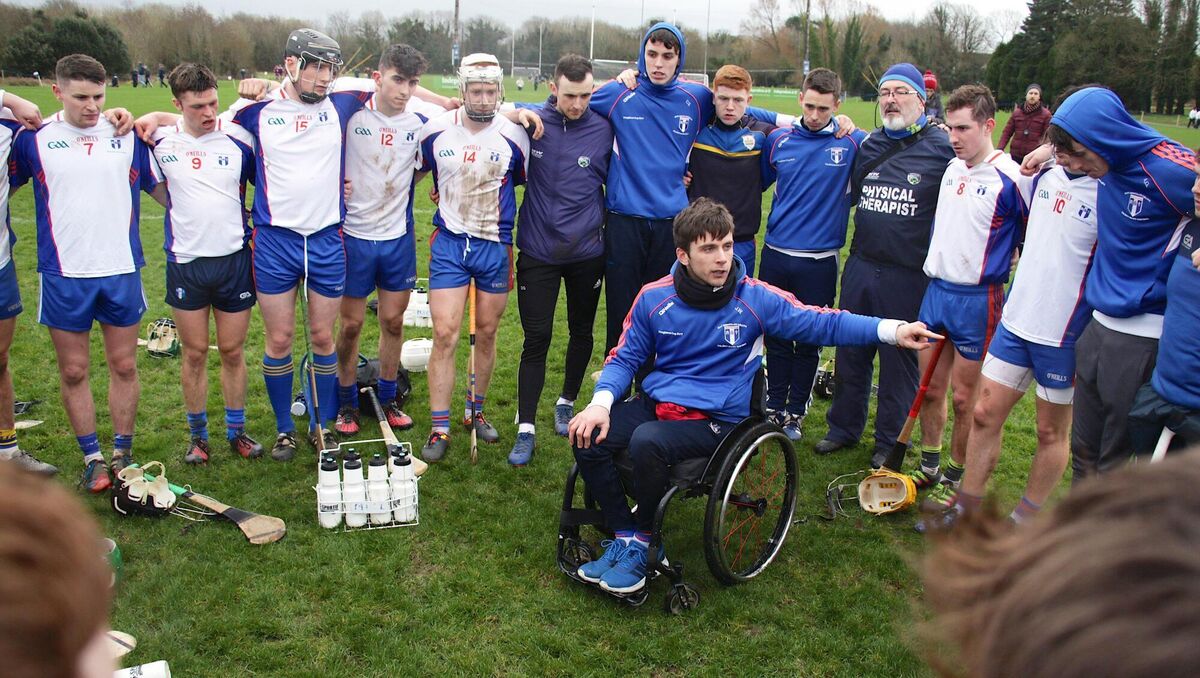
Mary Immaculate College manager Jamie Wall. Picture: Piaras Ó Mídheach/Sportsfile
While he is just 33, the current academic year is Jamie Wall’s tenth in charge of the Mary Immaculate College Limerick senior hurlers.
A new Electric Ireland Fitzgibbon Cup campaign begins tomorrow with a home game against SETU Waterford, with the Kilbrittain native's previous eight campaigns (there were no third-level championships in 2020-21) yielding two titles and a final appearance.
Having a deep squad is a requirement rather than a luxury nowadays.
“Most of the competitive colleges have about ten lads knocking around county panels - UL obviously have considerably more than that – and you don't actually worry about them,” Wall says.
“You know they’re fine and you trust the managers that those lads will come back to you in good nick.
“What we need to do is to make sure the other ten or 12 lads who are hoping to feature, that they're ready to go. That’s why a big thing for us in the last couple of years has been pushing the strength of the panel.
“I think back to our first Fitzgibbon team, we weren't as concerned about the lower end of the panel in terms of quality - it was really more about good characters. Now, it’s both – they have to be able to play, too.
“Your number 34 or 35 is hugely important now in a Fitzgibbon tilt because he dictates what you can do in December and January. It really is a squad game now.
“You’re trying to impress that on young fellas too, because if these lads do go on to play for counties, they need to understand that too. The quality of your All-Ireland champions very often comes down to what are they getting throughout the year off the rest of the squad.”
Having players with county squads can be a blessing or a curse, though new rules this year limit college players’ involvement in pre-season competitions.
Managing access can involve a balance but it’s something Wall approaches in an open manner
“You're not even blaming inter-county managers either,” he says, “because the pressure that they're under is huge and they have to hit the ground running.
“If any county goes out and loses their first two league games, there's a big crisis. That's just the nature of the world today.
“The thing is, at this time of year, you just have to get a little bit of luck at the start of the Fitz and then you nearly build your team as it goes on.
“I think the team that wins the Fitzgibbon, and this is something that hasn't changed, has fellas with very high numbers playing in the semi-final and final.
“A bit of interaction goes such a long way. It's funny, you kind of get a feeling every year about the vibe you're going to get and this year the vibe has been better. “You can say, ‘Right, let's work together for the betterment of the player.’
“Because I do still believe, and I'll always firmly believe, that the competition is so worthwhile as a testing ground for fellas - when a championship game is there to be won, what does he do?”
“I think that's a huge thing that the Fitzgibbon really does show you. I just always think, if you go down and you see a fella and if he can do it in the Mardyke or he can do it up in Dangan, that’s a huge indicator that he’s capable of the next step.
“We've all seen guys in the vast, kind of open spaces of a league match and the level of hurling is so high, great – but what is the level of competition like? Is there a fella out there fighting for his life in that game, like there is in the Fitz? That's the question.”










 App?
App?


