Reardens All-Star hurling team honours players from six different clubs
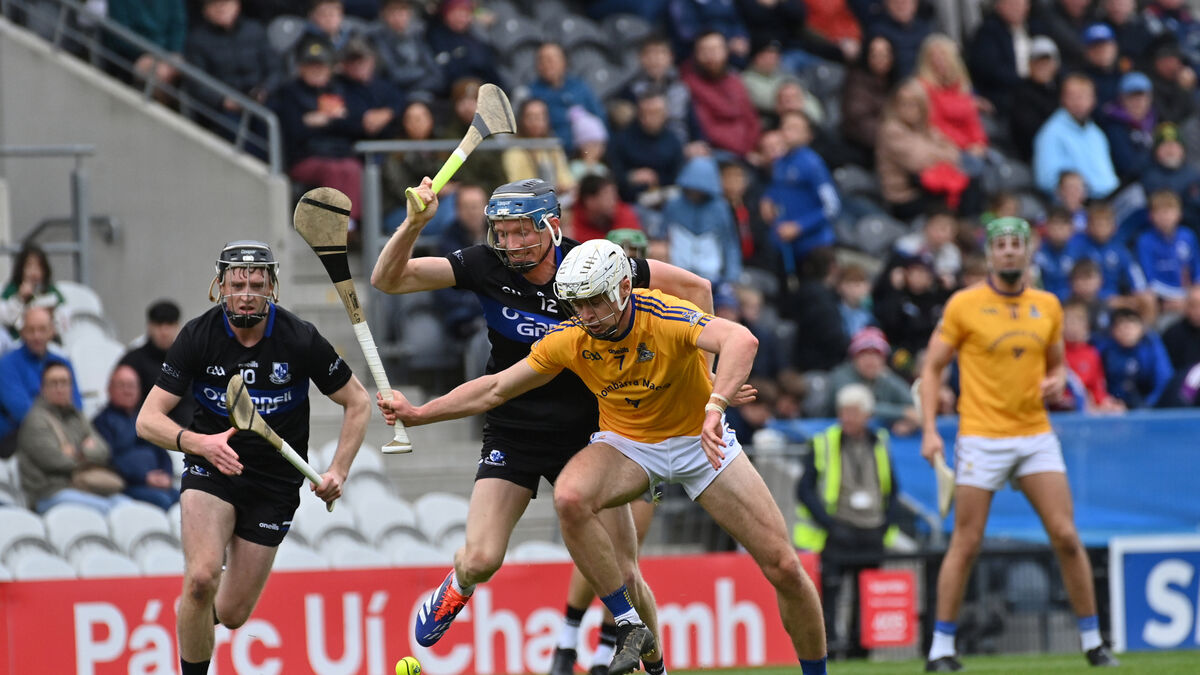
Sarsfields' Cian Darcy battles with Ciarán Doolan of St Finbarr's during the Co-op SuperStores Premier SHC semi-final at SuperValu Páirc Uí Chaoimh as Jack O'Connor anticipates the break - all three players feature in the Reardens All-Star hurling team. Picture: Dan Linehan
Any end-of-year composite team, honouring the best players in a given season, is accompanied with a general expectation that it should align with a quota of sorts.
The champions, having shown themselves to be the best, deserve X number of players; the beaten finalists X minus two or three, with the semi-finalists and perhaps quarter-finalists then given some to round out the selection.
It’s a nice theory but, as ever, events dictate matters, as seen with the 2021 All-Star hurling side, where Limerick claimed 12 of the 15 places and Cork, despite reaching the All-Ireland final, had none. By the same token, Cork won that year’s All-Ireland minor hurling, beating every opponent by at least ten points, and the nine spots given to them on the team of the year was harsh, if anything.
Just because Cork received only four of the 15 placings on the 2010 All-Star football team didn’t mean they didn’t deserve the All-Ireland; instead, the selection is 15 independent snapshots rather than a rating of a given team’s campaign.
To illustrate that, look at Charleville in 2024 and 2025. Last year, they had one player on the Reardens All-Star hurling team despite ending up in the relegation play-off, with Tim Hawe rewarded for a prodigious goalscoring output.
In 2025, they won two group games and gave eventual Sarsfields a huge test in the quarter-final – Jack Callaghan at midfield was picked on the team after a series of fine performances but it’s not to say that they were not a far more formidable overall output than they had been in the previous campaign.
And yet, as it happens, this years team did fall nicely in terms of representation reflecting how far a team went. Along with Charleville, the other side defeated in the quarter-finals were Glen Rovers – Patrick Horgan scored 2-9 in that loss to Midleton and it wasn’t even his biggest personal tally in the championship, having notched 2-10 against Sarsfields.
St Finbarr’s exited at the semi-final stage, defeated by Sars – throughout a campaign that saw them dethrone Imokilly with a fine performance, their two most consistent performers were in defence.
Damien Cahalane is no strangers to Reardens teams in either code and he once again displayed his defensive qualities, shining even in defeat to Sars, while Ciarán Doolan continued his impressive progress of recent times.
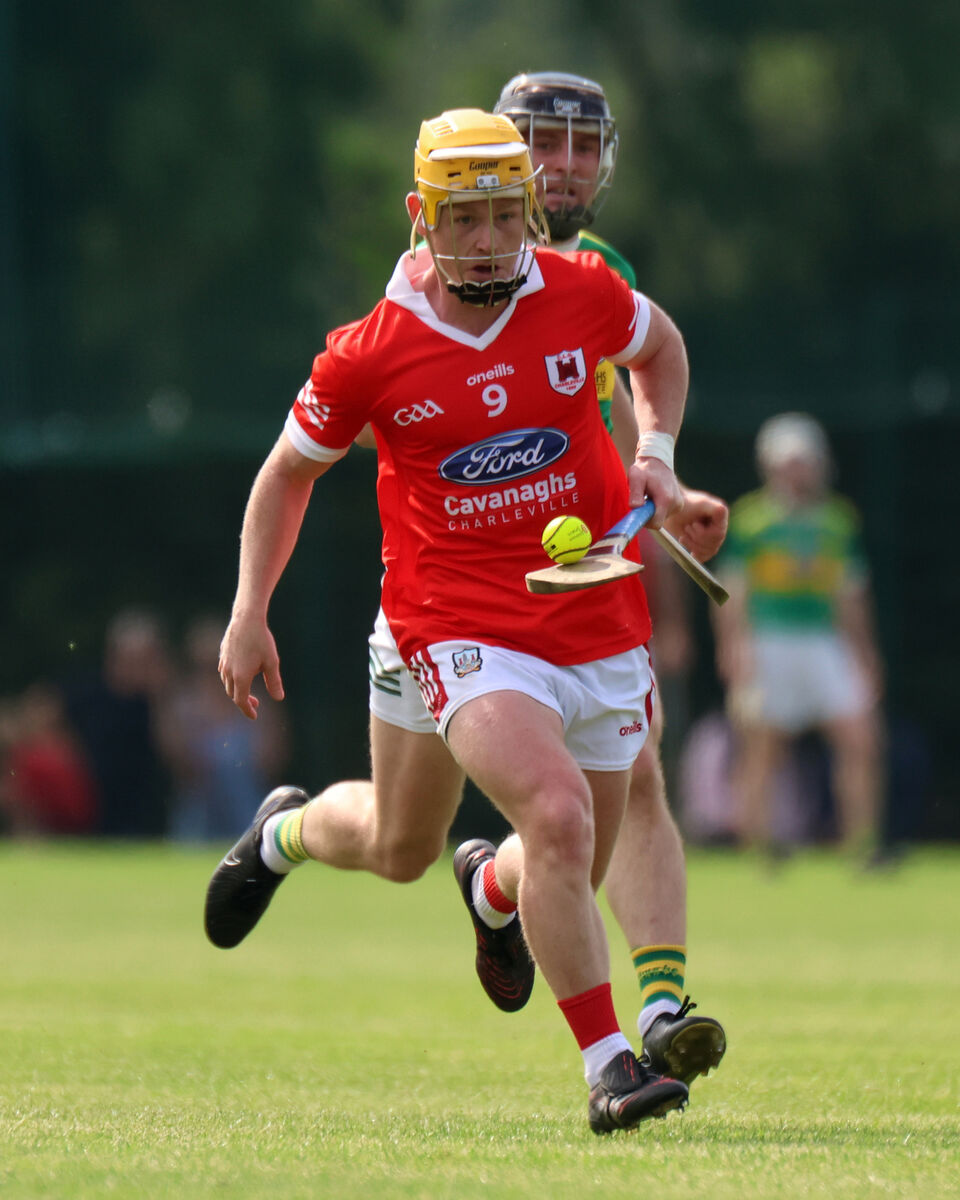
Doolan is chosen at wing-back and on the other wing is another player who exited at the semi final stage, John Cashman of Blackrock, who was to the fore as the Rockies booked an automatic last-four spot with a strong group-stage showing and then came so close to getting the better of Midleton. Across four matches, Michael O’Halloran finished with 3-13, all from play, illustrating a varied attacking threat.
Key to Midleton getting to the semis and then overcoming the Rockies’ challenge were the performances of Eoin Moloney in defence and Conor Lehane in attack – then, their injury-enforced absence for the final made Sars strong favourites, a status they backed up well.
Along with that duo, Mikey Finn was a constant bundle of energy, and, with Lehane out, the midfielder – still only U21 – was entrusted with dead-ball responsibility for the decider.
Two singles, a pair and a trio make nine, leaving six other spots and they are occupied by a Sarsfields sextet. Starting as ante-post favourites, the Riverstown side came into the championship on the back of a third straight league title, having last lost a championship game to a fellow club side in 2022.
That defeat had come against St Finbarr’s and it was the Barrs who came closest to denying Johnny Crowley’s side but Sars came through that test by a point – having trailed by six at half-time – and then had seven to spare against Midleton.
Goalkeeper Ben Graham built on the strides made in last season’s run to the All-Ireland club final, while captain Conor O’Sullivan - winning a sixth medal – showed that longevity is no bar to excellence.
Kerry native Bryan Murphy was deployed at centre-back for the latter stages of the championship and was flawless, while in attack Cian Darcy’s strong running from wing-forward was a valuable asset – his displays earned him a call-up to the Cork panel.
In the final, James Sweeney and Jack O’Connor shone brightest in attack, reflecting how they had fared throughout the run to more Seán Óg Murphy Cup glory.
As with the national selection, we would suggest it is a team where nobody could be said to be a tokenistic selection – and, equally, nobody could be said to have been unfairly omitted.



 App?
App?


