Remembering Barry McGann: Cork sporting prodigy who chose rugby over Man United
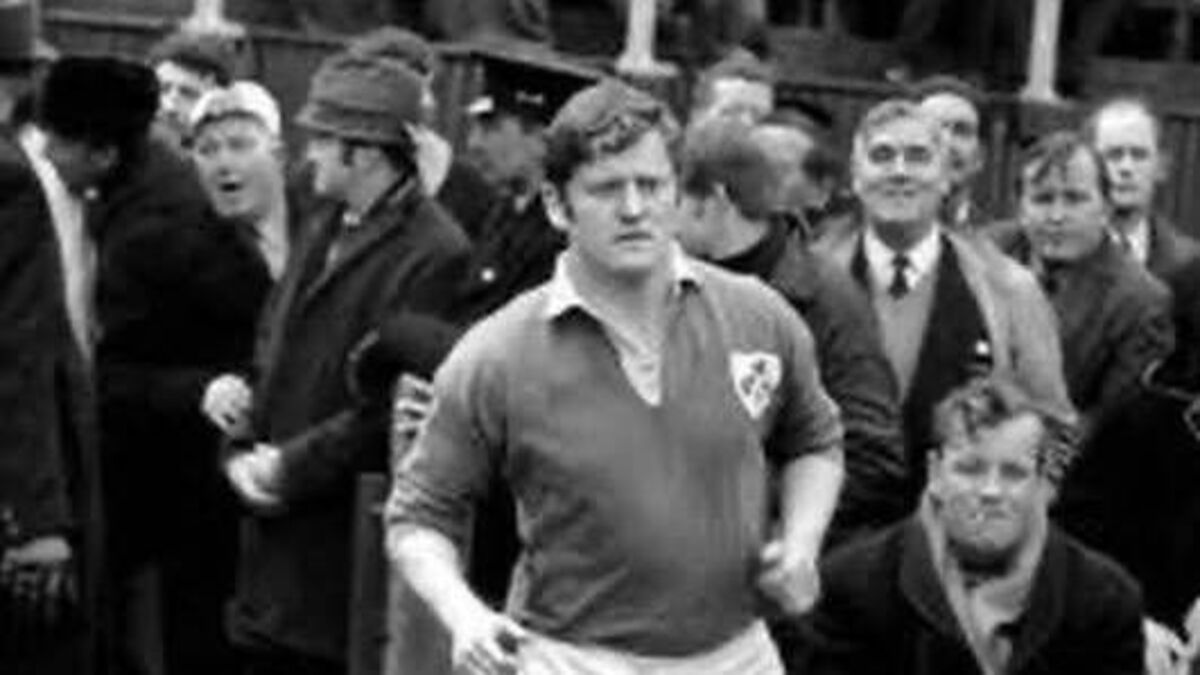
Barry McGann taking the field for Ireland.
He dazzled Irish schoolboy soccer, faced Johan Cruyff, and twice refused the lure of Old Trafford. Yet Barry McGann chose rugby, and became one of Ireland’s most gifted out-halves.
Following his passing in November, we revisit the remarkable career of a man who could have been a star in two sports.
Sporting history is filled with 'what if?' stories, those rare prodigies who could have reached the summit in more than one discipline.
Irish sport in particular has seen a conveyor belt of multi-talented youngsters forced to choose between their competing gifts.
EXTENSIVE
The roll of honour is extensive: Tomás O’Leary, Shane Long, David Meyler, Jason Sherlock, Chiedozie Ogbene, Denis Irwin, Niall Quinn, Dessie Hutchinson, Dinny Allen, Dave Barry, Tony Ward, Mick Galwey, and Moss Keane to name but a few.
Yet, curiously absent from many such conversations is Barry McGann — the former Ireland out-half who died last month, and who, at one time, was courted by none other than Manchester United.
Had he chosen differently, McGann might have been greeting Kevin Moran at Old Trafford in 1978 rather than watching him arrive from afar.
But by then, the Corkman had already carved out a distinguished rugby career, leaving behind a soccer pedigree that was every bit as luminous.
Barry J McGann was born into a family steeped in Gaelic football.
Educated at St Joseph’s in Cork during the 1950s, he followed brothers Seán and Diarmuid into the famed Mardyke academy, both of whom would go on to play senior football for Cork.
He starred with the St Joseph’s team that captured the Sciath na Scol title in 1961, young McGann seemed destined to continue the family tradition.
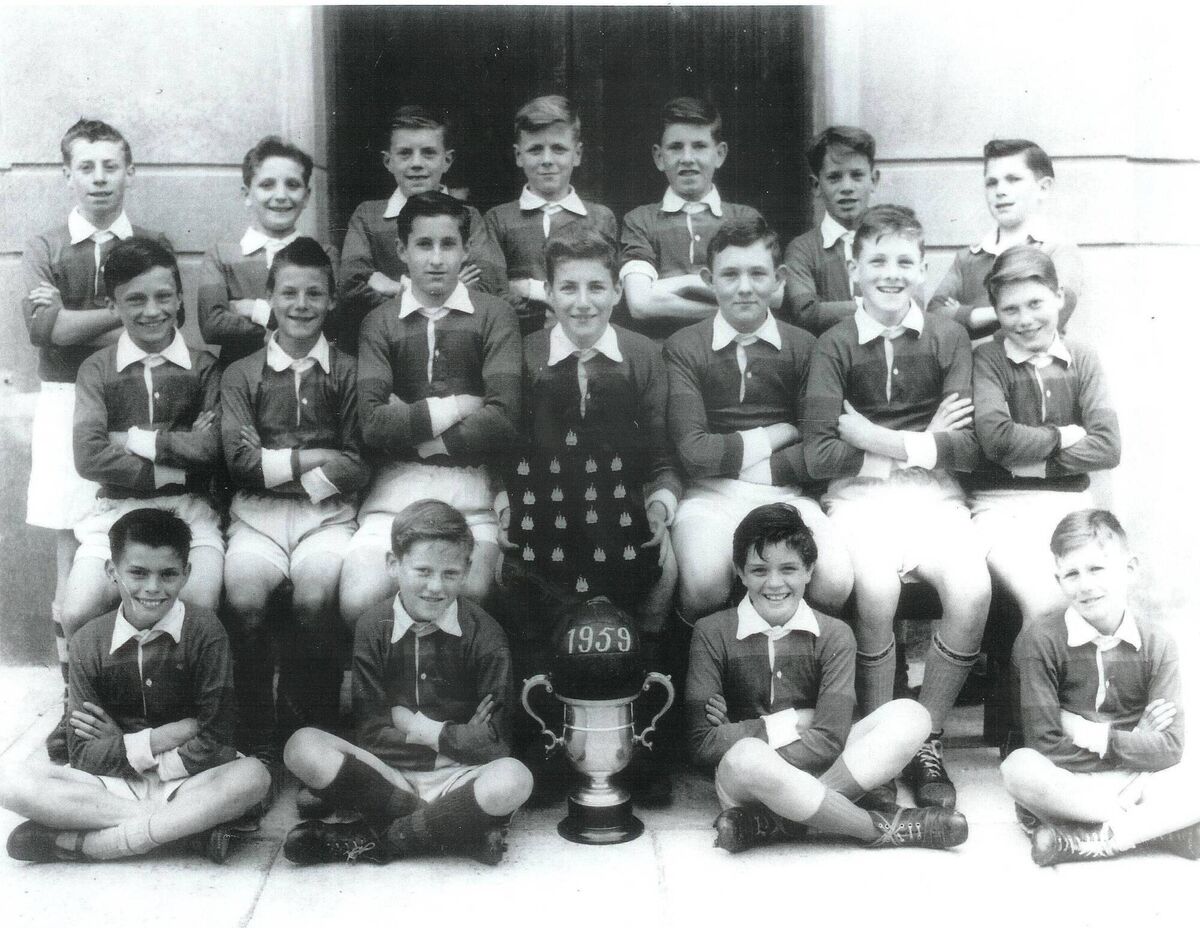
But a move to Presentation Brothers College changed everything.
At Pres, rugby was king, and McGann found himself drawn irresistibly to the oval ball. Simultaneously, however, he was blossoming into a soccer prodigy with Glasheen.
His performances quickly attracted the attention of Manchester United captain Noel Cantwell, another St Joseph’s alumnus, who was instructed to invite the Cork teenager for a trial at Old Trafford.
For almost any schoolboy, such an invitation would have been the stuff of dreams.
But McGann, now immersed in PBC rugby culture, declined. That decision cost him a schoolboy international soccer cap shortly afterwards: on the day of the trial match, he chose instead to line out for Pres in junior rugby.
If that disappointment lingered, it did not last long.
McGann captained PBC to victory in the Munster Junior Schools Cup, before leading the seniors to the Munster crown in 1966 on a team that included future Ireland captain Donal Canniffe and future Grand Slam-winning coach Declan Kidney.
Though rugby was gaining his loyalty, McGann’s brilliance with a round ball had not faded.
Glasheen were thrilled to welcome him back for the latter stages of the 1966 FAI Youth Cup, and his impact was immediate.
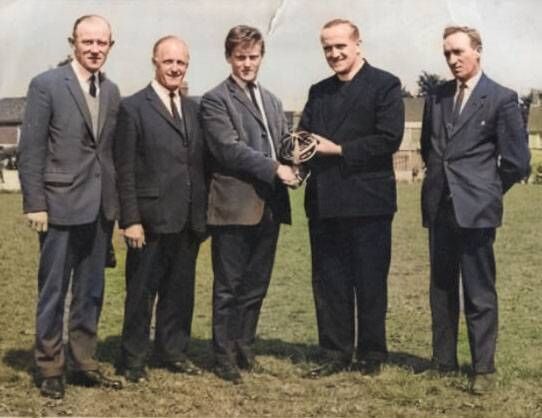
He scored twice in a 4–1 semi-final win over Young Elms at Milltown, including a dazzling solo goal that lived long in the memory: winning the ball in midfield, slaloming past a series of defenders, drawing the goalkeeper and slipping the ball to the net — a finish straight from the pages of Roy of the Rovers.
Recognition
At Flower Lodge, he helped Glasheen to their sixth national title, prompting belated recognition from international selectors.
In the UEFA Youth tournament that followed, he played against Holland and was marked by a young Johan Cruyff — a detail that, given the rugby career to come, would be relegated to a scrapbook clipping.
That same year he played in a Denis Law XI testimonial at Flower Lodge.
Again, the offers followed. Again, he declined an invitation to Manchester. Soccer, for all his gifts, was not his future.
Though he did make a brief appearance in the League of Ireland with Shelbourne in the 1968–69 season, the shift toward rugby was now complete.
After leaving PBC, McGann signed for Cork Constitution, and his impact was instant. In his first full season, Constitution regained the Munster Senior Cup in 1967, beating Highfield in a replay.
McGann, still barely out of school, kicked all 12 of Constitution’s points across the two matches.
Business commitments took him to Dublin in 1969, and Lansdowne secured his signature. His form there accelerated his rise into the national squad.
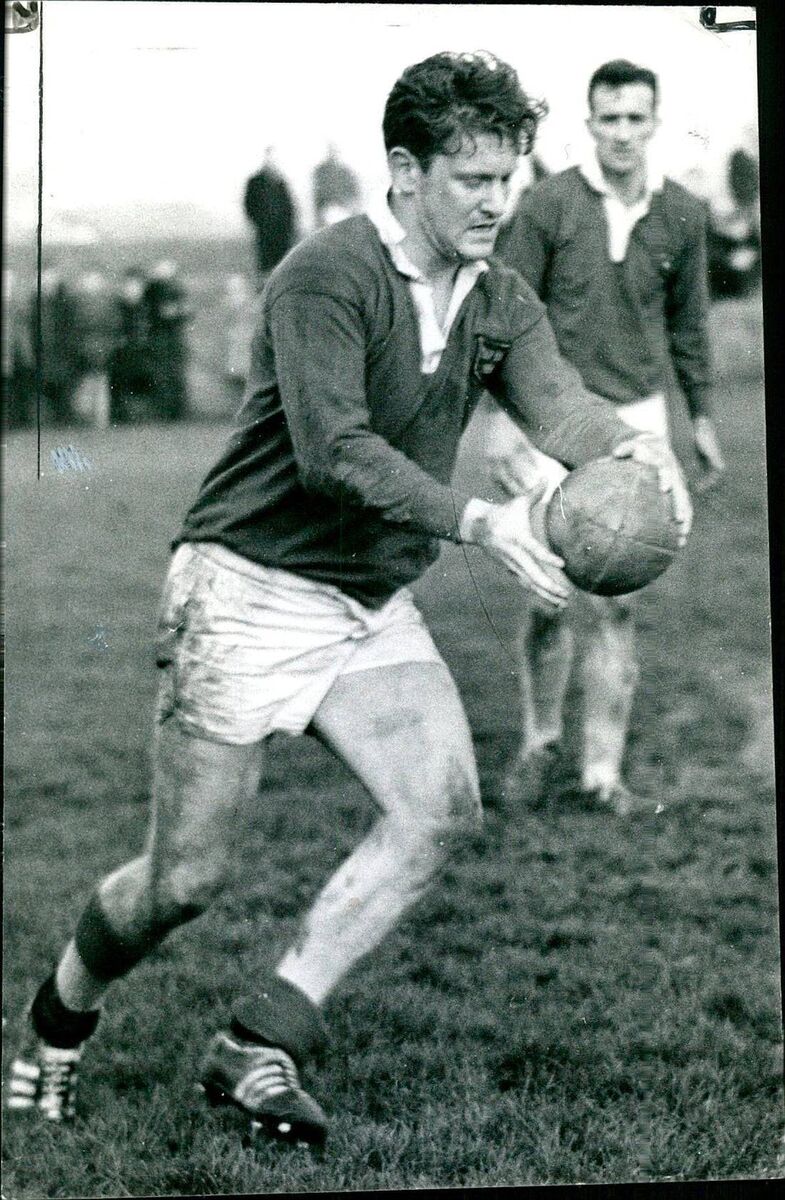
When Ireland’s great out-half Mike Gibson withdrew injured before a Five Nations clash with France, McGann was drafted in.
His debut was outstanding, guiding Ireland to a 17–9 victory. Even when Gibson returned, McGann retained the No. 10 jersey, with the Ulster maestro moving to centre — a switch that would help cement Gibson’s reputation as one of the finest centres in world rugby.
An international career of style and substance, McGann’s international career spanned 25 caps between 1969 and 1976, yielding 60 points through tries, conversions, penalties, and drop goals.
PEAK
In an era without World Cups or regular fixtures against second-tier nations, such numbers represented a significant haul. He faced the best: France, England, Scotland, Wales, New Zealand, and Australia.
His most celebrated performance came in 1973, when Ireland drew 10–10 with a Grand Slam-chasing New Zealand side at Lansdowne Road.
With seven minutes remaining and Ireland trailing by seven, McGann orchestrated a dramatic comeback.
His conversion from near the touchline in the dying seconds shaved the wrong side of the post by inches — a kick that would have given Ireland victory.
Even in disappointment, his excellence was undeniable. The Independent hailed him as man of the match: “His near miss detracts not an iota from the sheer splendour of his overall performance… surely one of the game’s greatest kicking half-backs, with superb defensive qualities as well.”
McGann returned to Cork Constitution in 1970 and added three more Munster Senior Cup medals to his collection.
Though sometimes described as portly, he possessed deceptive pace, impeccable distribution, and a magical kicking repertoire that made him a constant match-winner.
His final Irish appearance came against the All Blacks in Wellington in 1976, closing a distinguished international chapter.
A life of what-ifs answered by what was. In remembering Barry McGann, it is tempting to dwell on the paths not taken: the Manchester United trials he refused, the soccer international caps denied by scheduling clashes, the possibility of a dual-code career. But the career he chose was no consolation prize.
He became one of Ireland’s most gifted out-halves, a footballer in the truest sense, whose instinct, ingenuity and elegance shaped a memorable era.
The 'what ifs' will always linger. Yet what he achieved — in schoolboy soccer, in club rugby, in the green jersey — answers the question more clearly than any speculation ever could.

App?