What Brian Hayes brings to Cork's attack and how Clare limited him in Croke Park

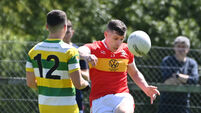
Brian Hayes fires in an excellent goal for St Finbarr's against Charleville. Picture: Larry Cummins.
When Cork lost to Waterford in last year’s opening Munster championship match, Pat Ryan made a clear decision about what direction Cork needed to go, and how they were going to go about getting there.
Drafting in six new players was an extreme risk in the circumstances of such an important fixture against Clare in round 2.
Ryan was still searching for the right balance, but there was a definite change of approach; it was the biggest Cork team in an age; Cork kept their searing pace on the bench.
It didn’t work because Cork lost the game. Still, they showed enough that afternoon to suggest that the team was taking shape, that the overall balance was closer to being what Cork needed.
And yet, one of the key pieces of the jigsaw still wasn’t fitting. Brian Hayes, Cork’s most imposing and biggest player was taken off scoreless that afternoon against Clare.
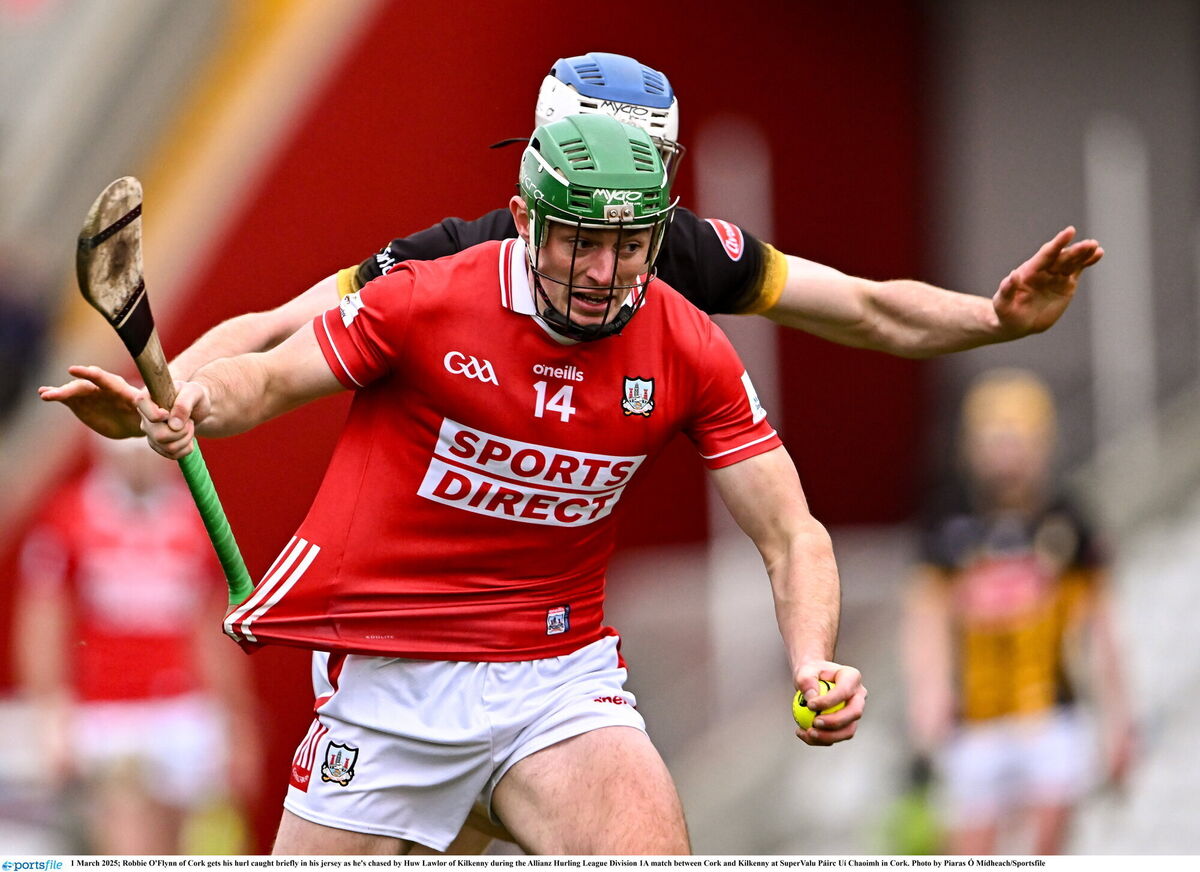
He wasn’t expected to start against Limerick 13 days later. He wasn’t going to, until Robbie O’Flynn pulled his hamstring in training on the Thursday night beforehand. Hayes got a second chance, and took it.
And Cork took off.
Hayes is quick, on the turn and over 10-15 yards, but the reduced role of some of Cork’s fastest players has underlined how much the profile of this side has changed since the start of last year’s championship.
The team looks more physically imposing again now but Ryan has fully realised the vison he always had for Cork - a side with an ideal amalgam of pace, power, size, class and aggression.
Cork still have lethal pace but nowhere near as much as they used to in their preferred starting 15.
Yet two of Cork’s fastest players - Darragh Fitzgibbon and Shane Barrett - were their two standout performers in last year’s championship, accumulating 2-42 from play from 61 shots, as well as having assists for a colossal 40 more scores.
Clare trusted themselves all afternoon, even after Rob Downey’s early goal opened up a horrifying vista of what could go wrong with how Clare were set up man-for-man as opposed to a more zonal defensive set-up.
Not having a second line of cover left Clare more exposed, especially when the Clare half-back line follow their men so aggressively on the opposition puckout.
Yet Clare still believed they would win more of those 50-50 contests than they would lose – which they did.
Shutting down the space around and outside Barrett was also heavily tied into Clare being aerially dominant on the Cork long puckout to limit those secondary opportunities for Barrett, who was limited to just eight possessions in total.
Aggressively matching up man-for-man on long puck-outs also reduced that long option to Hayes, which is where Barrett had done most of his damage off secondary ball.
Clare knew too that Conor Cleary’s power, physicality and ability to try and outmuscle Hayes would limit that option further – which it did.
The biggest lesson Cork learned from that match though, especially around Hayes and Barrett, was allowing too many Clare short puck-outs. Clare were able to work the ball out too easy, but Cork also lost their attacking shape inside trying to tackle from behind.
Hayes had already shown how destructive, and constructive, he could be on long restarts on both days against Limerick last summer.
In the first half in Páirc Uí Chaoimh in May, Hayes was centrally involved in Seamus Harnedy’s goal, which he flicked down to Barrett, while he also set up a goal chance for Barrett, and had another goal chance himself, both of which were saved by Nickie Quaid.
Early in the second half of the All-Ireland semi-final, Hayes moved to the top of the D for Cork’s long puck-out and it yielded two points in four minutes.
Hayes was a key instigator of the havoc Cork created on their long puck-out against Limerick – which yielded 3-19 across both games last summer.
Yet he also showed his devastating scoring potential in that semi-final in Croke Park. He scored 1-4, but Hayes could have had a hat-trick; another goal was disallowed after referee Thomas Walsh adjudged, incorrectly, that Alan Connolly had fouled a hand pass to Hayes; minutes later, Hayes’ flick just clipped the crossbar.
The All-Ireland final was a reality check, for Hayes, and the management, but Cork knew what they had – and how destructive Hayes, and everyone around him, could be if they learned from those lessons. Hayes and Cork clearly have this spring.
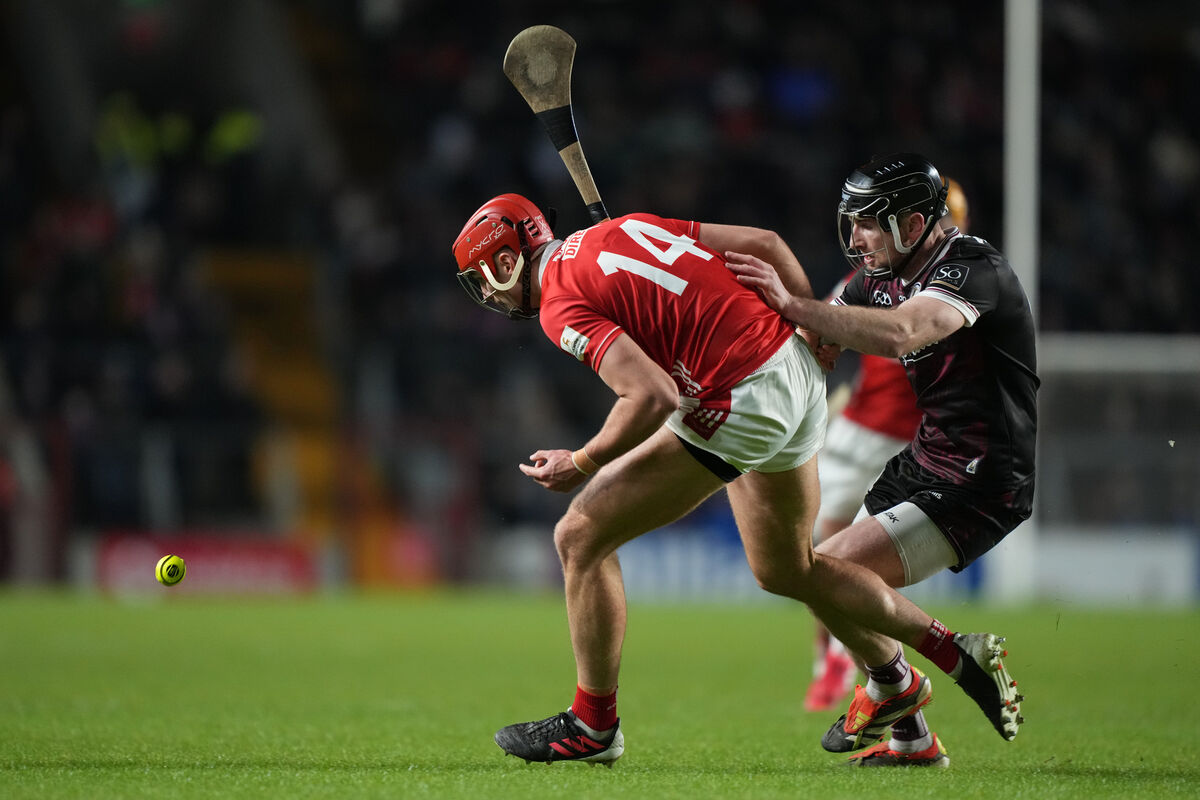
As well as being able to attack the ball in the air and on the ground, who can win it ugly or clean, who can move with menace and pace and imposing power, Hayes can finish with polish and elan. He showed as much last Saturday against Galway with his goal.
Cork have quality and X-factor players all over the pitch but Hayes has the potential to be the difference for Cork this year.
And that’s why everyone in Cork – and genuine hurling people everywhere – were relieved earlier this week when a scan revealed that Hayes’ knee injury was not as bad as initially feared.
Everyone wants to see a player as good as Brian Hayes in the championship.




 App?
App?


