Christy O'Connor on GAA refereeing: Who helps when good officials make bad calls in games?
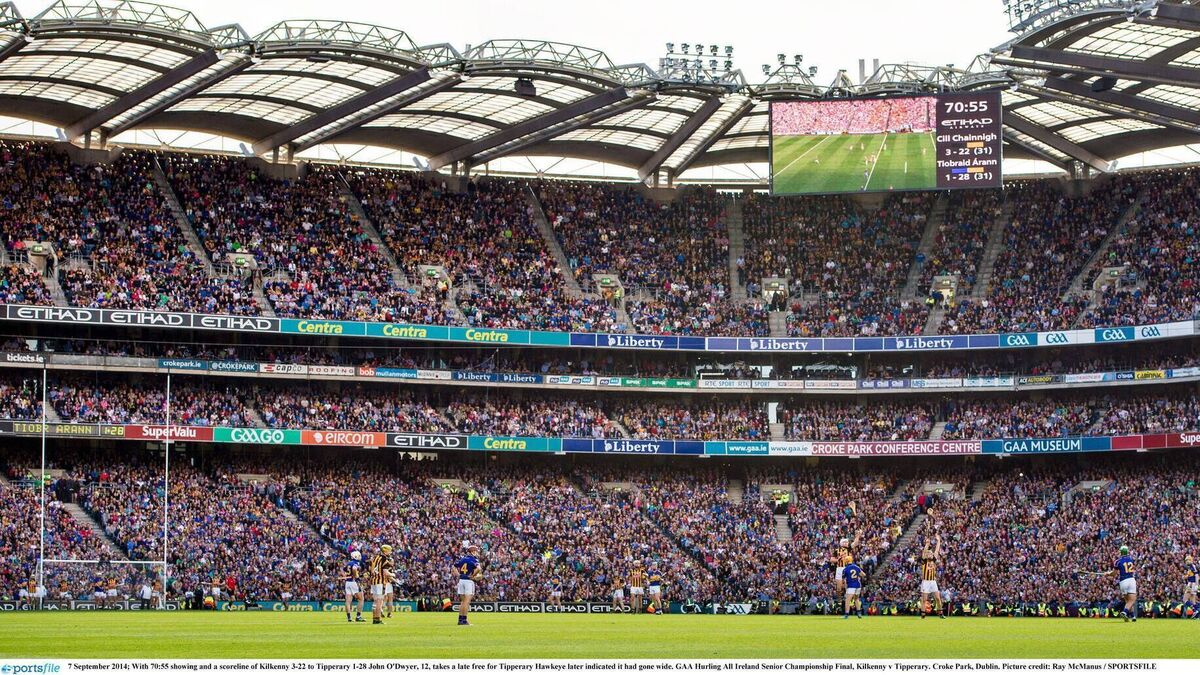
John 'Bubbles' O'Dwyer takes a controversial late free for Tipperary in the 2014 All-Ireland final draw with Kilkenny. Picture: Ray McManus / SPORTSFILE
After the epic 2014 drawn All-Ireland hurling final between Kilkenny and Tipperary, not long after John 'Bubbles' O’Dwyer had missed a last-second long-range free to win the match for Tipp, Michael 'Cosy' Coyle, the umpire who signalled for the decision to go to Hawk-Eye, was introduced to the man who invented the score-detection system.
Coyle shook his hand. “You saved my bacon today,” he said. He had because, no matter what decision Coyle and his other umpire at that Canal End goal, Seamus ‘Sob’ O’Brien, made that afternoon, they’d have been forever hated in either Tipp or Kilkenny.
On the other hand, that vitriol would have been nothing like what would have been served up from Kilkenny supporters to referee Barry Kelly – who had awarded a controversial free in the first place - if that ball had been waved a point.
The ball just went over the post but the Tipperary crowd in the lower deck behind the Canal goal were on their feet, baying for a white flag.
“I was glad it was so tight,” Coyle later recalled to Denis Walsh in “because I could go to Hawk-Eye and rely on it. Last puck of the game and the last decision of the game was left to you — you were going to decide the All-Ireland. . . "
Without Hawk-Eye Coyle said he would have waved it wide, but that would still have left him forever exposed to the wrath of one county who believed that Coyle got it wrong.
Umpires in Croke Park and Semple Stadium have that luxury that umpires in every other ground don’t. Even if an umpire makes a wrong decision now in Croke Park, Hawk-Eye can correct it within seconds.
Still, when an umpiring decision goes wrong anywhere else, the referee is the focal point for all that frustration. After the biggest umpiring faux-pas of the last decade, the infamous ghost-goal awarded to Tipperary against Waterford in the 2018 Munster round robin - when Austin Gleeson was wrongly adjudged to have caught the ball behind the line - all the heat was on the referee Alan Kelly.
Kelly never publicly revealed the impact that decision – which effectively knocked Waterford out of Munster – might have had on him, but David Gough gave an interesting insight last week into how much those wrong decisions can psychologically effect referees.
Speaking on the RTÉ documentary Réiteoir, Gough referred to penalising Mayo’s Conor Loftus at the end of last season’s Connacht final (which led to Galway’s winning point), and the failure to award a free to Kerry in the 2016 All-Ireland semi-final against Dublin.
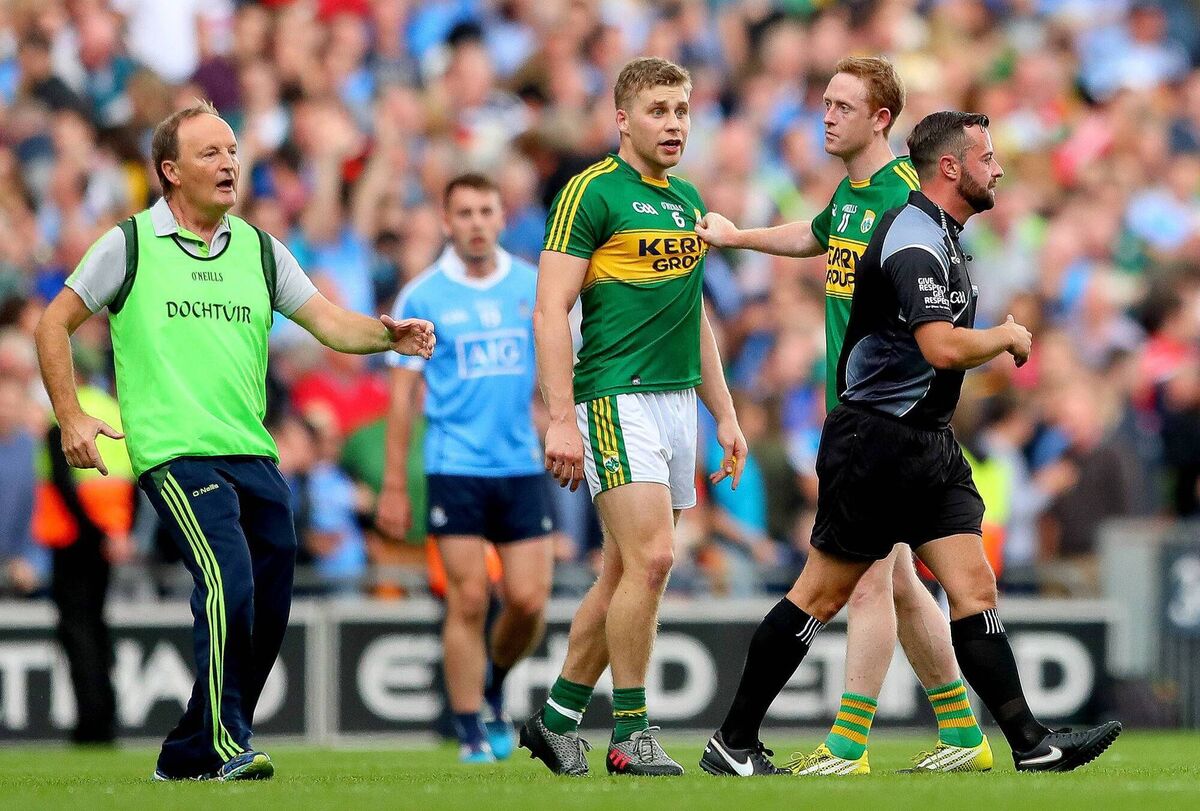
"I gave Galway the free and it was wrong," said Gough. "Mayo deserved it. That was difficult for me and it still bothers me. I am still talking to the psychologist about the negative mindset I have because of that foul and I’m still worried that it will happen again. That’s the second time ever it happened – 2016 and 2024 – and that bothers me a lot."
Referees need to learn and develop coping strategies to help deal with the challenges of officiating, but they also need more psychological supports.
The GAA first recognised as much eight years ago when retaining a professional therapist, Justin Campbell, to counsel inter-county referees.
The burden on referees now is colossal, especially when hurling and football have gone so fast and so physical. “The anxiety is huge,” said Campbell. “Sometimes (it triggers) depression. Some referees – maybe it’s human nature – have a tendency to bottle it up and hold on to it themselves but it's important that the service is there to be able to support them and help them.”
In the documentary, Donal Smyth, GAA National Match Officials Manager, spoke about how the GAA needed to provide even more resources to support the mental health and well-being of referees, which led to the establishment of .
The programme has been driven by Dr Noel Brick and developed with the GAA, specifically for club referees. Just two weeks ago, Brick ran a number of workshops, one of which was titled ‘Performance Psychology for Referees’, at the Ulster GAA Club Referee Conference.
A few years back, Brick was one of four psychologists at the University of Ulster School of Psychology in Coleraine behind a study that highlighted the detrimental emotional impact that verbal and physical abuse has on GAA match officials.
Among the key findings of their study were that 94 per cent of match officials had received verbal abuse at some stage in their careers, while some 23% experienced physical abuse.
The study also highlighted how 48.6% of officials agreed or strongly agreed that abuse made them consider quitting their role. Why wouldn’t referees walk away if abuse is having a significantly negative impact on their mental health and well-being?
Last year, over 600 referees were recruited nationally, but the devil is in the detail around retention numbers; the retention of referees after two or three years has become a serious issue.
Part of the programme is designed to address those concerns, but the best way to improve that culture is to apply more stringent disciplinary measures to all offenders to try and radically change that culture.






 App?
App?


