Cork City's Intertoto Cup run helped change the game forever
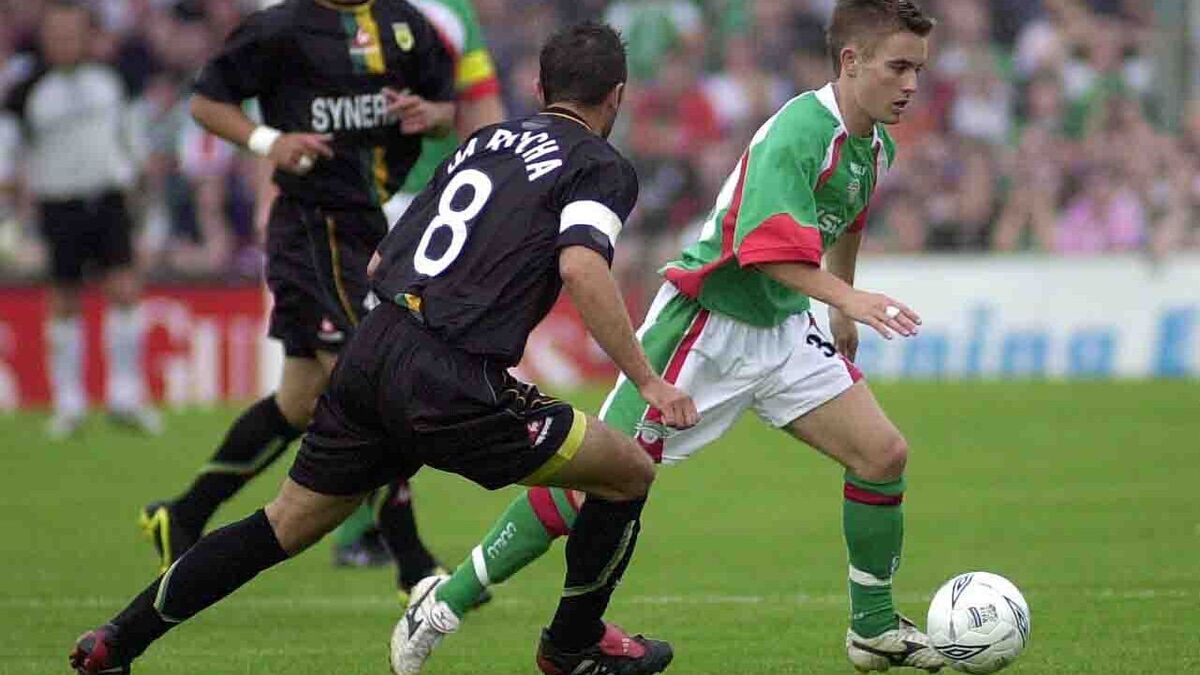
Cork City's, Liam Kearney gets away from FC Nantes Atlantique's, Frederic Da Rocha in the Intertoto Cup quarter-final at Turner's Cross. Picture: Gavin Browne
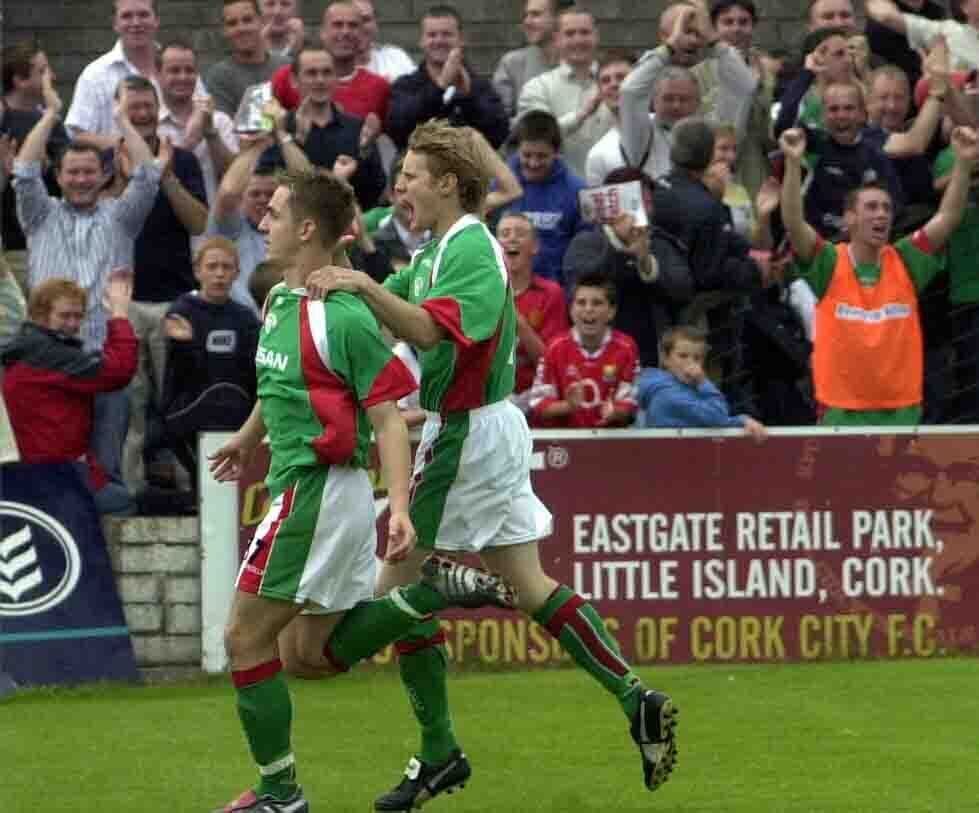
It’s 20 years since Cork City made history by reaching the UEFA Intertoto Cup quarter-final and memories of days out in Sweden, Netherlands, and France are as vibrant as ever on Leeside.
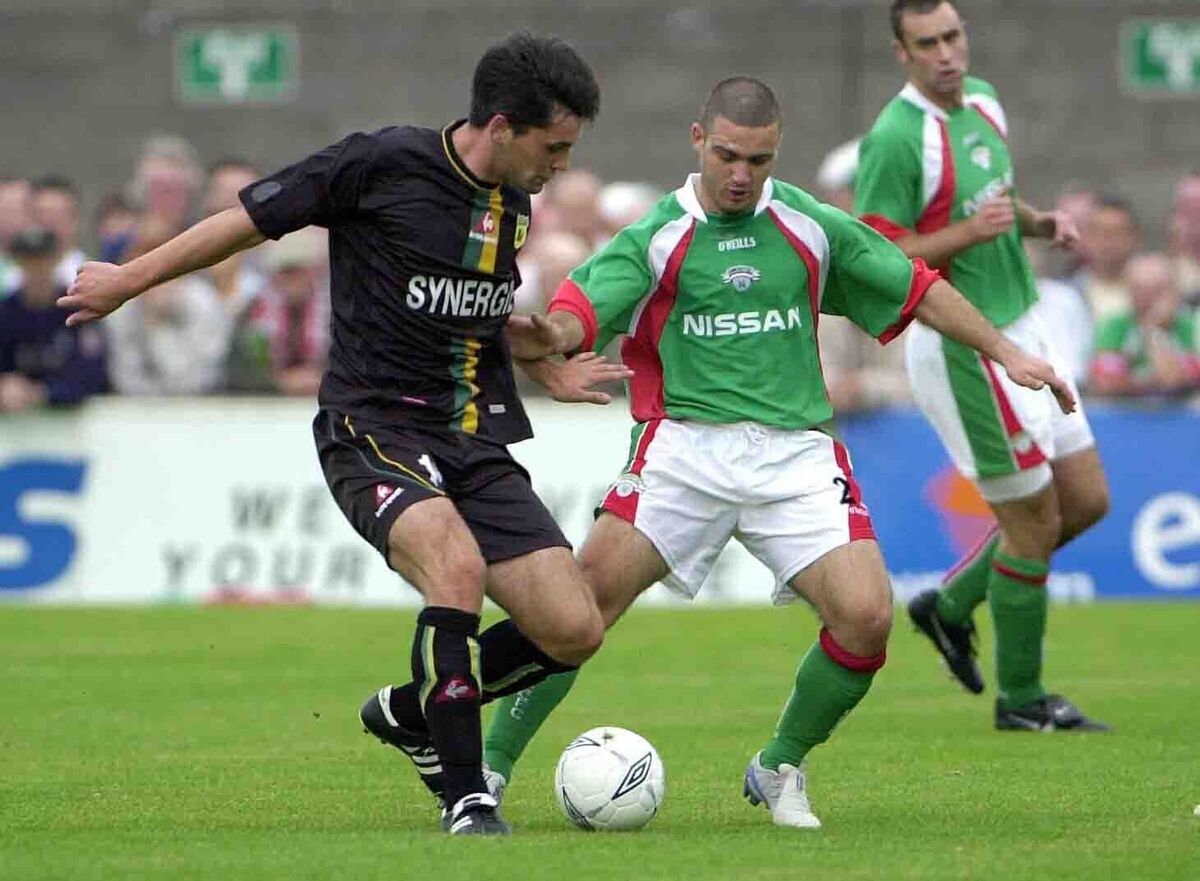
The Rebel Army made a statement that summer on the continent by knocking out Malmö and Nijmegen, before going down to Nantes at a sold-out Turner’s Cross.
Their names are forever associated with Cork soccer, from Neal Horgan at right-back to John O’Flynn up top.
It wasn’t all about Cork that summer - what happened in Turner’s Cross was part of a revival of Irish soccer on the continent after years of false starts and mid-adventures.
Shelbourne made sure their rivals from Leeside weren’t alone in pushing boundaries as they reached the Champions League play-off round that year and narrowly lost to Deportivo de La Coruña, a side looking to build on their run to the semi-finals during the 2003-04 season.
These storylines, which filled in the gaps in a sporting summer involving Cork’s push for a first All-Ireland title since 1999 and Dublin's quest for vengeance after a shock loss to Westmeath in the Leinster championship, gave a new dimension to the traditional discourse between May and August.
The change was initiated so clubs would be in the middle of their season when it came to the first-round qualifiers for the various European competitions, and 2004 was proof that the change was justified.
City’s European history was a reason unto itself why change was needed, even though there were occasional results in ties involving big names. They only progressed on one occasion, and that was against Cwmbran Town in the Champions League.
The reason was simple. The fixtures were usually played in early autumn, at the start of the League of Ireland season. Players had to rely on raw ability as opposed to fitness, which meant professional sides had a huge advantage.
This advantage was turned on its head by moving to a summer season, and this became clear when Bohemians defeated BATE Borisov in the first qualifying round of the 2003-04 edition of the Champions League.
Shamrock Rovers also had lukewarm success by reaching the second round of the Intertoto Cup, and thoughts of a long summer on the continent ended with a 4-0 victory to Slovan Liberec.
Then Cork City got the better of Malmo, one of the best clubs in Sweden, and followed that up by knocking a Dutch team out of a European competition.
People were already familiar with upsets in 2004. Greece won the Euros and Porto became the first team from outside the established elite to win the Champions League since Marseille in 1993.
Millwall got to the FA Cup final. Real Zaragoza beat Real Madrid in the Copa del Rey final. Everything involving Irish club football that year felt different.
There was an air of possibility.
This wasn’t just one result involving one team, this was two Irish teams going the distance and recording results.
Something had clearly changed, and supporters started wondering what was possible as opposed to expecting the worst while hoping for the best.
A precedent was set and City reinforced that by reaching the UEFA Cup first qualifying round in 2005 by defeating FK Ekranas and Djurgårdens. Twelve months later, and City recorded a win in the UEFA Champions League and they went down fighting against Red Star Belgrade, who won the European Cup in 1991.
This helped shift the national conversation to qualifying for the group stages of a major international tournament as opposed to going for a run, and that dream was eventually realised by Shamrock Rovers in 2011.
20 years on, the names Malmo and Nijmegen bring smiles to football supporters on Leeside. They also start the conversation about famous runs in continental competition, and that naturally leads to talk of 2016 and the games with Linfield and BK Hacken.
Dundalk also did it, while Cork City still stand as the only Irish team to have recorded a win in the UEFA Youth League.






 App?
App?


