Cork's results a reflection of the county's current standing across all levels
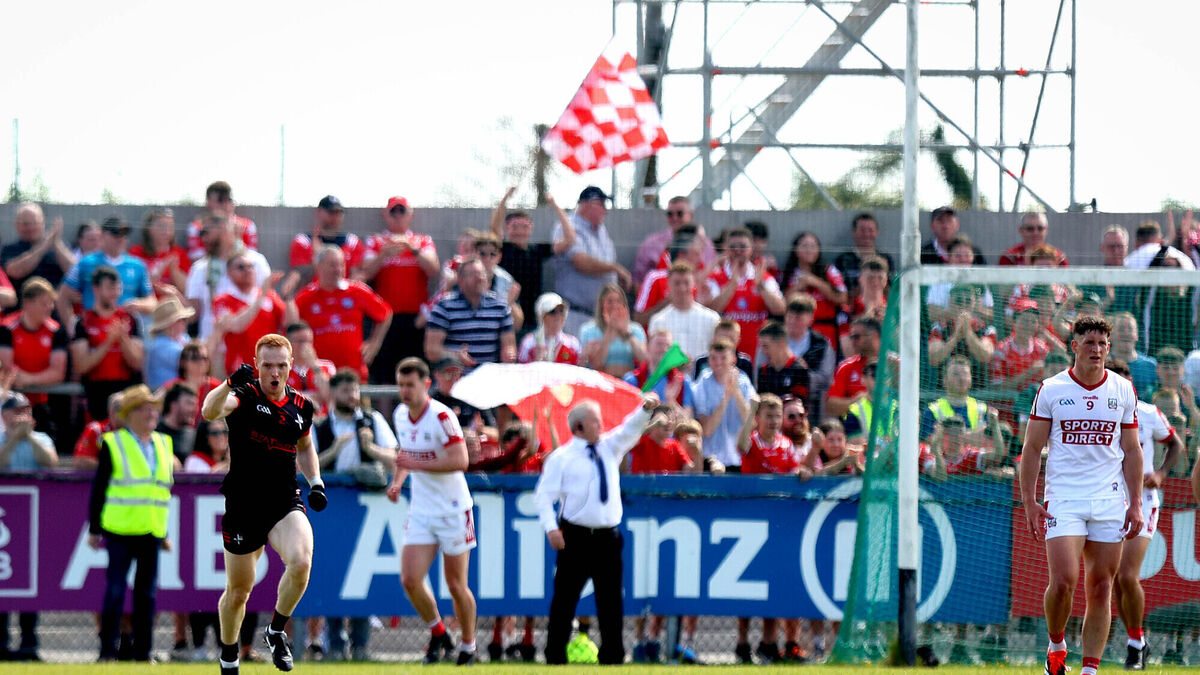
Donal McKenny celebrates Louth's goal against Cork in Sunday's All-Ireland SFC preliminary quarter-final at Inniskeen. Picture: Inpho/Ryan Byrne
The chances are that, if you were talking to anybody about Gaelic games on Sunday or in the days after, you’ll have heard – or perhaps said – the phrase, “Cork should be beating Louth.”
Given that Sunday’s one-point defeat in Inniskeen, Co. Monaghan was the first time Cork had been beaten by Louth in the championship since the 1957 All-Ireland final, such an attitude is understandable in one sense. On the other hand, it’s somewhat indicative of a lack of an overall appreciation of where the county is right now.
Louth have reached the last two Leinster finals, only losing to Dublin by four points this year. They have beaten Kildare this year in league and championship, hammered Meath in the All-Ireland round-robin and drawn with Monaghan – those counties all probably felt too that they should be beating Louth. The Wee County had beaten Cork in the league in 2023 and 2024 and, while they lost to them in the 2022 and 2023 championships, these margins were four and two points respectively.
Ger Brennan has done a good job there since taking over from Mickey Harte and, while their journey will surely come to and end against Donegal at Croke Park this weekend, they are in the last eight on merit. Sunday was not a shock.
However, Louth’s competence is not an excuse for Cork. Whatever about “should” have won, they certainly could have won. Equally, they could have won against Tyrone the previous week. But – and this is central to examining things in the round – they also could have lost to Donegal. As thrilling a day as that was, it was one where Cork took three goal chances and managed to keep a clean sheet – it could be argued that it was the exception as much as the rule.
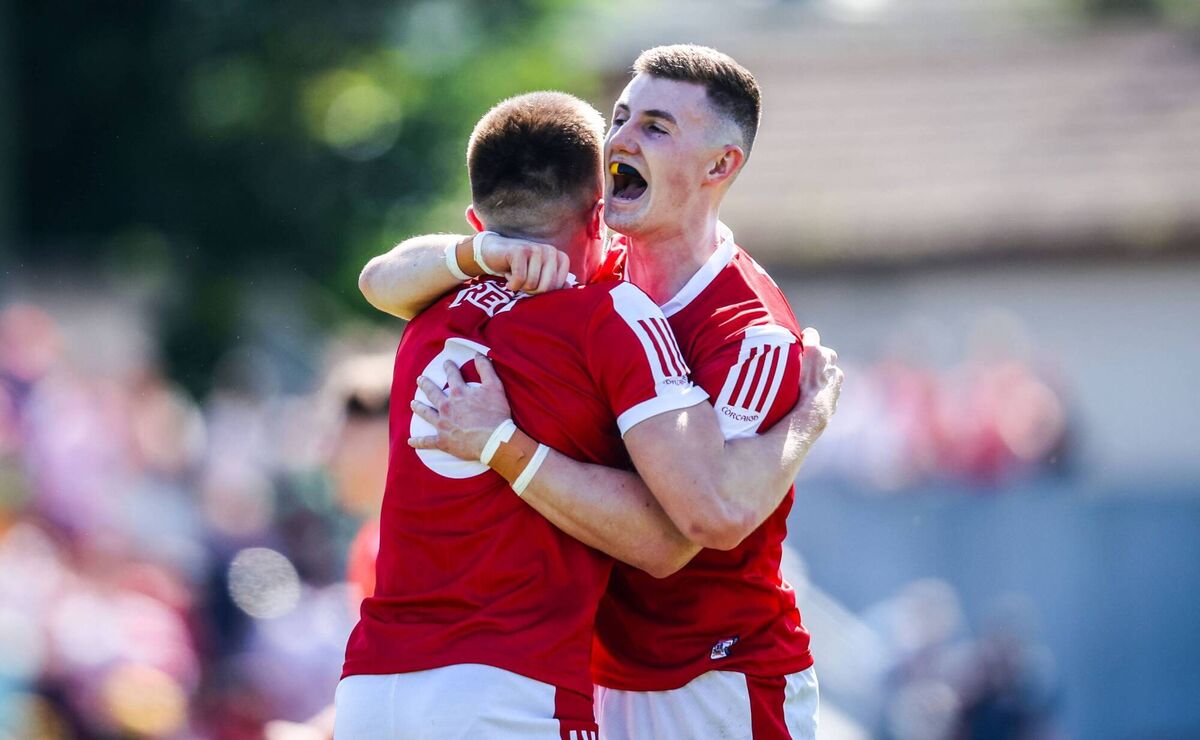
Cork’s 3-9 that day in Páirc Uí Rinn is not all that markedly different from the 1-8 they got against Louth. Top analyst Stephen O’Meara made out that the ‘expected points’ metric for Inniskeen was Cork 12 points, Louth 11.3 – in such a light, a final score of 1-9 to 1-8 the other way is well within the margin of error.
That we keep talking about what Cork “should” be doing is because we can still remember Conor Counihan’s team going toe-to-toe with Kerry every year and battling for Munster and national honours on a regular basis. Unfortunately, that team is long gone.
Cork have not won a Munster title or reached an All-Ireland final since 2012 – Tipperary have twice been in the last four during the same period. Cork’s ranking is somewhere between sixth and 12th in the country. While winning a preliminary quarter-final would have put things in a better light, getting past Dublin or Kerry or Armagh and making a semi would have been a tall order.
To put a positive spin on things, most Cork fans would probably accept falling short of the quarter-finals this year if it meant that promotion from Division 2 of the league was achieved next spring. Playing Division 1 football provides a clearer way to improvement, but unfortunately there is no guarantee that that will happen either.
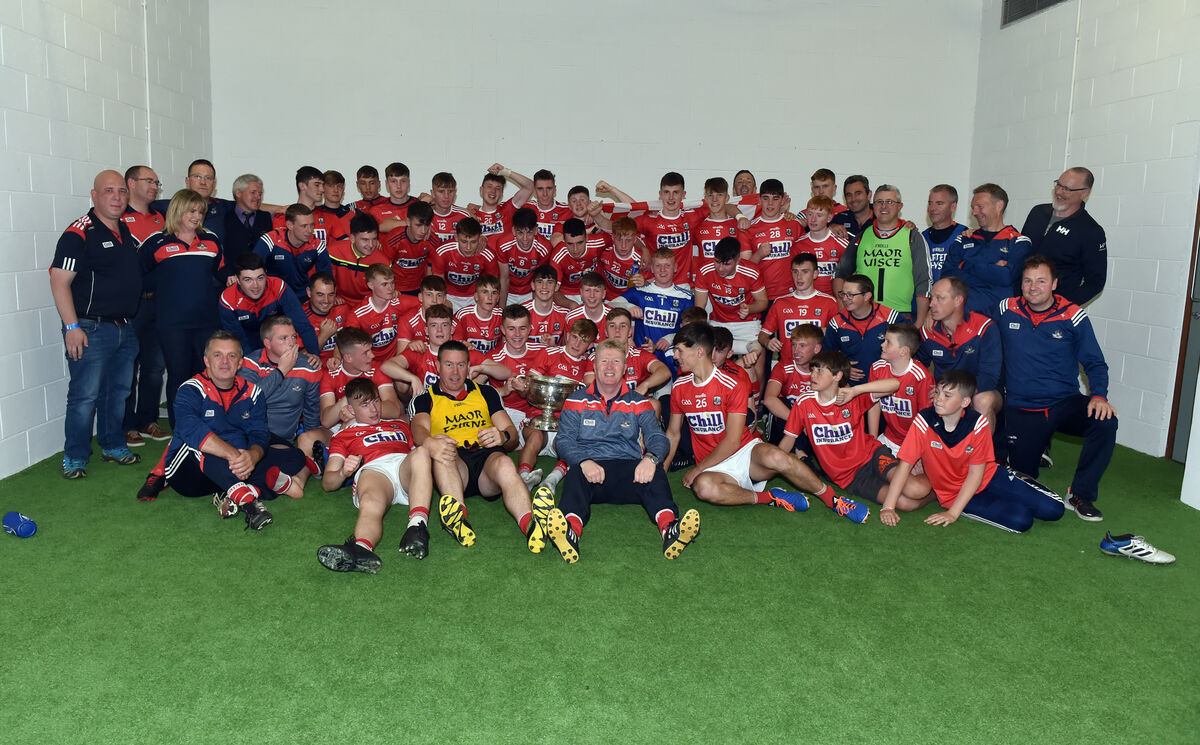
In 2019, Cork won the All-Ireland minor and U20 football titles. By the end of this year, most of the players involved will be 22 and 25 respectively – but across the two groups, only Conor Corbett (minor), Maurice Shanley, Colm O’Callaghan and Mark Cronin (U20) saw game-time on Sunday.
That year of course also saw the publication of the infamous five-year plan. While the use of the word ‘Corkness’ offered up an easy target at the time, the headline objective was that Cork would be competing for All-Irelands, at all grades, including club and county, within three-to-five years. Beyond that 2019 double, the dial has not moved.
The senior team’s results will always garner more attention and the ups and downs therein will tend to be exaggerated in terms of impact. Below that, though – U20, minor and at schools level – the trophy cupboard has been fairly bare beyond a couple of Munster titles.
Reaching an All-Ireland quarter-final – or even a semi-final – would not have glossed over the whole picture.





 App?
App?


