Christy O'Connor looks at the impact a TMO and goal-line technology would have on GAA
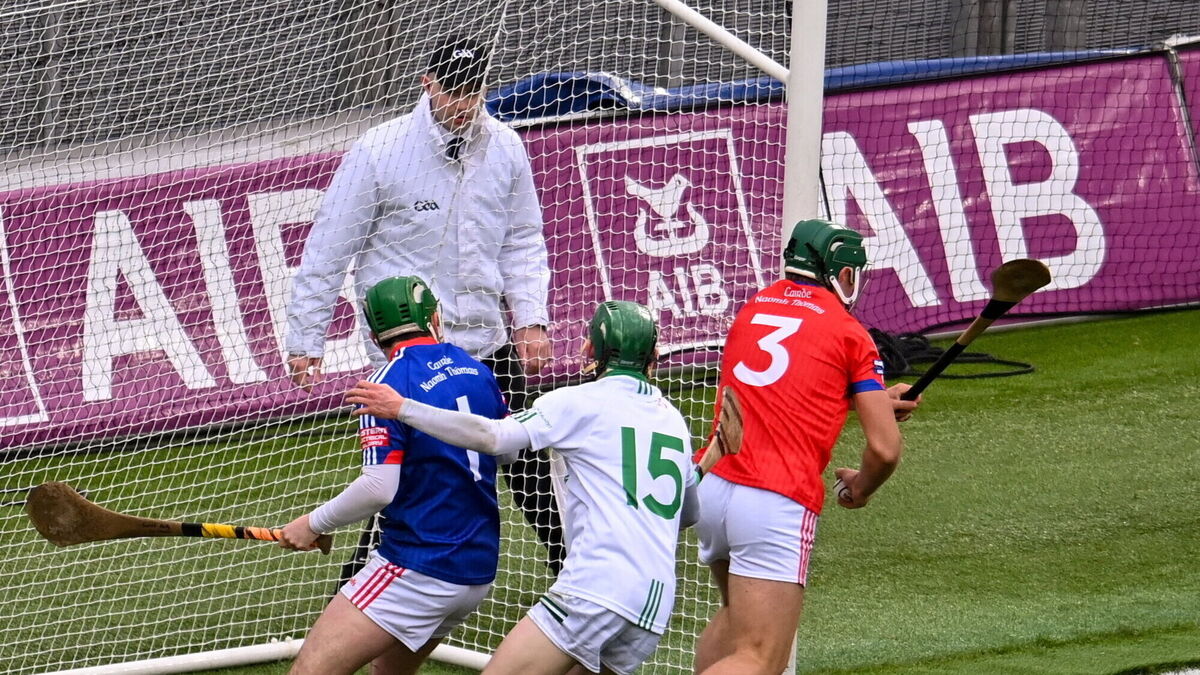
Fintan Burke of St Thomas' carries the ball away under pressure from Seán Bolger of O'Loughlin Gaels at Croke Park last month. Picture: Sam Barnes/Sportsfile
WHEN TG4 showed multiple different angles of St Thomas’ Fintan Burke stopping Owen Wall’s shot in the All-Ireland club hurling final in January, it took the final camera angle to conclusively prove that the ball had actually crossed the line and the goal should have been awarded.
The first slow-motion camera shot from the Hogan Stand corner in front of Hill was inconclusive as the green flag was fluttering in front of where Burke had the ball in his hand.
The camera from inside the goal also couldn’t prove that the ball had crossed the line as Burke’s right leg was covering the sliotar in that exact moment that he was motioning it forward after securing possession.
But the slow-mo camera angle from the Cusack Stand showed that the ball was over the line. It was only inches but inches was the difference between winning and losing an All-Ireland.
Of course it’s never that black and white. A game is decided across hundreds of different moments and actions, a missed block here, a loose tackle there, all adding and subtracting to either a winning or losing total at the end of 60 or 70 minutes.
What are those options? For a start, it seems strange that the GAA uses a score-detection system in Croke Park and Thurles that doesn’t include goal-line technology.
As far back as six years ago, when Tipperary were awarded the infamous ‘ghost goal’ in a 2018 Munster round-robin match against Waterford, the then Referees development committee chairperson, Willie Barrett said that “goal-line technology is something that should be considered”.
It never was. Cost is the obvious issue but there are other factors involved too. The score detection system in Croke Park is based on a number of angles from cameras positioned on top of the Hogan and Cusack Stands, which capture the flight of the ball.
The problem with applying this to the goal-line is that umpires are meant to stand beside their respective posts for optimal positioning and would therefore potentially block the camera’s view.
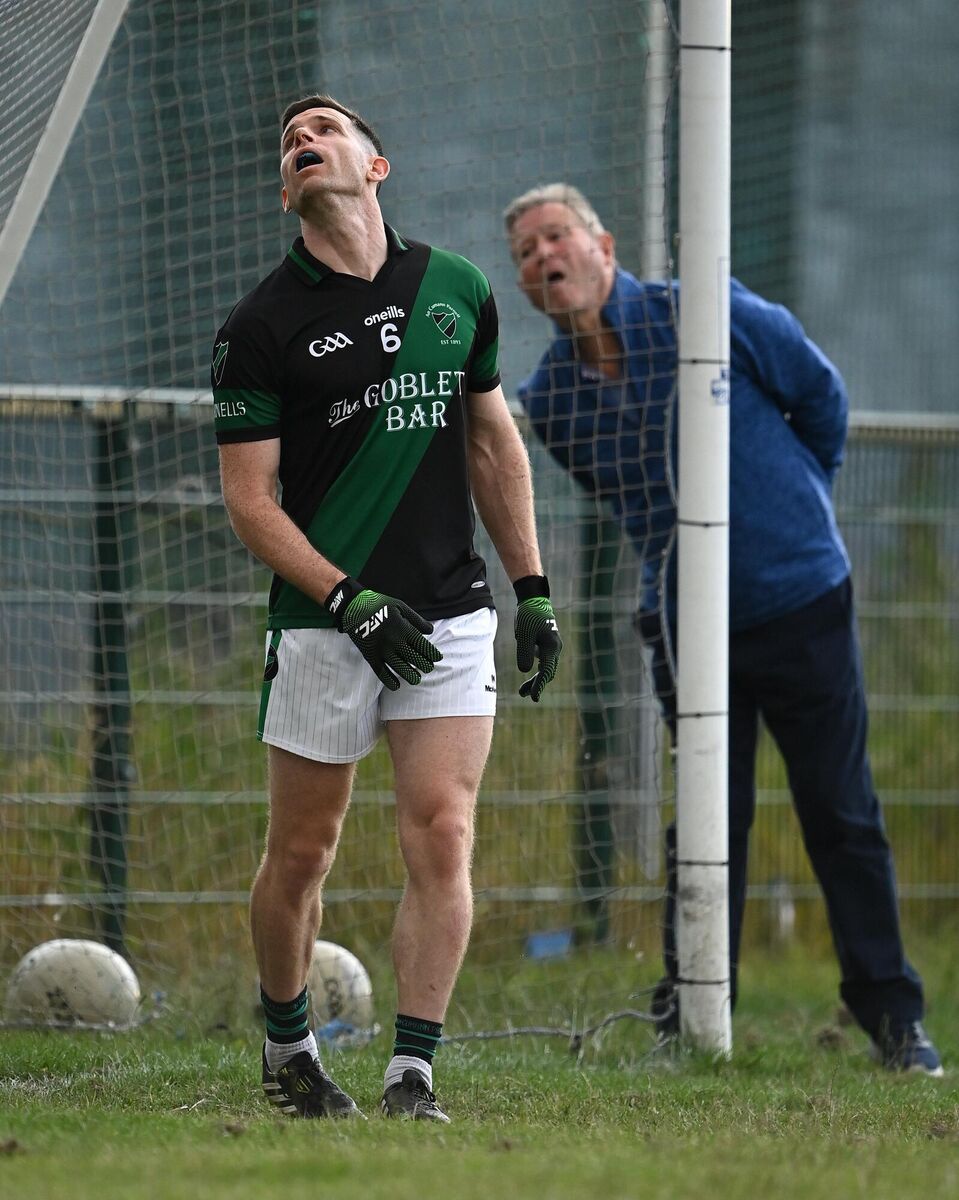
If the umpires were in those positions for the All-Ireland club finals - they were both standing behind the goal - they would have had a much better chance of seeing that the ball had crossed the line. Yet even if they were, and had missed it, the camera on top of the Cusack Stand would have activated the technology and awarded the goal.
There is also another option available to the GAA – the new digital sliotar; there is a chip in the sliotar that, if connected to a camera in the goal, could alert the referee through a beep in his ear-piece, or from an official, if the ball crossed the line.
Given that adding goal-line technology to Hawk-Eye’s system would require huge costs, it would be harder to justify considering there are so few incidents (similar to the one in the All-Ireland club final) in big GAA games. So surely the digital sliotar is a more logical way to solve this problem?
The crux is that you can’t have goal-line technology for hurling when it’s not there for football. So does the overall solution lie in the role of a ‘score assistant’, which operates in ladies football?
That practise first came into use seven years ago when the LGFA and TG4 announced a ground-breaking partnership move, whereby a ‘scores assistant’ sits in the TG4 production vans at all televised matches, where they would have the benefit of all available television angles to help judge if a score has taken place.
The GAA has become so professional now that technology is a natural assistance in getting all those big decisions right. After a work group was set up to look at how technologies could assist referees, there were silent trials of a Television Match Official (TMO) during nine championship matches – six football and three hurling – last summer.
The feedback to date has been mixed. The trials showed that, while it had been possible to install a TMO providing there was a minimum of five cameras, that footage wouldn’t necessarily capture everything that happened on the pitch, which would militate against its comprehensive use for off-the-ball incidents.
It was also felt that the system would be impractical to install for all intercounty matches as opposed to big championship fixtures in Croke Park. There was also often confusion over the separate issues of score detection and other aspects of play, such as aggressive fouls or technical fouls in the lead-up to scores.
The work group’s report, which is due out shortly, is likely to argue against the benefits of a TMO for hurling and football. If so, does that end the debate on goal-line technology?
The option of a ‘score assistant’ in football is unlikely to happen because of so many games (the majority of which wouldn’t be televised live) happening at the same time, along with a potential dearth of qualified officials to fill that role.
Availing of the benefit of the digital sliotar is also probably a non-runner if the practise doesn’t exist in football.
However, given how fast the ball moves in hurling, it seems strange that the GAA couldn’t use the digital sliotar for goal-line technology. Especially when the option is there.








 App?
App?


