Christy O'Connor on why last season was the greatest Munster hurling championship ever
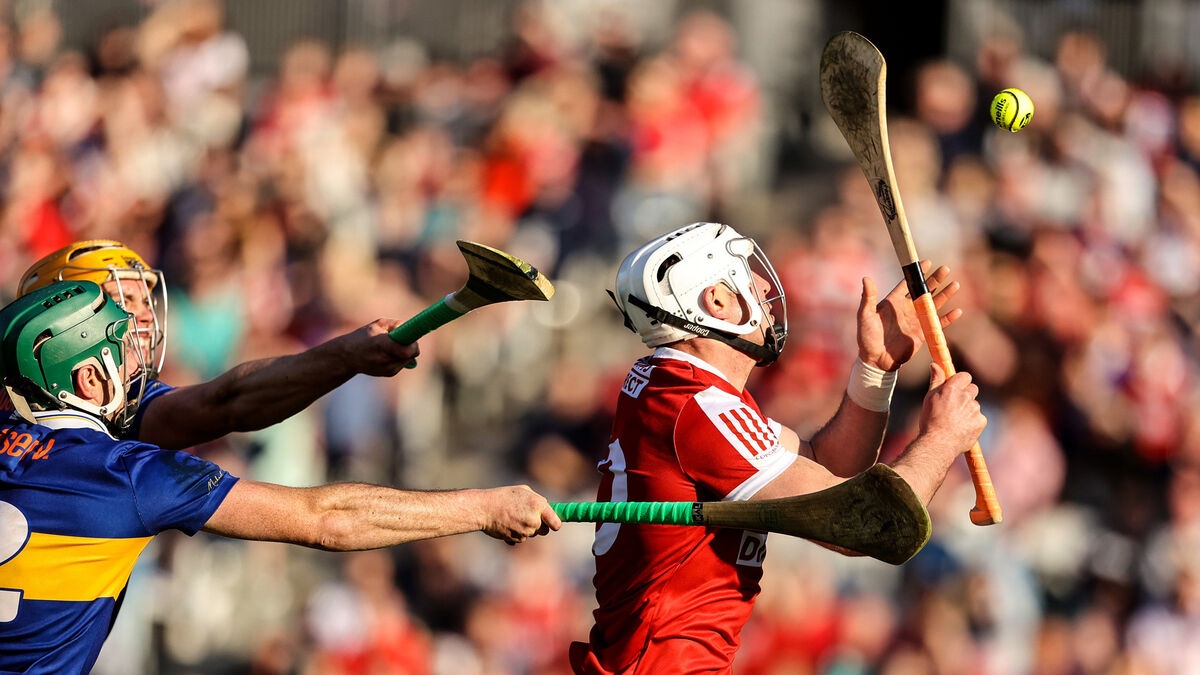
Declan Dalton scores the opening goal for Cork against Tipperary in their thrilling battle at Páirc Uí Chaoimh last year. Picture: INPHO/Ben Brady
OVER two and a half hours after the final whistle of the All-Ireland hurling final had blown in July, a handful of Limerick players and backroom members appeared on the Croke Park pitch, in various groups, for another round of photographs, another collection of memories and images stored as posterity to frame their greatness.
Will O’Donoghue was still dressed in his gear, his number 6 jersey still on his back, walking around in his socks, recording images on his phone. At one stage, Seán Finn jumped into the shot, wearing a sleeveless top where his bulging arms have only got bigger from so much time spent in the gym from not being able to perform on the pitch after tearing his ACL against Clare in April.
Defeat that evening was the first time Limerick had lost a match since the 2019 All-Ireland semi-final against Kilkenny and, while they looked vulnerable at different stages of the Munster championship, finding a way has become so hardwired into their being as a group that Limerick just expect to do so, no matter what they are faced with.
There were stages in the first half of the All-Ireland final, just like the semi-final against Galway, when all the glitches and kinks that showed up in their system at various stages of the championship threatened to short-circuit the board and force it blow up. And then Limerick just hit the reset button. Go again. And blow the opposition away.
Limerick’s four-in-a-row proved their greatness and cements their status as possibly the greatest hurling team in history. They were the story of the season but it was also a championship that threw up some incredible chapters and storylines.
For a start, the Munster championship was the greatest GAA provincial championship ever played, loaded with some epic matches, the majority of which were played out to the backing track of enthralling tension and drama.
Clare-Tipp was an eight-goal thriller. Clare-Limerick was a game for the ages. Cork-Tipp was dynamic and absolutely electric at the end. So was Cork-Clare and Limerick-Tipp. Cork-Limerick was one of the best games, and occasions, of the last decade. The only non-events were Cork-Waterford and Waterford-Clare.
The Munster final was nowhere near the quality, drama or intensity of last year’s Clare-Limerick decider, but it was still absolutely compelling, tense, relentless, gripping and thrilling, with a controversial late free not awarded that would have taken the match to extra-time.
It was the fourth match of the campaign that was decided by one point. Two more were draws. Two points separated the teams in another match.
Some of those results completely altered the direction of the championship. If Cork had beaten Clare (they lost by one point) and Tipp had beaten Limerick (they drew) on the same day (May 20), Limerick would have been gone from the championship with one round remaining on a head-to-head with Clare.
A week later, May 27, was arguably not just the most entertaining day of the summer, but the greatest day in the history of hurling.
Prior to this year, the final round matches in Munster and Leinster had always been kept apart but they were all played the same afternoon this year. What transpired was so electric that a Hollywood scriptwriter couldn’t have made it up.
Three of the matches (Kilkenny-Wexford, Cork-Limerick and Galway-Dublin) were still on a knife edge in additional time. The Cork-Limerick and Kilkenny-Wexford matches were two of the best games in the history of the round robin. Defeat would have seen Wexford relegated to the Joe McDonagh because Antrim beat Westmeath to survive. Wexford-Kilkenny was such a crazy match that there was a 14-point swing. There was a 13-point swing in the Galway-Dublin game that ended in a draw.
Tipp started that day as favourites to reach the Munster final but were shocked by Waterford. Limerick beat Cork by one point but a draw would have seen Cork progress to the Munster final and Limerick would have edged out Tipp for third spot.
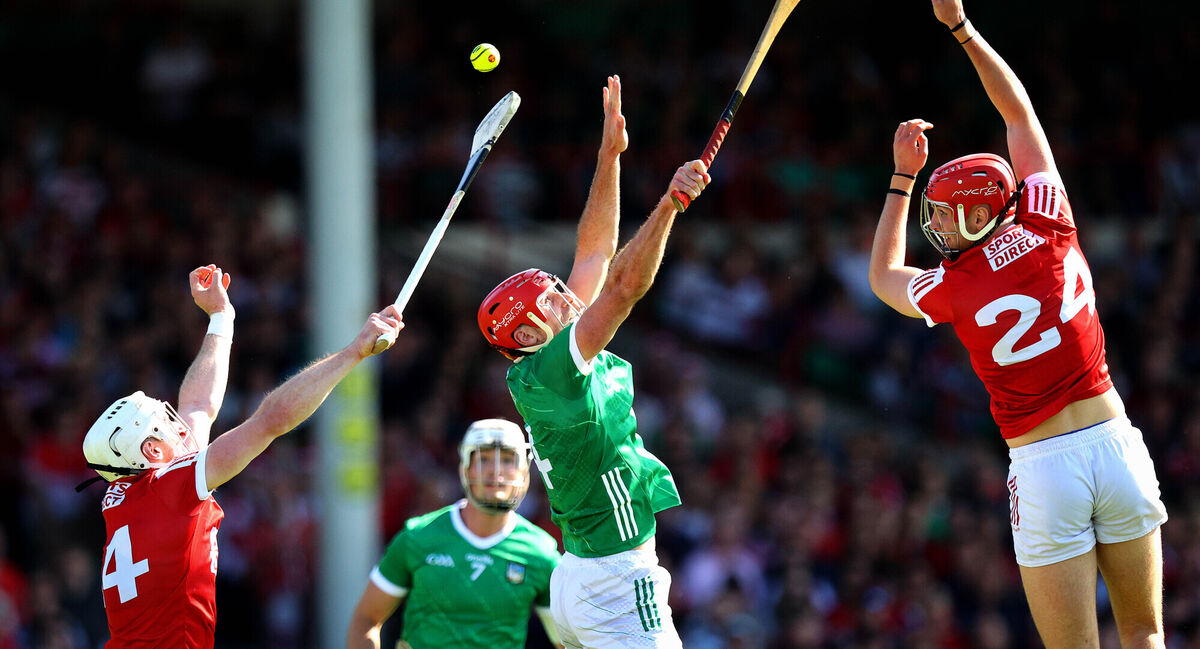
That Waterford victory, along with Limerick’s win against Cork, suddenly propelled Limerick from third place into second in the group, which moved them into the Munster final, and onto the pathway they craved, with just two more games to reach the All-Ireland final.
There were some other crazy twists and turns. The craziest of all was Westmeath’s 17-point second-half turnaround against Wexford, which saw Westmeath record a first-ever championship victory over Wexford.
Two weeks later, Galway were sucker-punched with the last play of the Leinster final when Cillian Buckley scored a goal to win the match. Galway recovered to beat Tipp in the quarter-final before being mauled by Limerick in the second half of the semi-final.
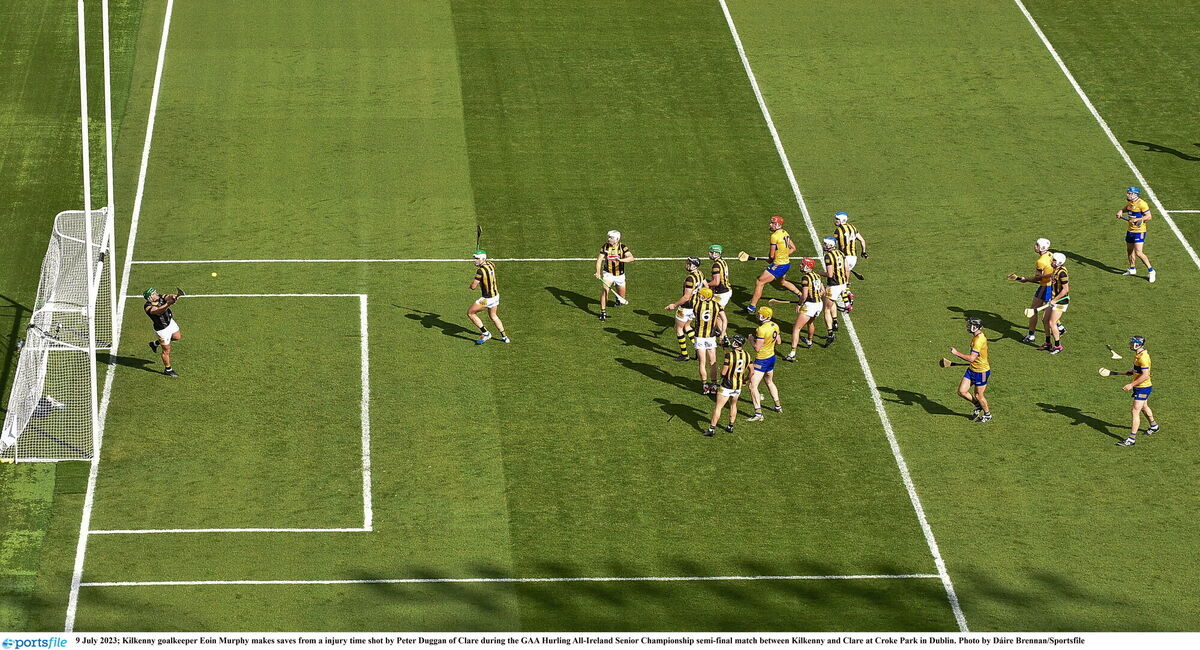
After hammering Dublin in the quarter-final, Clare carried huge motivation into the semi-final after their no-show against Kilkenny at the same stage 12 months earlier. In a brilliant match, Clare fell just short, with the defining moment being Eoin Murphy’s iconic save from Peter Duggan late on.
Kilkenny went into the final pumped to make up for the 2022 final defeat to Kilkenny. They looked on course to do so early in the second half when Paddy Deegan’s goal put them five points ahead. And then, Limerick sparked into life, outscoring their opponents by 0-19 to 0-4 for the remainder of the match.
Limerick were relentless, absolutely relentless. And were always able to find a way – throughout the season.




 App?
App?


