Tadhg Coakley's new book The Game an honest appraisal of our love for sport
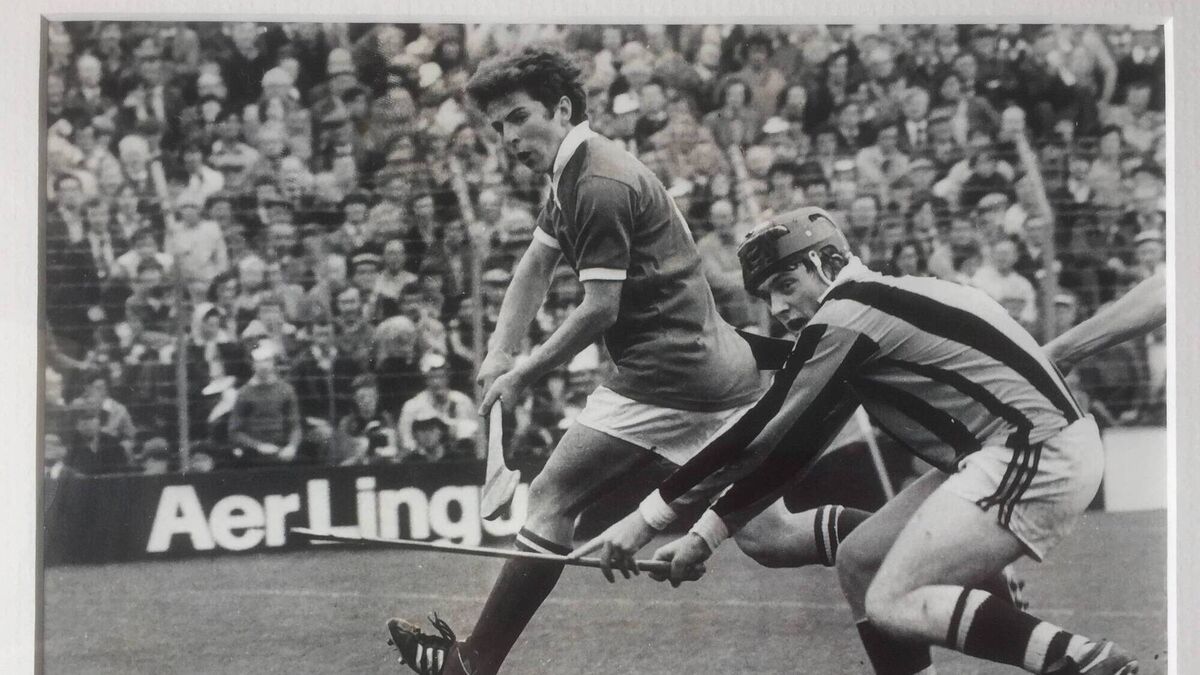
Tadhg Coakley playing for Cork in the 1979 All-Ireland MHC final against Kilkenny.
I’m going to go out on a limb and say that no previous All-Ireland minor hurling medal winner has written a book with a chapter starting Riky Riski.
In that regard, Mallow native Tadhg Coakley, a part of the victorious 1979 Cork team, is out on his own. For some reason, when I saw the heading ‘My Sports Hero Riku Riski and Some Question’, I assumed him to be a cricketer of Asian origins, perhaps – betraying a lack of recent Scottish football knowledge, as he played three games on loan at Dundee United in 2016.
That spell at Tannadice is not why the Finnish attacker metaphorically has his picture on Tadhg’s bedroom wall, though. Instead, it’s the rather noble stance he took in 2019, when he opted against a call-up for his country for a winter training camp and two friendly matches in Qatar, citing “ethical reasons and the values I wanted to act upon”.
The chapter is one of series of essays in Coakley’s new book The Game, subtitled ‘A journey into the heart of sport.’ It’s not some dewy-eyed list of favourite matches and players, though – as he says in the preface, it’s not a paean to sport. However, the section featuring Riski essentially drills down into how and why we turn a blind eye to so many negative aspects around sport – the parts that others have turned into the business – so that we can still enjoy the games. Similarly, the next chapter, with the arresting title, ‘Am I Sexist?’, is something that should hopefully set an example for the rest of us.
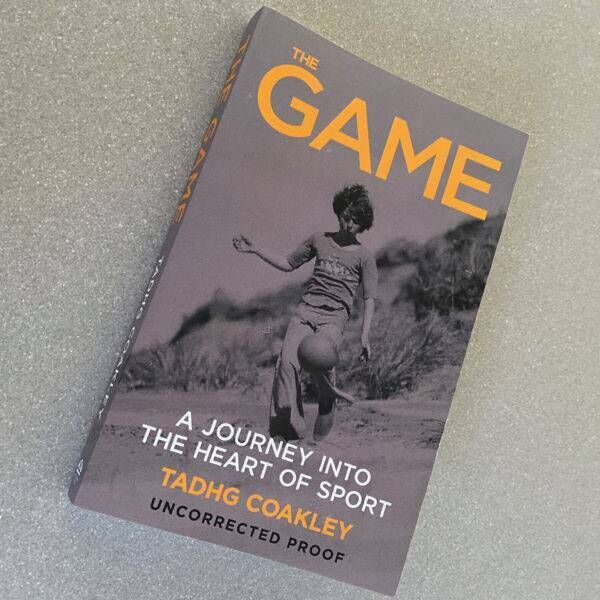
Having written The First Sunday in September, a series of short stories stitched together to form a novel set on All-Ireland hurling final Sunday, and Whatever It Takes, featuring as its hero (or anti-hero) a detective who had captained Cork to All-Ireland hurling glory, Coakley knew that he had to lay bare his own relationship with sport. “The prospect of coming out from behind my fictional characters was terrifying and is terrifying and the writing of this book was – at times – a painful uncovering of my life,” he writes, and that’s not an exaggeration, as can be seen with the opening to the chapter ‘Dark Passions’.
“I was at the Munster hurling final in 2010. A child was sitting beside me with this father. The boy was either or nine. Not long after the beginning of the match, the father and son changed places and I realised that it was because of me. Something I’d said, or maybe shouted or sworn, the look in my eyes, my rigid body language or the tone of my voice, had frightened the child.
“They didn’t return to their seats after half-time – the father must have found a safer place in the stadium for his boy to watch the game – and the empty seats were an admonishment all second half. I felt ashamed.”
But this isn’t a negative book; far from it. It may be rigorous examination in the mirror, with the memories unique to the author but, ultimately, what makes sport what it is are the communal experiences, the losing as well as the winning.
While we always dream of the wins, we struggle to prepare for the defeats, even if they are generally more plentiful, as Coakley lays out in ‘Losing – The Anonymous Subsoil’. Given that he played GAA to a high level, you might think that chastening days on the field dominate, but an episode on the golf course, in a competition that mattered little to anyone beyond the competitors, is recalled with a keenness and clarity that you hope is someway therapeutic.
But, even then, despair gives way to the ever-lurking hope and the cycle starts again. Or, as he puts it: “In this way, we accept loss, we embrace loss, we understand loss. We know that sport is about loss.
“It’s shit, but it’s better than nothing, isn’t it?”
Thankfully for the reader, the first part of that sentence is not applicable in relation to this book. And it’s far better than most other sporting material you’ll read this year.
- The Game by Tadhg Coakley is published by Merrion Press and is out in May








 App?
App?


