Not everyone ready for launch - a chance for promotion is missed
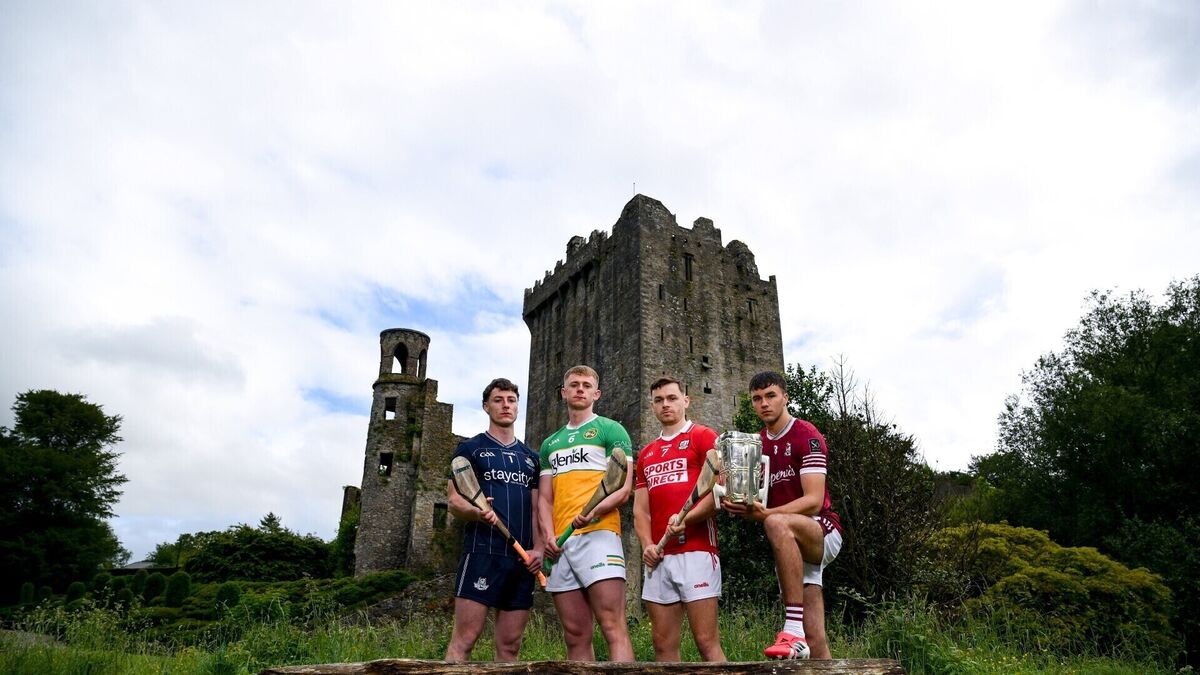
Eddie Gibbons of Dublin, Killian Sampson of Offaly, Mark Coleman of Cork, Aaron Niland of Galway at Blarney Castle. Picture: Brendan Moran/Sportsfile
Most Fridays at around 8.35am, the second sports bulletin on Morning Ireland on RTÉ Radio 1 features an insert called Hurling Nation as former Cork goalkeeper Dónal Óg Cusack looks ahead to the weekend’s action.
Examining it as an objective reviewer, it is not perfect radio: it is a pre-recorded monologue, with no chance for the speaker to be challenged, and with regular references to the ‘microwaved championship’, it runs the risk of talking the sport down rather than up.
Still, we cannot dispute the Cloyne man’s credentials as a hurling missionary and the few minutes each week serve as an advertisement for a sport that is still alien to pockets of the country.
Promotion is key to the growth of the sport and Cusack’s misgivings about the format of the championship are illustrated by the fact that, once the provincial round-robins have concluded, there are just three weekends of inter-county hurling remaining.
Every opportunity to spread the word is important and the GAA deserve credit for the way that, once the Munster and Leinster championships are over, an All-Ireland launch is held, with the venue changing each year.
For 2026, Blarney GAA Club was the siting for the event, which took place on Tuesday. On Monday evening, Blarney Castle was the natural choice for pictures while the players involved visited Scoil Chroí Íosa, alma mater of Mark Coleman, the fitting choice as Cork representative, even if it was just after a disappointing loss.
Finbarr McCarthy of 96FM was also a fitting choice for the launch itself on Tuesday, where GAA President Jarlath Burns related how he had kissed the Blarney Stone and gained the gift of the gab – when he sent the picture to his wife, she replied with some irony that she hoped it might bring him out of his shell.
Burns also made some serious points, not least the fact that, while some clubs suffer from rural depopulation, others have the challenge of urban over-population and Blarney, with two pitches and a growing hinterland, came under that heading. The main one of those pitches was in superb condition, it should be noted, thanks to the usual top-quality work by Stephen Forrest.
The movement of the population towards the east coast was something that needed to be looked at by the GAA and the government, Burns said, citing how the corridor from Midleton to Youghal was a prime example of impending over-crowding.
And, judging by those in attendance in Blarney, the mid-west has a problem in terms of having players available to grace it with their presence, despite being invited.
As you can see from the pictures accompanying this article, Mark Coleman was joined by Dublin’s Eddie Gibbons, Killian Sampson of Offaly and Aaron Niland (Galway).
Keen students of mathematics will note that that amounts to four counties, but of course there are six remaining in the race for the Liam MacCarthy Cup. Unless Dublin can produce a strong response to their Leinster final loss to Galway, the All-Ireland semi-final will be a local derby between counties who were the two most recent champions before Tipperary’s triumph last year.
Would hurling fans like to hear from players from those counties, as part of promotion of the sport? One would think so.




 App?
App?


