"I wear two jumpers and two pairs of pants to keep warm": City Council tenants say they've been forgotten
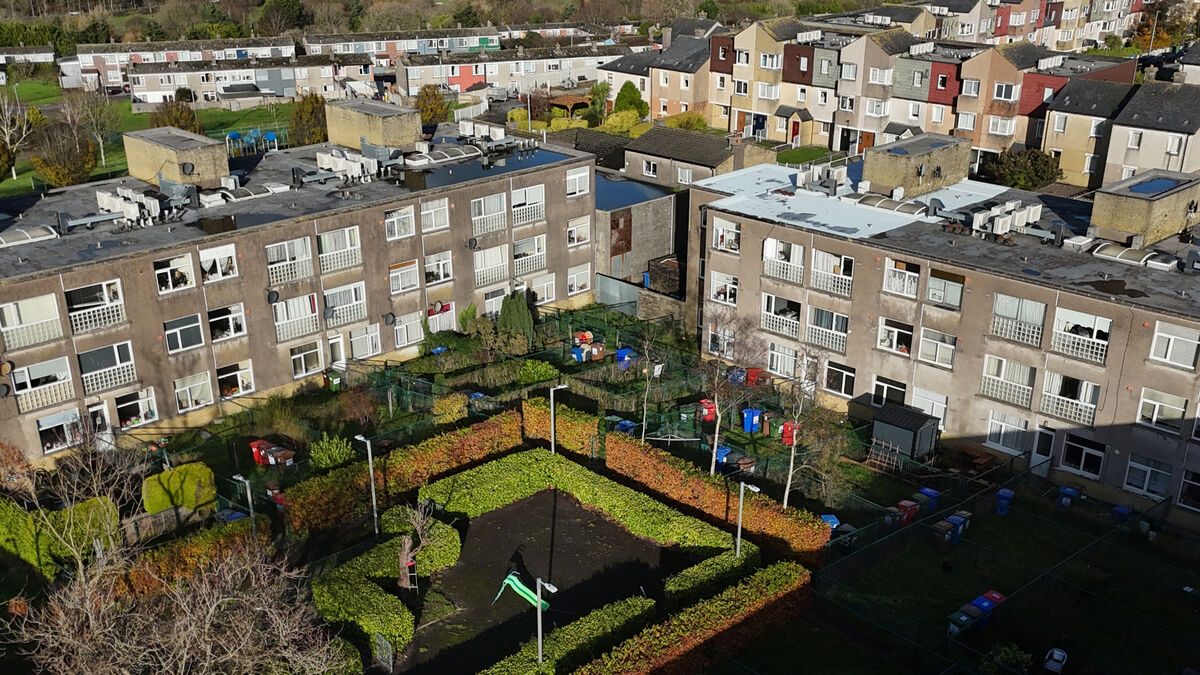
Houses and apartments at Ard Bhaile and Glenamoy Lawn on the Old Youghal Road. Pictures: Larry Cummins.
“I just want to move out now, to be honest. I just can’t bear it anymore with the state of the place, I just want to get out,” says Josie O’Keeffe.
“If I put on the heating for five minutes, that’s a fiver. It’s costing me about €60 a week and it doesn’t heat the house; I wear two jumpers and two pairs of pants to try and keep warm.”
A Cork City Council tenant who is wheelchair-bound and suffers from Chronic Obstructive Pulmonary Disease (COPD), the 55-year-old lives in the run-down Glenamoy Lawn flats in Mayfield, on Cork city’s northside.
Her flat is cold and prone to damp and black mould. The floors are broken and rickety, and there is no wheelchair access to the communal gardens at the rear of her home.
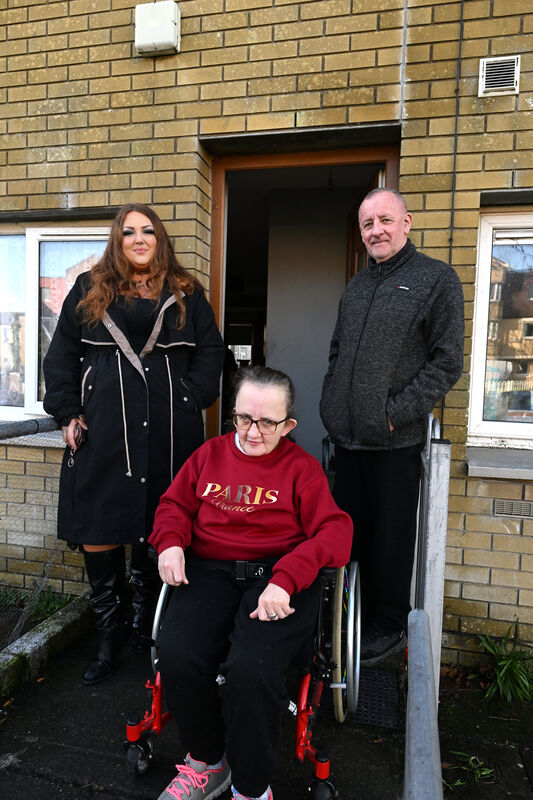
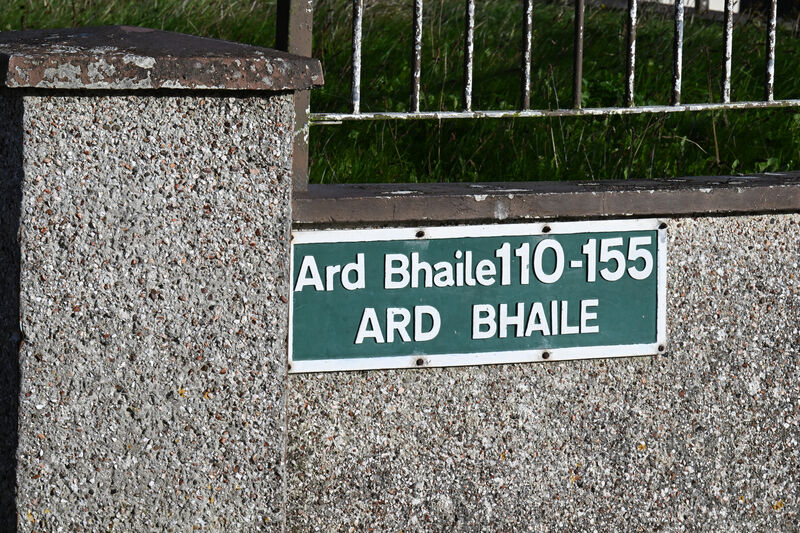
She has lived in the flats for the past 12 years, and she is one of many social housing tenants in neighbouring Glenamoy Lawn and Árdbhaile who say they cannot afford to heat their homes.
Heating has been a serious problem for the tenants in the 60-year-old estates since a new heating system [/ur]was installed a decade ago, and, facing into another winter of misery, many say they have lost faith in the council.
Now, a promised multi-million retrofitting of the dilapidated flats is in serious trouble, with the council first admitting that tender bids were “well above” amounts available through Government grants and then announcing that the only bidder had withdrawn.
Tenants say problems began 10 years ago, when the council replaced the estates’ original air-to-water heating system, claiming it was costing an annual €200,000 to maintain.
The replacement air-to-air system has been described by tenants as “a disaster”, and they complain that it is ineffective, expensive to use, and – unlike the previous system – does not heat water.
The system consists of large air-conditioning units mounted at ceiling height, and tenants claim the dry heat they generate dissipates as soon as the units are switched off, while many complain it exacerbates breathing problems for those with health issues.
Last year, tenants voted to accept a council plan to upgrade their homes to a B2 or higher level of energy efficiency, with the installation of air-to-water heat pumps, triple-glazed windows, and improved ventilation and insulation.
The council said this would come under the EERP (Energy Efficiency Retrofit Programme) Phase 2, funded by the Department of Housing, Local Government and Heritage. The planned first phase would see 36 homes upgraded, with an average budget of €34,000 per home, and a maximum of €42,350, amounting to a maximum cost of more than €1.5m.
The cost of retrofitting the 226 remaining homes across the two estates under phase two would have cost – using the council’s figures – in the region of €9.6m, meaning the entire project would have cost more than €11m.
Councillors were told at September’s north-east ward local area committee (LAC) meeting that tenders for the initial works had come back significantly over the amounts “available through department grants”.
Then, a month later, councillors were told that the only qualifying tenderer had withdrawn their tender.
“The housing directorate is engaging with this tenderer and the wider market with a view to retendering as soon as possible and ensuring there is a greater interest in tendering for the project,” the council said.
The bidder had, the council said, “concerns regarding the level of works and associated costs relative to some of the allowances contained within the original tender submission”.
A council spokesperson said it remains committed to the energy efficiency retrofit in Glenamoy and Árdbhaile but added it would not comment on “commercially sensitive matters”. Asked to name the former bidder, the council said tender processes are governed by confidentiality.
Josie O’Keeffe says the conditions in her flat are making her illness worse, and she was hospitalised recently with a chest infection which she says was caused by the black mould.
In July of last year, a leak from the abandoned upstairs flat caused water to flood into Josie’s home, ruining the wooden floor and leaving water damage all over her home.
Josie says the council replaced the lock in the upstairs flat, but left it as it was, despite the empty home being chock-full of rubbish and decaying food. All through the summer of 2025, the smell in the abandoned flat grew so bad that it routinely set off carbon monoxide and fire alarms. In September, neighbours broke in, fearing there might be a dead body in there.
They found that the flat’s four large rooms were filled with bags of refuse, with rodent droppings covering the parts of the floors that were still visible. Inside the door sat multiple stacking trays full of groceries and prepared meals, delivered by a local charity, some dating back three months, and all of which had gone off.
The once abandoned flat has since been cleaned out and relet. The signs of water damage remain on the ceilings and walls of Josie’s home, and the flooring is broken and rotting. She says the council has done nothing to rectify that damage.
Josie’s friend Elizabeth Hayes lives across the road in Árdbhaile, and the smell of damp hits us as soon as we enter her home. The front walls and the main door are spotted with mould.
Elizabeth is a 53-year-old former creche worker. She is a cancer patient who had surgery in October. Her flat would have been due for retrofitting in phase two.
“I’m here six years and I’m complaining about the cold and the damp in this place the last four years.” She indicates the overhead heater and says: “I can’t use that heating because it dries my chest out, I’d be coughing and choking after it. My chest is grand when it’s off, but I’d be frozen too.” She says she doesn’t feel the council cares about its tenants.
On the other side of Glenamoy Lawn, 29-year-old Lindsey O’Sullivan shows us around her second-floor flat. It is very neat and tidy, except for the damp and mould on the ceiling and walls, and the sections of flooring which have been pulled up due to water damage.
“Any time it rains, the water comes in through the roof and down the walls,” she says. “One time the rain got into the fuse-box and the electricity had to be turned off.
Her little boy Tadgh is six, and he suffers from asthma. His bedroom is decorated with pictures of Marvel superheroes, and on his bed is a Spider-Man duvet. There are wet patches on the walls and the ceiling.
“It’s freezing in here, and the damp is really bad for his chest. I’ve sent doctors’ letters to the council and they just seem to ignore them,” she says.
“It’s like they don’t care.” Issues affecting the estates had long been raised by former Workers’ Party councillor Ted Tynan, who once lived in Glenamoy Lawn, and his political successor Jerrica Struthers has continued that work.
She says she cried at the LAC meeting when she was told it would be two months before the retrofitting even goes back out to tender.
“That means another brutal winter that people will struggle to survive.
“I’m demanding two things from Cork City Council: to talk to the residents directly and give them a straight, honest timeline,” she says.
“And secondly, put emergency supports in place right now to help vulnerable tenants heat their homes this winter.
“People here have waited long enough. They don’t want more red tape, they just want warm, safe homes.”









 App?


