County needs to grow population to half a million by 2050 to achieve 'critical mass'
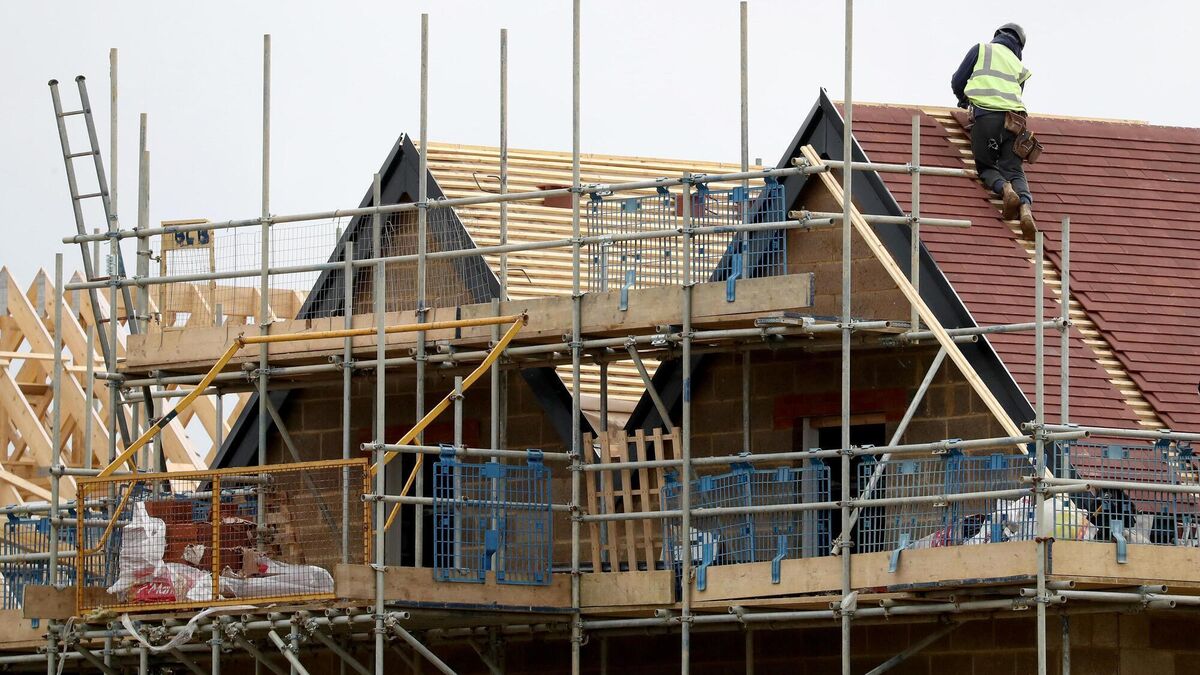
The largest concentration of new-builds will be in the county's eastern region along the commuter rail corridor.
To achieve ‘critical mass’, the Metropolitan region of Co Cork will have to reach a population of 500,000 by 2050 and a further 120,000 jobs will have to be created to make this a reality.
However, there have been warnings that projected growth across the county won’t be achieved unless Transport Infrastructure Ireland (TII), Uisce Éireann, ESB and Department of Education don’t provide the infrastructure required to enable Cork County Council to achieve the goals it has set.
Projected growth patterns have been released in the newly-adopted County Development Plan (CDP), which also outlines housing density planned for four different parts of the county up to 2034.
At present the highest number of jobs, at slightly less than 66% of the entire county, are concentrated to the east and north of the city – mainly in Carrigtwohill, Midleton and Little Island – and that's where the bulk of new housing growth will be concentrated.
The metropolitan zone covers an area of the county stretching from Midleton in the east to Kilumney/Ovens in the west and south of Fermoy in the north to Carrigaline and Passage West in the south.
Housing density in this area will be a maximum of 50 units per hectare.
The largest concentration of new-builds in it will be in its eastern region along the commuter rail corridor. Developers are already planning to construct thousands of new homes along the railway line at Glounthaune, Carrigtwohill and Midleton.
The CDP splits into three other areas: Greater Cork Ring, North Cork and West Cork.
The Greater Cork ring is outside the Metropolitan area and encompasses areas such as Fermoy, Macroom, Bandon and Youghal.
Projected housing density for these areas are designated at 40 units per hectare.
It’s the same for Mallow, which is designated as a ‘key town’, again because of its railway connectivity.
The other designated regions of predominantly rural North and West Cork have housing density at a maximum of 35 units per hectare.
The CDP is allowing for up to 50,000 homes to be built up to 2034, with a minimum growth set at 38,370.
It also identified ‘long term and strategic development’ at two specific sites.
One is at Monard, near Blarney. Around 41 hectares earmarked there could accommodate 1,433 housing units.
The other site's at Kilumney/Ovens is 46 hectares and capable of taking 1,500 new units.
Apart from building by private developers, the council has committed to constructing 3,837 social, affordable, cost rental houses each year up to 2034.
But some councillors have warned the plans could be stymied if certain agencies don’t co-operate.
Fianna Fail councillor Gillian Coughlan, who chairs Cork ETB, has demanded the Department of Education & Youth carry out a detailed audit of projected needs across the county.
She claimed the department is underestimating the current and future needs and must urgently address this.
Fianna Fail councillor Sheila O’Callaghan castigated Uisce Éireann for systematic failures across the county with water and sewerage services.
“If pressure isn’t put on them then we cannot follow through with this plan,” Ms O’Callaghan said.
Senior local authority officials said they will continue to engage with national agencies to ensure appropriate infrastructure is put in place.






 App?
App?


