Fears for 'new' north Cork school as local wastewater treatment plant is already 'overloaded'
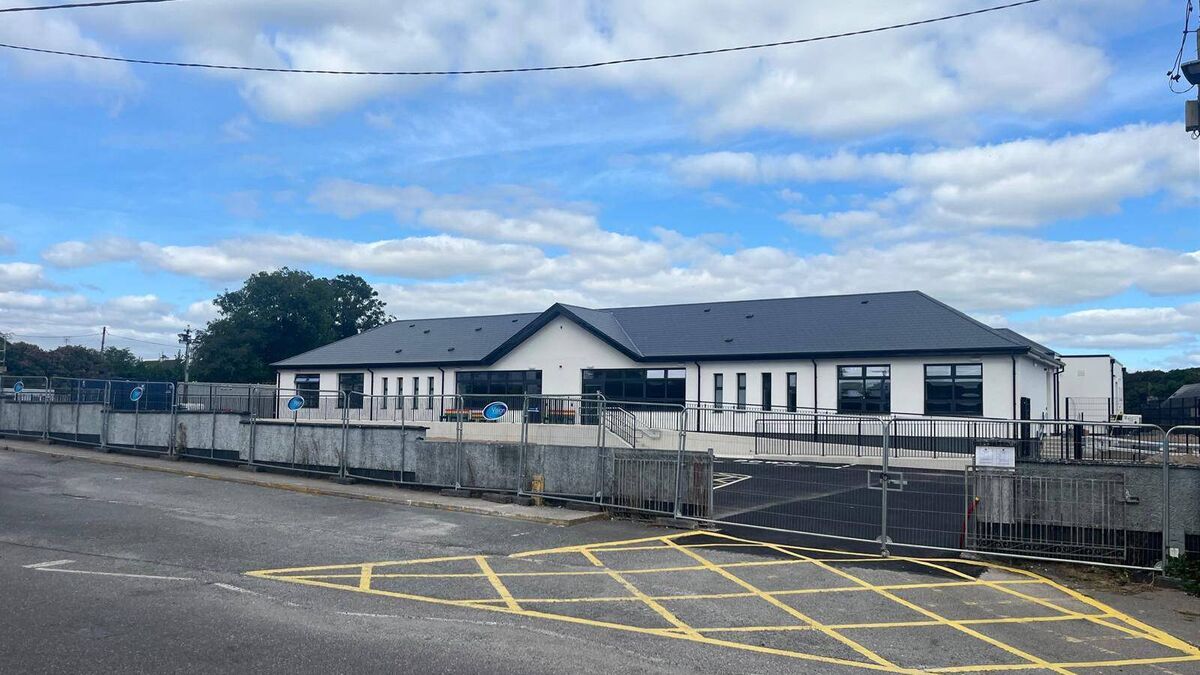
Construction work on the new school premises, a refurbished former primary school, above, is complete, but concerns have been voiced about possible added strain to the local wastewater system. Picture: Donal O'Keeffe
A sewage plant key to the opening of a Co Cork special school is “biologically and hydraulically overloaded”, the Environmental Protection Agency (EPA) has said.
The North Cork Community Special School had been due to open in Carrignavar on August 27, but the Department of Education declined three times this week to confirm that it will now open on that date.
Construction work on the new school premises, a refurbished former primary school, is complete, but concerns have been voiced about possible added strain to the local wastewater system.
A key planning condition for the new school states that it cannot be connected to the public wastewater network “without prior approval from (Uisce Éireann)”.
The school has 25 staff and caters for 36 children, aged between four and 18, with autism and mild or moderate learning difficulties.
Carrignavar is about 10 miles from Cork city and has a population of 563 people, per the 2022 census.
The past decade has seen ongoing issues regarding sewerage capacity in the village. In 2017, the then Irish Water’s annual environmental report said Carrignavar’s wastewater system was overloaded and its final effluent non-compliant with the water utility’s emission limit values.
In 2019, Inland Fisheries Ireland (IFI) raised concerns that the public wastewater system was “organically and hydraulically overloaded”.
In 2020, Irish Water received the benefit of the Probation Act following a prosecution by IFI for breaches of fisheries and water pollution legislation, and in April 2026, the wastewater treatment capacity register classified Carrignavar as ‘red’, meaning there was no spare capacity available.
IFI this month initiated legal proceedings against Uisce Éireann for what it called “alleged deleterious discharges to the Cloghnagashee River” at the end of July.
A spawning ground for pike, eel, and perch, the Cloghnagashee is a tributary of the Glashaboy river, which feeds the Glashaboy reservoir, serving the entire Glanmire area.
The EPA said it had been notified of “a discoloured discharge in the River Cloghnagashee, Carrignavar” on July 27 and carried out an inspection that day.
During that inspection, the inspector highlighted to Uisce Éireann concerns about the quality of wastewater discharge from the treatment plant.
“Carrignavar wastewater treatment plant is both biologically and hydraulically overloaded,” the State agency said.
“Uisce Éireann [is] responsible for the operation and maintenance of Carrignavar wastewater treatment plant and the associated sewer network and ensuring discharges meet the requirements of the wastewater discharge licence.” The EPA added that it currently has “an open compliance investigation” in relation to the required upgrade of the treatment plant and will consider any further enforcement actions following that investigation.
“Uisce Éireann has been instructed to expedite both operational and infrastructural improvements at the site to bring the discharge into compliance with the licence and to provide timeframes for the implementation of these works,” the EPA said.
Colm Burke, Fine Gael TD for Cork North Central, said the EPA’s findings were “damning” and called on Uisce Éireann to upgrade the facility at the earliest possible date.
Pádraig O’Sullivan, Fianna Fáil TD for Cork North Central, said the EPA’s findings confirmed what residents in Carrignavar had known for years.
“This treatment plant is overloaded and has been discharging in breach of its licence,” he said.
“Uisce Éireann needs to urgently expedite the upgrade works the EPA has directed.” Uisce Éireann was asked for comment.










 App?
App?


