Social housing in Cork city by the numbers
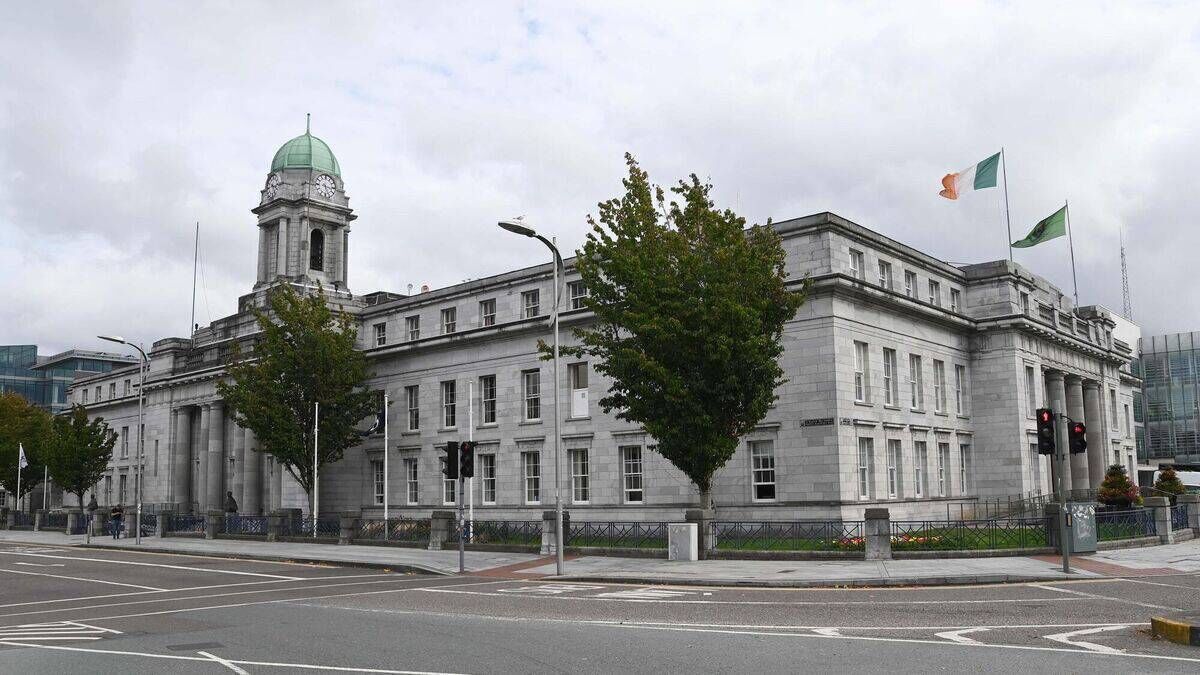
According to a spokesperson for Cork City Council, its annual €147m-plus housing budget includes €21m spent on maintenance — the council will receive and address 11,000 repair requests by direct labour in 2026. File picture: Denis Minihane.
With almost 12,000 social housing units managed by Cork City Council, last year saw just over €147m allocated in the housing and building service division in the council’s 2026 budget.
By comparison, Dublin has approximately 60,000 directly-managed social housing units across its four local authorities, but with the Department of Housing not collating exact figures, it is difficult to directly compare the Dublin and Cork overall budgets.
According to a spokesperson for Cork City Council, its annual €147m-plus housing budget includes €21m spent on maintenance — the council will receive and address 11,000 repair requests by direct labour in 2026.
Read More
Maintenance is an issue of some controversy.
Sinn Féin’s housing spokesperson, Eoin Ó Broin, has said that due to successive governments underfunding local authorities, maintenance of ageing social houses is beyond the financial capability of many councils.
Over the past five years, Cork City Council received 480 tenant complaints regarding rodent infestations; 21,700 complaints regarding difficulties in heating council homes; 4,920 complaints regarding damp and mould; and 340 complaints regarding structural issues in council properties.
Almost a third of Cork City Council’s housing budget — €54m — will be spent on the rental allowance scheme, €1.3m on house loans, €6.6m on disabled person grants, and €45m on homeless services. Climate action, asset management, and asset inspection will account for some of the council’s remaining spend.
Cork City Council currently owns and manages 11,021 homes as well as managing 370 homes provided under various social leasing schemes. The council also owns 504 properties which are managed by approved housing bodies.
The total figure is 11,895 properties.
Of that total 11,895 properties, 9,678 are houses, 2,189 are apartments and 16 are described as “other types of units”.
Excluding the homes managed by approved housing bodies — occupancy information on these is only updated periodically — there are currently 10,837 occupied properties.
The council currently has 526 vacant units, including 94 which have been “decanted”— a phrase beloved of housing officials and meaning people have been moved out – as part of planned regeneration projects.
The spokesperson said the city council intends to deliver 3,000 new social housing homes over the next five years, which will be delivered by both the city council and approved housing bodies.
The council has 10,837 active tenancies, of which 4,145 are held in joint tenancies -meaning two tenants - and the remainder are held in sole tenancies.
There are 14 housing officers working across the council’s three area offices, with five housing officers in the north-west area office, four in the north-east area office, and five in the south area.
On average, each housing officer handles 814 properties, with the highest number of properties, 1,031, in the south area district one, and the lowest, 644, in the north-east area district four.
Of Cork City Council’s total current active tenancies, 3,273 are occupied by single adults with no children in occupation, 2,217 are occupied by two adults with no children in occupation, a figure that includes adult children residing with a parent as well as couples.
The remainder — 5,347 —are occupied by what the council refers to “households with a larger composition”, presumably meaning families with children. There are 7,269 children registered as occupants in active council tenancies.
Asked how many of its tenants are over 65 years of age, the council said: “We do not systematically collate data on the age of tenants as there is no business requirement to do so”.
Cork City Council operates a differential rents scheme, which was introduced by Philip Monahan, the country’s first local authority manager, a century ago.
This means that rent payable is calculated on the household income and will reduce or increase based on fluctuations in income when notified to the council.
The average weekly council rent is €80.56 per week.
Certain properties, which the council described as being under special lettings for community use, pay a reduced fixed rent of €10 per week.
The current highest weekly council rent is €366.60 per week.
When asked how many properties are more than 50 years old, the council said it does not collate such information.
- This special report was funded by the Local Democracy Reporting Scheme.








 App?
App?


