'The horror of what I have seen will never leave me': Cork charity founder haunted by scenes from war in Ukraine
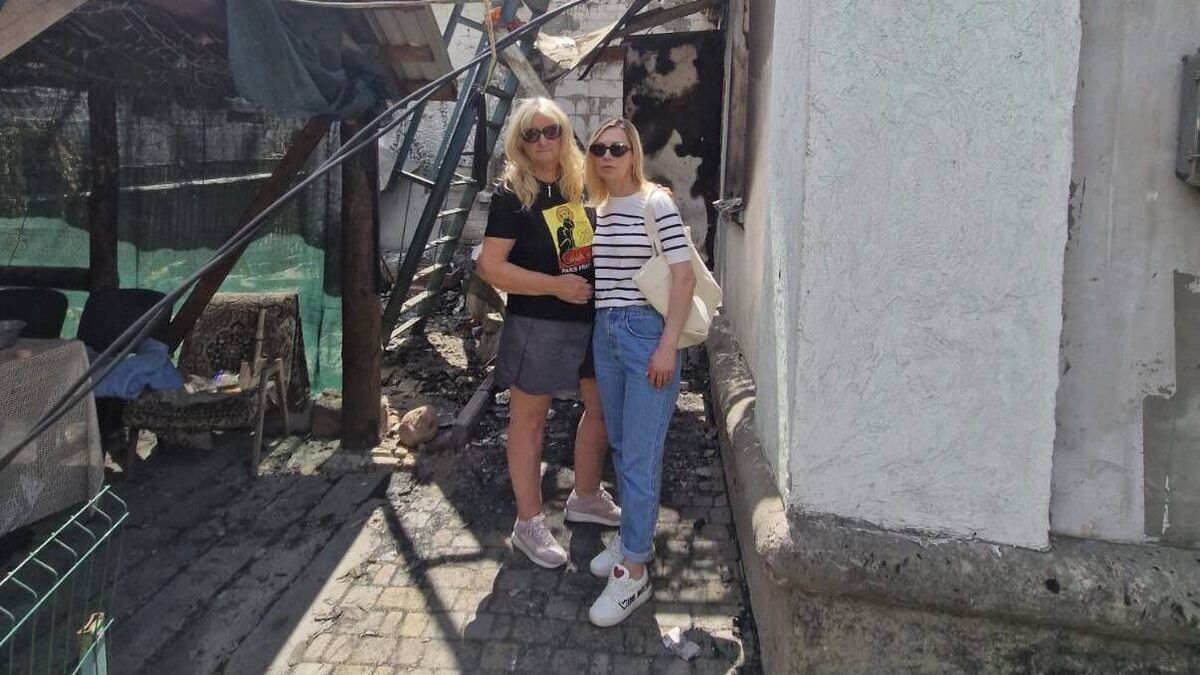
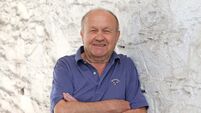
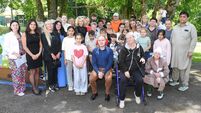
Fiona Corcoran left and Lena, who recently lost her mother following a Russian strike on Vyshneve.
The horror of the war in Ukraine will never be forgotten by the Cork founder of a charity that has assisted the vulnerable in that country for more than two decades.
Fiona Corcoran established the Greater Chornobyl Cause in 2002 to assist with the ongoing consequences of the 1986 Chernobyl nuclear disaster.
Ms Corcoran expanded her mission to provide critical support to orphans, the elderly, and those in need in Ukraine, Kazakhstan, and Russia.
She is currently in the “battered heart of Ukraine”, in the small town of Vyshneve, outside Kyiv.
Earlier this month, a Russian strike on the town hit a warehouse of armaments, setting off a series of secondary explosions.

Ten people were killed and hundreds of houses were damaged or destroyed.
Ms Corcoran has cursed out loud, again and again, at the “deliberate evil and savage brutality” that has been unleashed on innocent people.
“The horror of what I have seen will never leave me. In Vyshneve, homes are not just damaged: They are obliterated, reduced to twisted remnants, the skeletal remains of what once sheltered generations.
“The gardens still grow, mocking the destruction, a stubborn echo of life amid carnage.
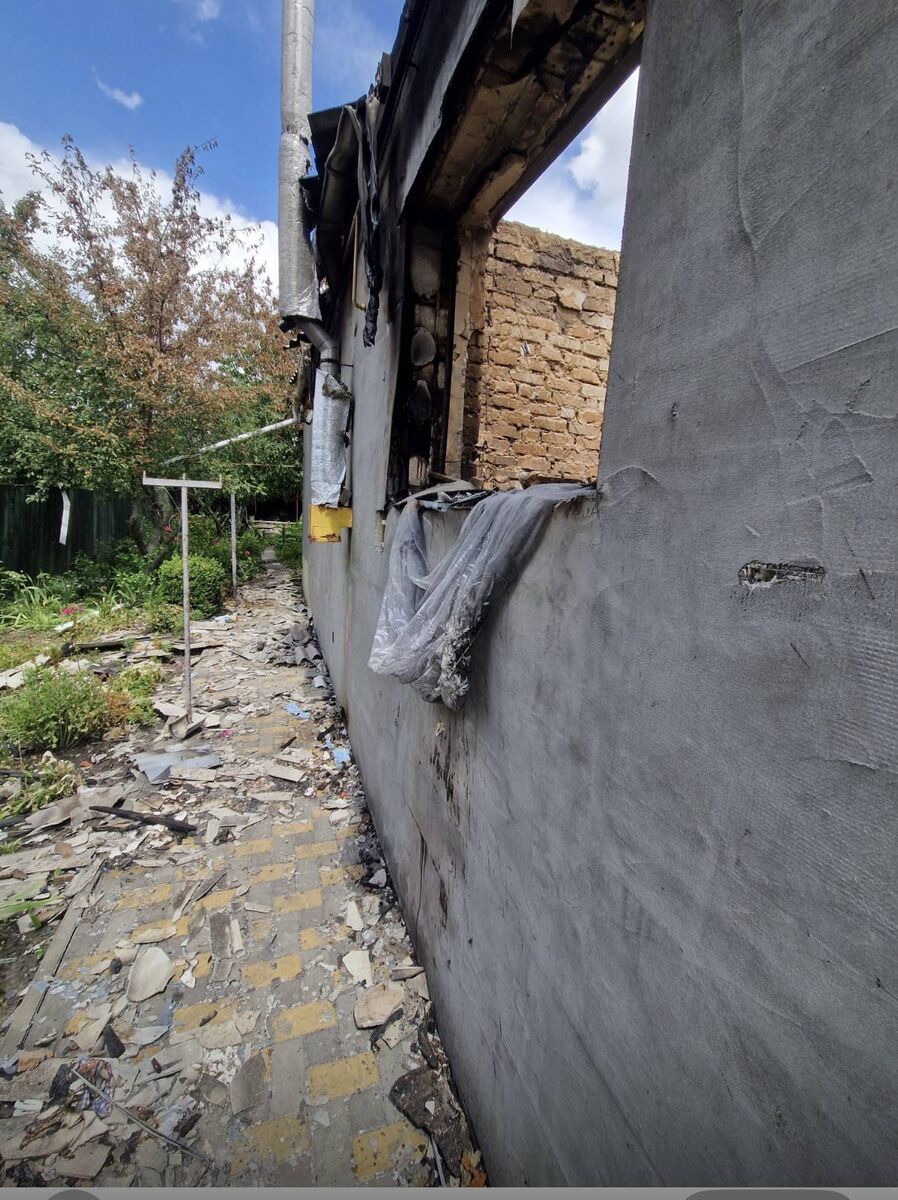
“I saw a hammock, empty now, that just days ago cradled a laughing child. A trampoline sits abandoned in the ruins, silent where the joyous shouts of children once rang out.
“Now, the only sound is the howl of grief,” Ms Corcoran said.
“I met Lena, whose beloved mother was slaughtered in the bombings, and her husband, Igor, who tries to be strong for her, though he is shattered by loss.
“Together, they smashed down their burning door, fleeing with their 16-year-old son — his body spared, but his spirit scarred for ever.”
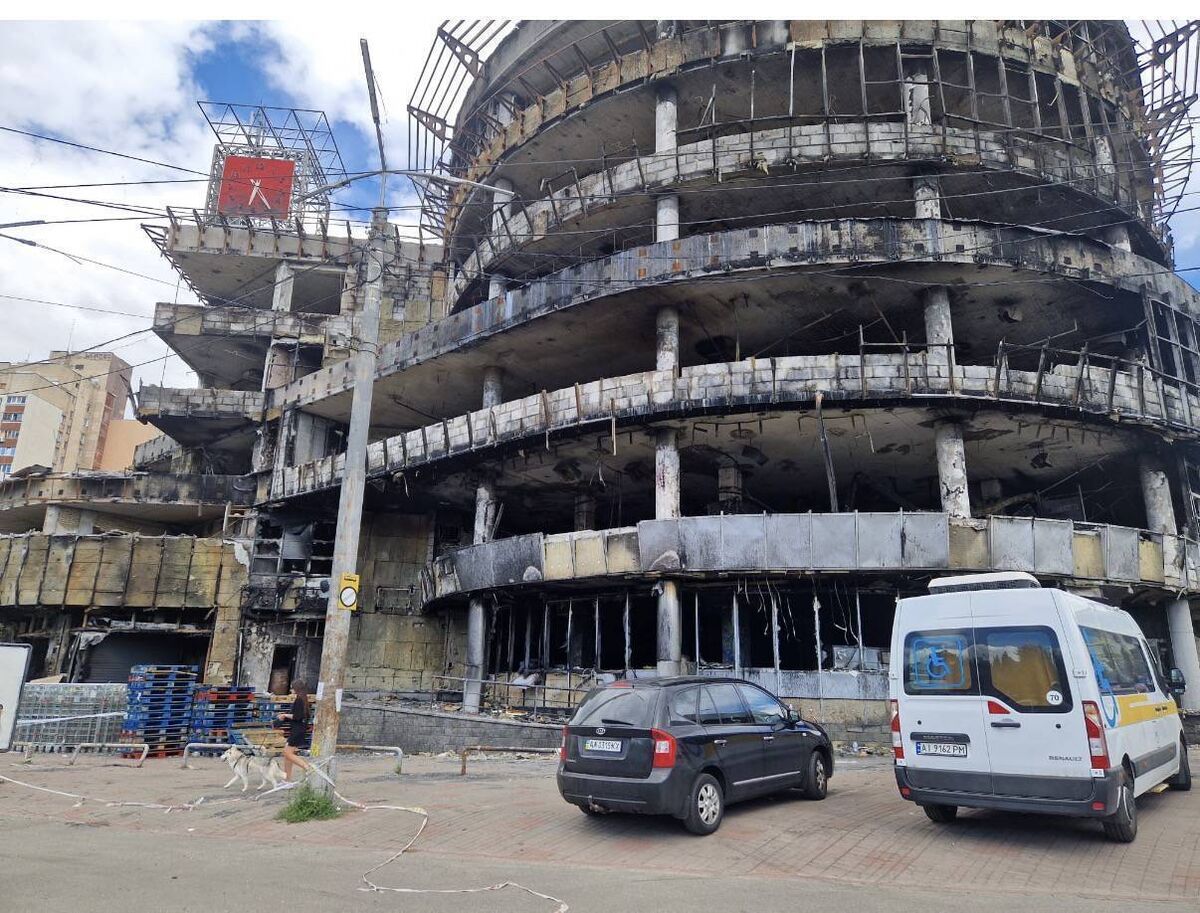
Ms Corcoran said she stood at the Kvadrat shopping mall, once alive with shoppers, “now a blackened skeleton”.
“Its clock will forever mark the hour of obliteration, when Russian missiles and drones ravaged it in the dead of night. The building is a tomb of hope. Then, I came to the Lukianivskyi Market, once the beating heart of the community — a place of pride, tradition, and survival.
“Stallholders whose families have traded there for generations now set up makeshift stalls outside the charred ruins, the air heavy with the stench of burnt debris and sour milk.
“They stand in the open, exposed to the elements and to danger, surrounded by the ashes of their past, their stalls, their livelihoods, their history swept away in a single act of aggression.
“I speak with these market people — men and women who have lost not only their trade, but their loved ones, killed in the very spaces they once called home and work.
“One stallholder told me, through tears, how his daughter and son-in-law died in a bombardment that came before dawn, leaving no time even to scream.
“Where their stalls once stood, where their fathers and grandfathers stood before them, there is only ruin and memory.”
Ukrainians waking 'in terror' every day
Ms Corcoran admits that she is “deeply afraid” for Ukrainians, who wake each day in terror, never knowing “if this day will be their last”.
Meanwhile, the charity head has also spent time in Ivanhiv, a community less than 60km from Chornobyl. She says that the needs of the people of the area “are greater than ever”.
“Among the most deeply affected are the elderly — those who have already survived the horrors of Chornobyl and now endure the suffering of a new and relentless war.
“Many women in their 80s, survivors of Chornobyl, and men who once risked everything as Chornobyl liquidators, are now left with illness and age. Some are so isolated and traumatised that hope itself seems to be slipping away.
“Here, there is no safety net, only waiting lists, cold rooms, and prayers. The war has reopened wounds that may never heal, unless we act swiftly.
“The desperate need for care cannot be overstated. Our only in-patient facility is overwhelmed; just 30 beds for a region with more than 6,000 elderly people and 3,000 with disabilities.”

Ms Corcoran says that through collective support, they have brought hope and relief to many.
“This generosity has enabled us to provide specialised beds, disability aids, therapy equipment, essential furniture, kitchen equipment, and a continuous supply of food, clothing, and hygiene products.
“Most crucially, support has made it possible for us to acquire an ambulance — a lifeline that allows us to transport patients to the capital for the advanced care they so desperately need.”
She said that the need is growing more urgent by the day.
“That is why our immediate and most critical project is the opening of a second in-patient care home at the former Prybirsk District Hospital.
“This cannot wait. The lives and dignity of our most vulnerable depend on it.
“We are pleading — yes, pleading — with people everywhere, with every ounce of determination and hope we have left, to help us make this a reality.”
Donations can be made to the Greater Chernobyl Cause at www.idonate.ie/donate/cause/greaterchernobylcause.

App?