Jury in Macroom murder trial told of stab wounds to deceased and discovery of knife in luggage hold of bus
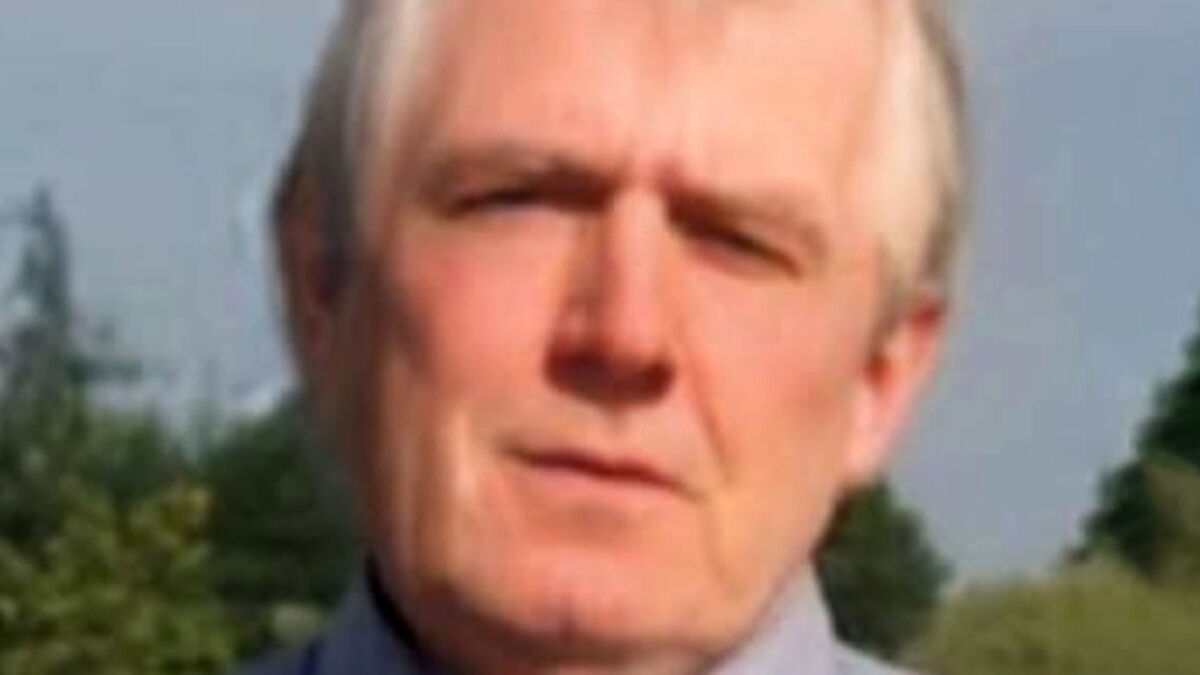
61-year-old Michael Foley who was found dead at his home in Macroom in 2024. Picture: Cork Courts Limited
The 61-year-old man found dead at his home in Macroom suffered eleven stab wounds, 19 slashes and 23 bruises and lacerations, the pathologist told the jury, who were also told today by another witness of a carving knife being discovered in the hold of a bus.
Dr Margaret Bolster, assistant state pathologist, told Ms Justice Siobhán Lankford and the six men and six women of the jury in the Macroom murder trial that the injuries could have been inflicted by the long carving knife which was shown to her, or by a knife similar to this.
The prosecution allege that 61-year-old Michael Foley was murdered at his home in Annville, Barrett’s Place in Macroom on February 1 2024. 32-year-old Daniel Hourigan who is originally from Farranree in Cork city, pleaded not guilty to his murder.
Dr Bolster gave evidence of the wounds and injuries that she found on Mr Foley’s body when she conducted a post-mortem on his remains at Cork University Hospital after Michael Foley was found dead in his home.
Dr Bolster said the wounds that she found on Mr Foley included eleven stab wounds, five of which were to the left arm, four to the chest, one to the abdomen and one to the thigh. Describing the 19 slash or incised wounds, Dr Bolster said 12 were to the forehead and seven were to the left elbow and arm.
One of the stab wounds pierced Mr Foley’s right lung leading to its collapse and one of the slash wounds penetrated his skull and caused the loss of a lot of blood.
The pathologist said there was no evidence that a slash wound alone caused death in this case. She said it was a combination of all the stab and slash injuries that led to death of Michael Foley.
“Slash wounds and stab wounds led to extensive haemorrhage and death,” she said.
Dr Bolster also said that toxicology tests revealed that the deceased had a blood alcohol concentration of 227mgs of alcohol per 100mls of blood.
Cross-examined by Ray Boland defence counsel for Mr Hourigan, Ray Boland SC, Dr Bolster agreed that this alcohol concentration level would could cause disinhibition and aggression and could affect a person’s ability to defend themselves and their coordination.
Bus Eireann driver Paudie McKenna gave evidence of finding the knife which he believed was stained with either rust or dried blood.
On February 1 2024 at 11.20am, Paudie McKenna picked up passengers at Macroom on the bus he drove from Tralee to Cork city. He described a man and woman who got on together and left a black plastic refuse sack after them in the cargo hold. At the end of his workday he looked into the bag.
he said.
The first thing he noticed when he tore open a hole in the black plastic bag was a strong smell of fluoride or something like toothpaste.
“Next to the pair of sneakers (in the bag) I saw a long knife. I took the knife out of the bag. I had a good look at the knife,” he said.
Gardaí contacted him subsequently. As soon as he was contacted he asked the guard if it was about the man and woman who got on the bus at Macroom. Under cross-examination he agreed with defence senior counsel Ray Boland, in relation to the man getting on the bus:
Describing the man’s appearance he said: “The male was low-sized, he had a kind of long goatee beard. I am not trying to make a joke but he reminded me of Super Mario with his head kind of bobbling along. That kind of came to my mind,” Mr McKenna said.
Prosecution senior counsel Jane Hyland explained what was meant by the response to the murder charge made by the accused when he said: “Not guilty of murder but guilty of assisting an offender under Section 7 Subsection 2 of the Criminal Law Act 1997.” She said that in non-legal language “what that means is that he is saying to you that he helped another person when they committed an offence to prevent them being caught", but that he is not guilty of murder.
The trial continues.






 App?
App?


