Probe into last summer's major fish kill in Cork river cost €42,000
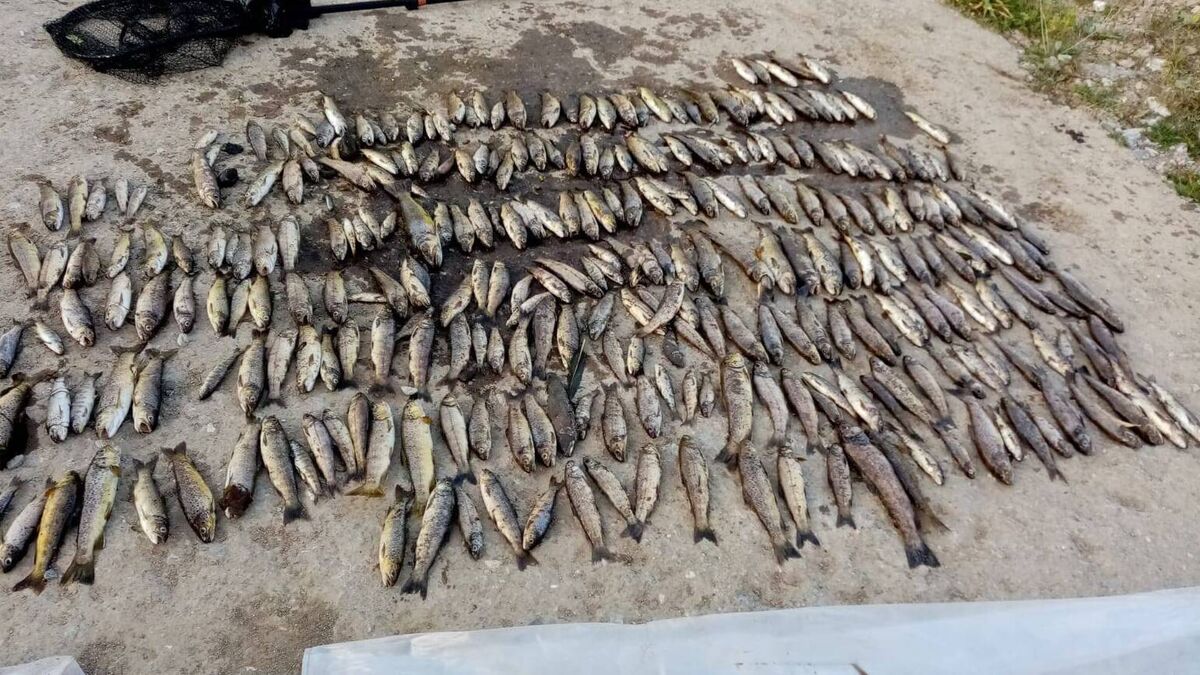
Some of the fish which were killed in the August incident.
More than €42,000 was spent on a probe into the cause of the major fish kill on the River Blackwater last summer, but no definitive cause for the death of tens of thousands of fish was found.
Inland Fisheries Ireland (IFI) said the investigation, which took place between August and September, cost €42,722.50.
While no definitive cause was found for the incident, which saw an estimated 41,801 fish killed — of which up to 32,178 were brown trout and salmon — approximately 81% of the costs incurred by IFI went to internal resourcing.
Of the costs incurred by IFI, €34,726.43 was paid out to nine staff members for 1,170 hours of work. A further €7,246.07 was paid to Eurofins Environment Testing Ireland for laboratory services.
Barrett Animal Collection Services Ltd were paid €750 for emergency fish disposal.
The information was provided to The Echo following a Freedom of Information request.
The ecological event, first reported on August 12, impacted up to 30km of the River Blackwater, as well as stretches of the River Awbeg and River Clyda.
During the initial investigation, led by IFI with support from the Environmental Protection Agency (EPA), among several other Government departments and agencies, the EPA believed the incident was likely caused by a water-borne irritant.
Speaking to The Echo, chairman of the Killavullen Angling Club, Conor Arnold, who is also a fly-fishing instructor and owner of a commercial fishery on the Blackwater, said he believes no cause was found due to the delay in setting up the inter-agency investigation.
“The money that was spent on the investigation doesn’t surprise me at all,” said Mr Arnold.
“It took them 14 days to set up the group to investigate, so it was two weeks in before they actually started. By the time they set it up, there was never going to be any evidence found.”
He said that he would like to see a fish counter in place, and habitat surveys and restoration works done to mitigate the impact.
“We also need water-quality monitors put in place, because another pollution event of the same scale will put us back to square one, or worse,” he added.
He said his business was badly affected, and that there is nothing to prevent this from happening again.
In the inter-agency report, the IFI said they found“no evidence to support a link between the fish mortalities and a point source of pollution or a specific environmental insult or waterborne irritant, and that no change in water quality had been detected in the affected stretch between 2024 and 2025”.
Despite this, IFI concluded that a waterborne irritant “likely entered the river 72 hours before the first mortalities were observed, at an unidentified point, and dissipated quickly, rendering it undetectable in water samples and fish-tissue samples”.
Uisce Éireann confirmed that a review of wastewater and water-treatment plants in the catchment area failed to identify discharges that could have resulted in the fish kill.
A spokesperson for North Cork Creameries said there was “nothing in our licensed effluent discharges that could have caused the mass fish kill or the dreadful injury to fish”.
This was later backed by IFI, which said no “causal link” had been discovered between the company and the fish kill on August 5.

App?