Council to carry out pilot project to prevent infestation of sea lettuce at Cork beaches
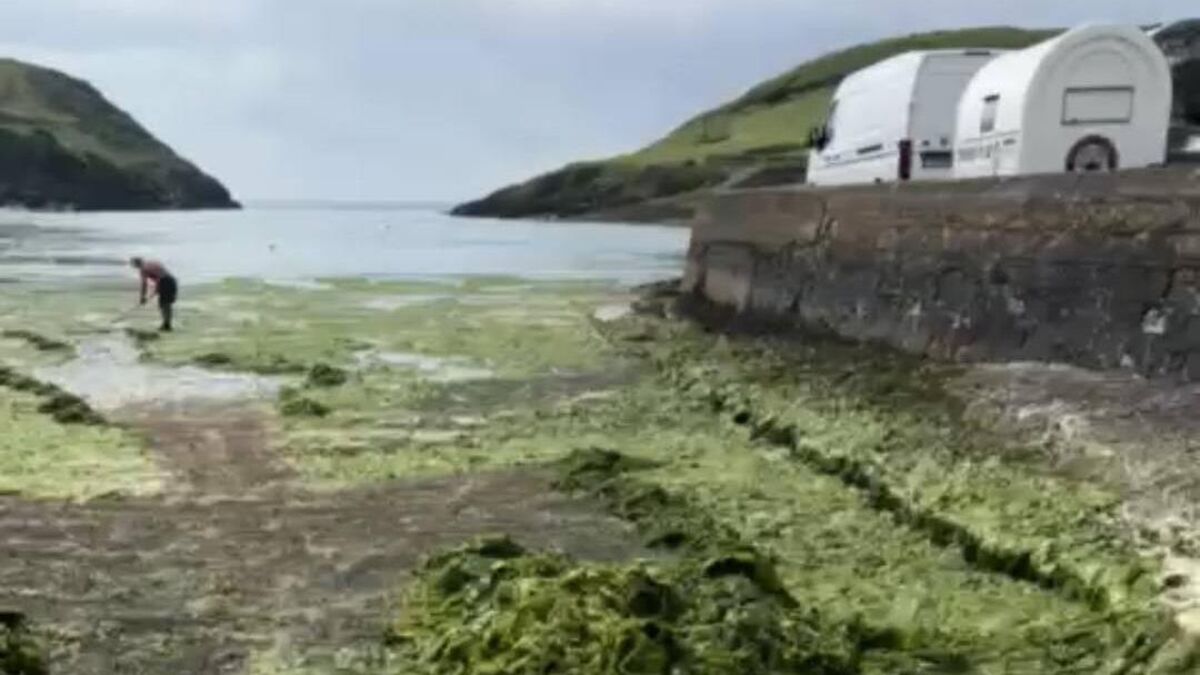
Sea lettuce in Robert's Cove, Cork. File picture
Cork County Council is looking for help to carry out a pilot project to control increasing sea lettuce infestation at beaches along the south-west coast by utilising shellfish to clean up bathing waters.
The infestation of sea lettuce on beaches and slipways in the region has worsened in recent summers, primarily due to nitrate fertiliser sweeping off the land into seas which are getting warmer.
The combination of both feeds sea lettuce. When it starts to decay it smells like rotten eggs and leads to fly infestation.
The council is to write to the Marine Institute and Local Authority Waters Programme asking it for help to carry out a pilot programme, copying one in Wales, where oysters and mussel bags are placed in the water.
The shellfish are adept filter-feeders removing nitrates and reducing the nutrition sea lettuce depends on to thrive.
Last summer Robert’s Cove, near Crosshaven, was so badly impacted by infestation that the beach had to be closed for a number of days while council crews and local volunteers cleaned it up. The stench drove families away.
Crosshaven-based Fianna Fáil councillor Audrey Buckley won cross-party support to seek help from the Marine Institute and Marine Institute and Local Authority Waters Programme for a pilot project to counter the algae.
She said projects, like the one in Wales, are using low-impact shellfish systems, such as oysters or mussels as a nature-based supplementary measure to reduce nutrient availability in suitable locations.
“Sea lettuce kills everything underneath it,” Ms Buckley said. “With summer approaching, residents have been asking what measures the county council intends to put in place to sustain access to our county beaches, including arrangements for eco-toilets and the management of sea lettuce.”
She said the council spent a significant amount of money alone on cleaning rotting sea lettuce from Robert’s Cove.
“Like other councillors, I have spent the last number of summers dealing with complaints from residents and visitors about sea lettuce washing up on our coastline, making the beach inaccessible,” Ms Buckley said.
She said the council’s response to date has been “reactive” by bringing in machinery to remove sea lettuce from our beaches when funding allows.
“That work is necessary, but it is not sustainable, and it does not address the root cause of the problem."
By working collaboratively with our environmental teams and external agencies, we can explore whether there are longer-term, more sustainable solutions available to us.
"I fully acknowledge that this is new territory, but if we do not start examining alternative options now, we risk facing the same problem year after year,” she said.








 App?
App?


