Cork City Hall hosting four-day 'model UN' event
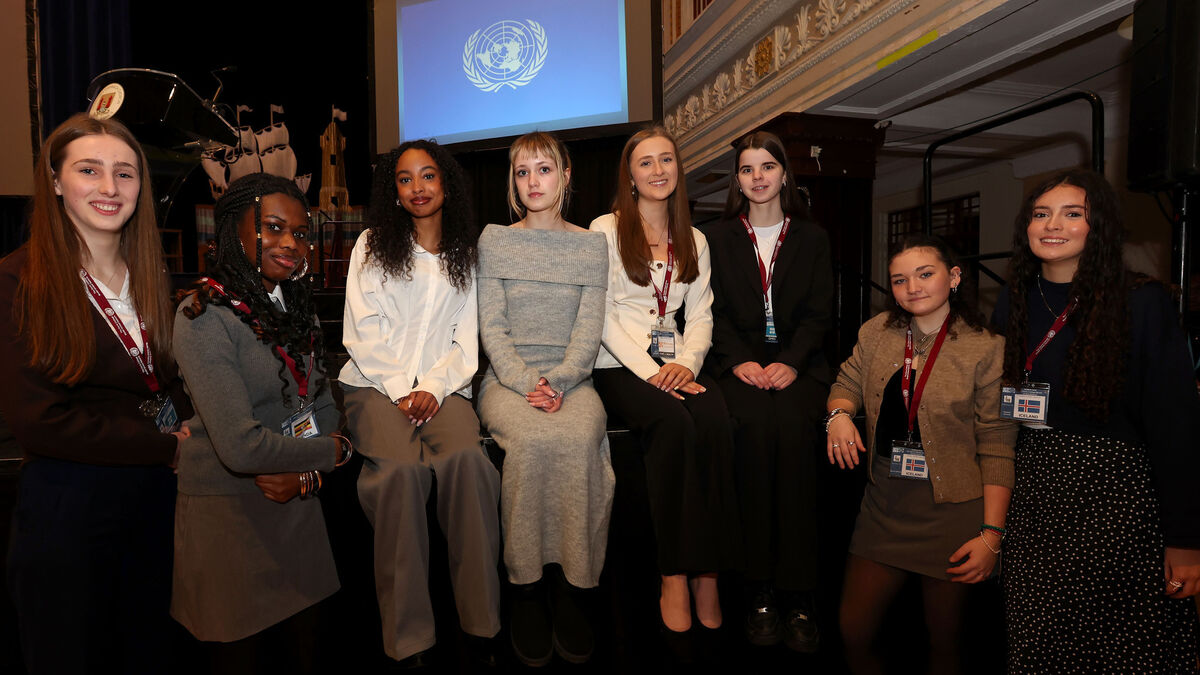
Orlaith Byrne, Cyrielle Konan, Ciara Rodriguez, Amelia O'Shea, Sinead Stack, Ciara Whooley, Mona Clifford and Isabella Scriven, all from Christ King Girls Secondary School, at the Davis College Model United Nations. Picture: Jim Coughlan
Over 600 students are participating in the Davis College 'model' United Nations event this week in Cork City Hall.
A Cork secondary school is hosting the event, which is now in its tenth year in City Hall, and runs from January 20 to 23.
Every January, students from all over the country and from overseas attend the largest international Model United Nations conference in Ireland.
This year, 550 delegates, 11 chief staff, 50 admin staff, and 50 teachers will participate, representing 42 schools from Ireland, Spain, and Germany.
The opening ceremony welcomed the Lord Mayor of Cork and the Deputy Ambassador of Poland, while a keynote address was delivered by acclaimed and award winning novelist Richard Zimler, joining delegates via live conference call.
The conference has been running since 2016 in City Hall, and sees students assigned a particular country or NGO to be a delegate for. Students must research their delegation, find out where it stands on the issues relevant to the conference and prepare and deliver speeches.
The four-day event provides students with a unique mock UN-style platform to tackle crucial world issues, and is hosted by Mallow’s Davis College, a Cork Education and Training Board (Cork ETB) school.
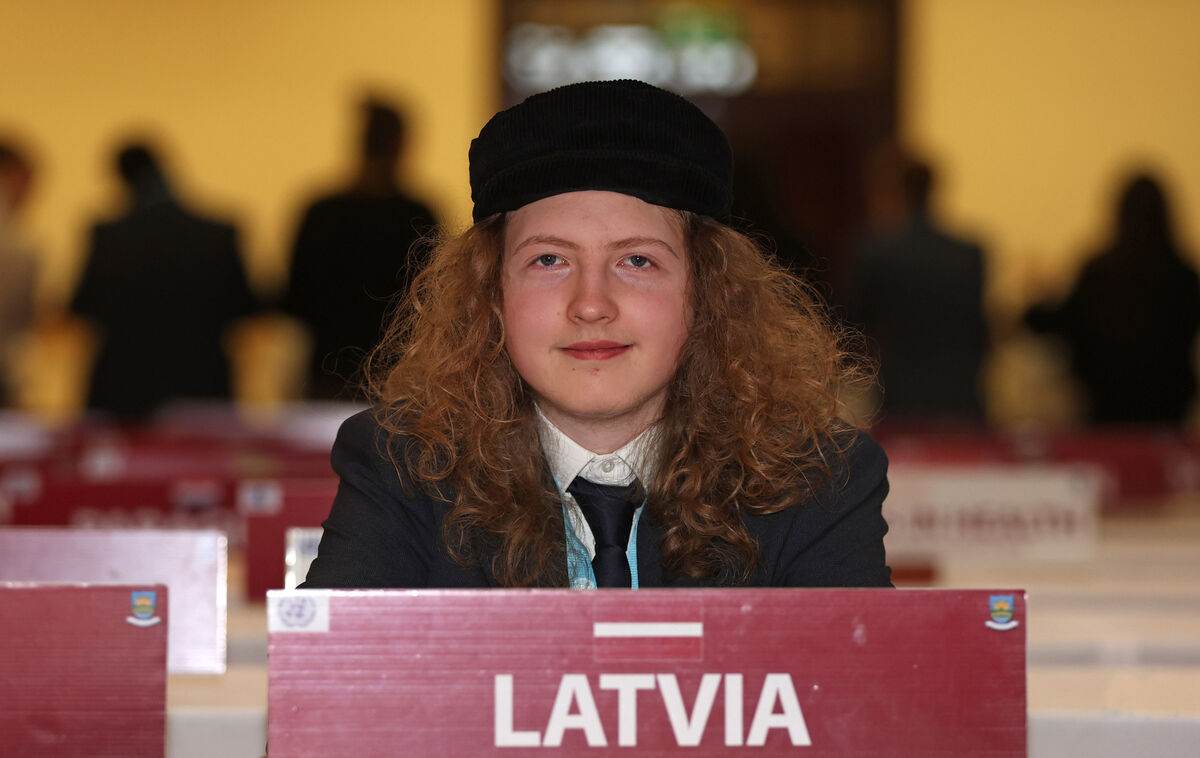
At the head of the conference are the top three student officers: Olamide Sanni, secretary general; Caraíosa Foley, deputy secretary general and Daniel Brennan, chief of staff.
Delegates will take their seats in the General Assembly, Special Conference, and Security Council, debating pressing global issues. The four-day event will follow a tightly co-ordinated schedule.
The General Assembly’s topics will include eugenics and bioethics, examining ethics in genetic engineering; immigration and national sovereignty, balancing borders, mobility, and integration; education in war zones, safeguarding learning in conflict areas; blockades and humanitarian aid, ensuring life-saving access during crises and religious freedom and its role in society, navigating belief, rights, and governance.
Topics on the agenda for discussion at the Special Conference include geoengineering and climate change, exploring interventions in earth systems; sex trafficking, combatting exploitation and supporting survivors; government corruption and governance limits, addressing global abuses of power; online safety and anonymity, regulating cyberspace while protecting rights and tackling global water scarcity.
In the Security Council, discussion topics include artificial intelligence in modern warfare, regulating autonomous weaponry and emerging threats as well as specific conflicts such as the US–Venezuela crisis and American imperialism, as well as rising tensions between Israel and Iran.
The event stands out as a student-run conference, empowering young people to lead every aspect of planning and delivery.
Conference organiser José Horta, who founded the Davis College MUN Club 11 years ago, emphasised the importance of youth leadership. “The students are the driving force behind the entire event," he said.
“DCMUN gives young people the platform to debate global issues, shape solutions, and build confidence that influences every part of their lives.”



 App?
App?


