Cork marks the changing habits in how we mourn our loved ones
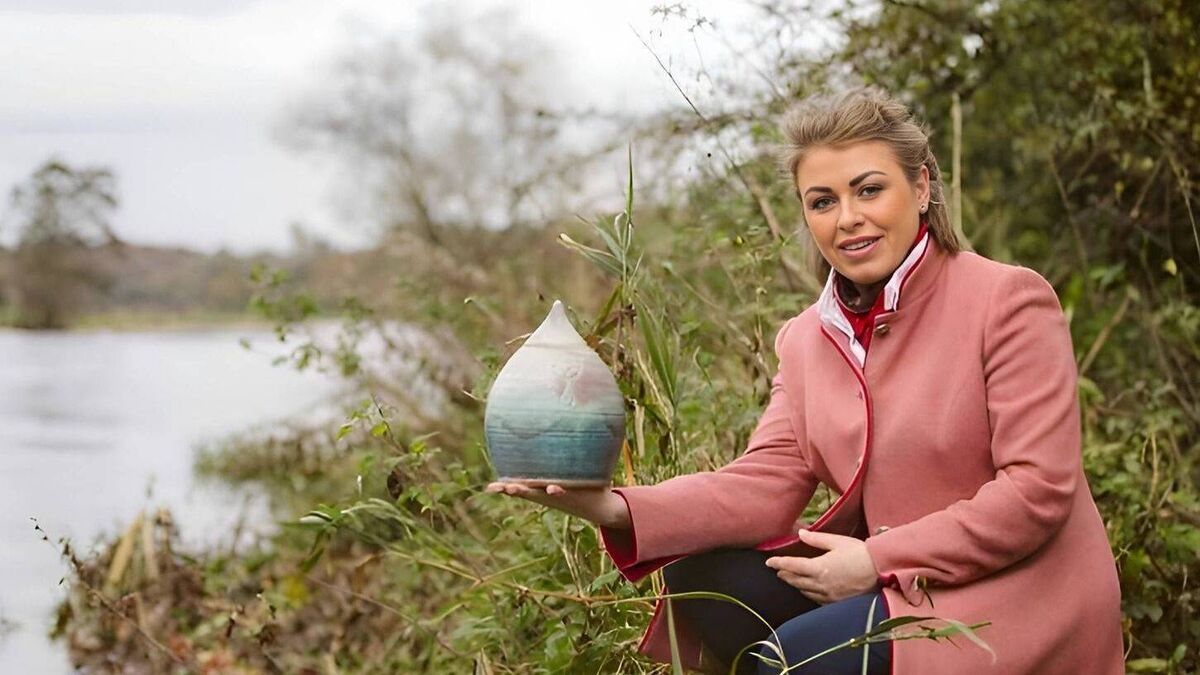
Elizabeth Oakes of Pure Reflections in Navan, the only company in Ireland completing resomation funerals as an alternative option to burial and cremation.
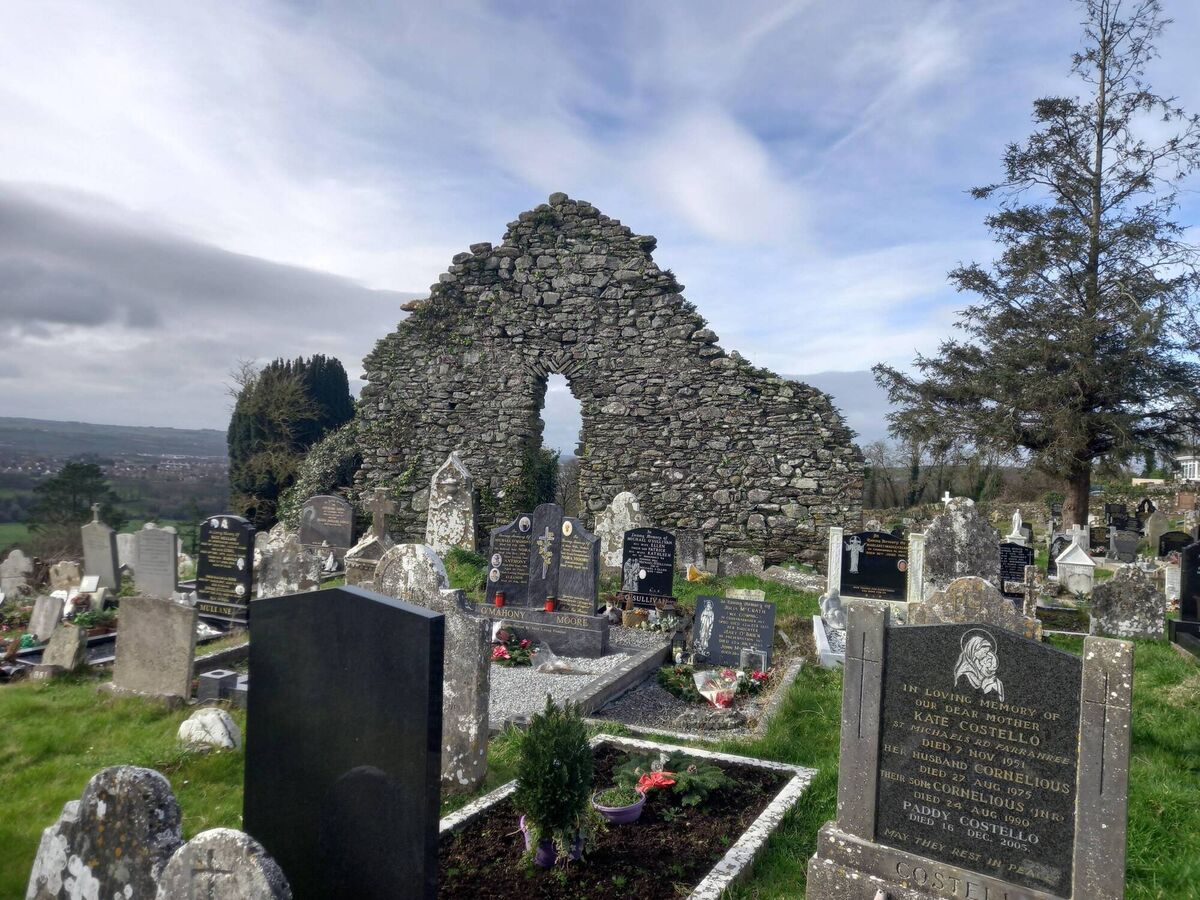
“In terms of burial habits in Cork, from a registrars’ point of view, I think covid had a big impact on how funerals are done, at least in Cork city anyways, and probably across the country,” said Mr McSweeney.
“Typically, they would have been carried out over three days, but now that’s been cut down to two.
“Prior to covid, there would have been a night in the funeral home for a rosary, then the second day would have been at the funeral home again for the removal, and then the third would be at the church for a burial.
“There’s also been a dramatic change in the way people celebrate funerals,” he added.
“I would say there was a lot more religious influence on funerals before than there is now, there’s certainly been a wane in that over the last two years.
“It’s totally age related, younger people have a different perspective on religion.
“They may not be atheists, but it’s not as important to them, they may have different beliefs — they’re not as rigid as the older generation.
“One out of every two funerals would have something along those lines now, which would’ve totally not been the norm even six or seven years ago,” said Mr McSweeney.
“There’s a lot more lay people involved now too, which may be due to the lack of priests being available — it’s a change by necessity more than anything else.”
Father Tom Hayes, who has been a priest of the Diocese of Cork and Ross for the last 40 years, said that throughout his tenure he has seen a substantial shift in the way people both host and attend funerals.
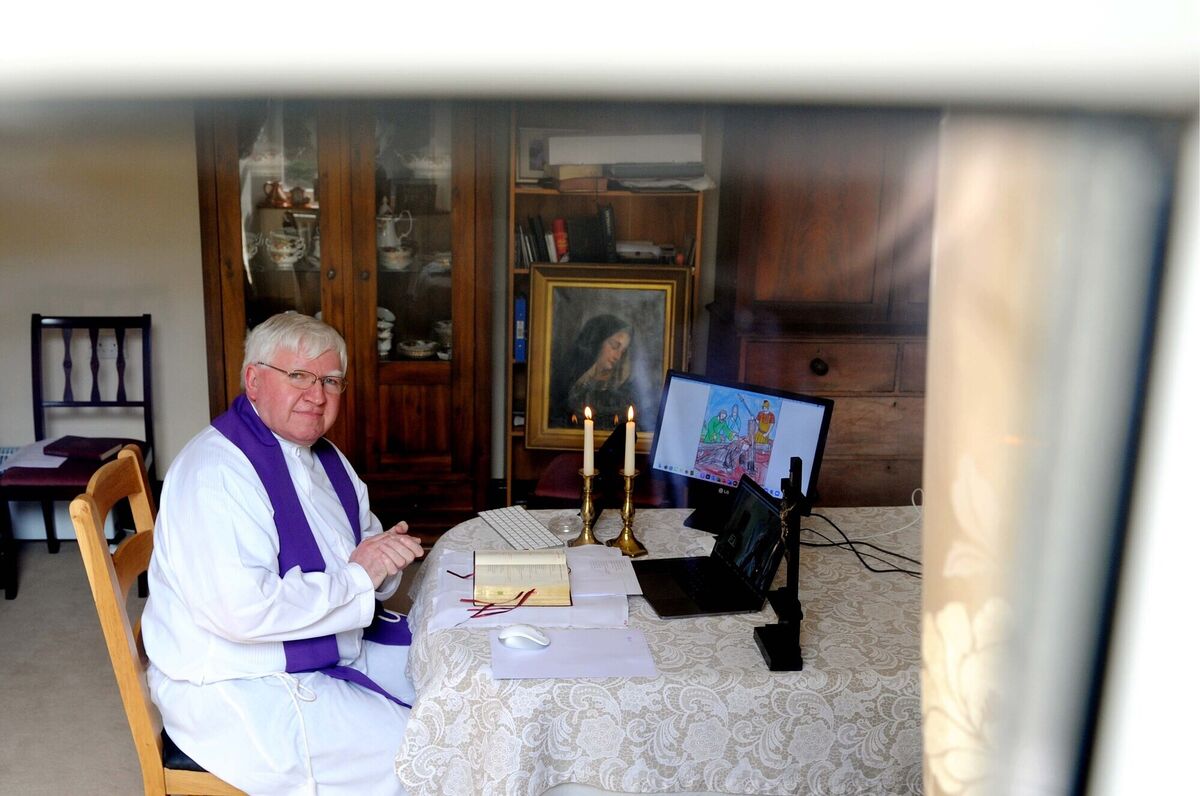
“You could write a book on how things have changed — there’s been a phenomenal amount of change,” said Fr Hayes.
“A number of things have changed in particular, but the one thing that hasn’t, which is probably the most precious, is the level of community support.
“That, however, was seriously interrupted during the pandemic, but most of it has been restored.
“Other than that, the most obvious change in recent decades has been the structure of the funeral rites, and the options that people have,” he added.
“When I started out, almost everyone’s funeral left from a church, and they were buried in the earth at a cemetery.
“I don’t know what the ratio is now, but not everybody wants to go to church. The majority still do, but some people choose alternative rituals, and some have no rituals at all.
“There used to be an established three day ritual previously, that was the dominant pattern for a long time, but nowadays, not everybody wants this.
“40 years ago, most of the funerals were very similar, but now, there’s a lot more variation,” said Fr Hayes.
“We do our best to meet the pastoral need of the situation, but it can vary a lot. It’s not black and white.
“Most of our parishes have lay people who will help families through the funerals — priests aren’t alone anymore.
“It’s been evolving over the last 10 years. It’s ever changing, the configuration of families has changed a lot too.
“How people actually celebrate the mass has changed a bit as well, 40 years ago there was a lot less participation in the funeral rites by the family, but now we encourage it by reading the scriptures and prayers, and choosing the music.
“That’s the one thing that stands out as something that has evolved over time — the personalisation of rituals, so that the ritual is more personalised to the life of the person who is being remembered.
Fr Hayes further touched on how some burial habits have been forgotten, or are close to being forgotten, with a modernisation of the burial ritual landscape.
“One thing that has almost disappeared; it’s not completely gone yet, but the responsibility of organising a burial place, that always fell on the family, and their neighbours then would have dug and closed the grave,” said Fr Hayes.
“It’s dissipated partly because of regulations imposed by the county councils, they only allow approved gravediggers to work in the cemeteries now.
“The pandemic did crash through a lot of rituals we had, but a lot of communities have gone back to recovering those.
“Changes will probably reflect what’s happening in communities across Cork overall; the question is how important is belonging to a community going to be for the next generation,” he added.
“A lot of community organisations are struggling to get volunteers, which may indicate that people’s connection with the local area may weaken over time.
“Connection with your neighbours is a lot thinner than it would’ve been before, so the incentive to go to a funeral will be reflected by that.
“Some people now live much more isolated from their community, their connection is more diminished than it has been for previous generations, and I think that will impact in time how funerals are done as well.”
As burial habits have undoubtedly changed over the years, it is expected that the funeral landscape across Cork and Ireland will continue to evolve into the future.
“In my opinion, coffin burials are definitely decreasing, but it’s slight,” said Mr McSweeney.
“It’s hard to put a figure on it, but I would say that one in every 12 would be a cremation. Cremation is a relatively new phenomenon for the people of Cork, with the crematorium in Ringaskiddy.
“I think that some people are nervous about it, but other people seem to like having that option, and would like to go that route.
Fr Hayes said he believes the number of cremations is “definitely growing”, and is more notable in urban settings.
“In rural areas, I think the number of cremations is much smaller,” said Fr Hayes. “I’m not sure as to why, but I would speculate that part of it is that there is a distinction in how funerals are conducted in the city areas in contrast with country towns.
“There is a stronger participation of the community in rural areas, but in the city, there isn’t really a bond between the cemetery and the parish. I don’t know what the burial landscape will look like in the next 10 years, but I do think that funeral patterns change very slowly,” he added.
“People are slow to change; how you decide to bid farewell to your loved one is not something you want to experiment with.”
Fiona Cranwell, director of the Shannon Crematorium in Co Clare, said that there has been consistent interest in cremation as an alternative funeral method, with the venue completing approximately 1,400 cremations in 2024.
“We’re only here since 2017, and since then there has been a steady increase each year,” said Ms Cranwell. “The first year we were doing five or six cremations per week, but now that’s our average every day.
“In Ireland, coffin burials are still 90-99% of funerals, anywhere that has ground, but in the city areas, cremation would be higher.
“Since covid, people have more input into how they create a service for their families, and technology lends itself to that, and the pull away from the church.”
Stacey Moloney, chapel manager at Shannon Crematorium, said 60% of cremations at the venue would have a priest or the church involved, whereas 40% would be humanist or celebrant-led.
“It’s almost an even split now, but a few years ago, it was predominantly religious,” said Ms Moloney.
Speaking about the change in perception towards cremation, Ms Cranwell said that there is still “a small percentage” of people who are nervous of cremation, but that’s “slowly changing,” added Ms Moloney.
While there has been a rise in the use of cremation as an alternative funeral method over the last number of years, there has also been another avenue recently explored in Ireland called resomation.
Resomation, while not yet considered a mainstream option for funerals across the country, is an eco-friendly option of remembering a loved one.
The process uses a 95% water and 5% alkaline solution to dispose of a body’s flesh before the bones are later ground down into a fine powder and placed in an urn.
There is only one company in Ireland conducting resomation funerals, Pure Reflections, which is based in Co Meath.
Elizabeth Oakes, the owner and CEO of Pure Reflections in Navan, said that the company, which has been operating for two years, completed just under 100 resomations last year, and is looking into opening a base in Cork.
“Resomation is a very environmentally friendly and gentle alternative to cremation,” said Ms Oakes.
“When a body is buried in the ground, there’s a chemical reaction that happens between the body and the soil, which is called alkaline hydrolysis — but now, because everyone is embalmed, they’re wearing polyester clothes and they’re in heavy-duty, plastic-lined coffins, that reaction is taking more than 50 years to happen.
“Resomation, or otherwise known as aquamation, speeds up the natural decomposition process, so what takes 50 years in the ground, takes four hours in our machine.
“The bones are then processed, put into an urn, and given back to the family,” she added.
“In our first year of business, we completed 98 resomations, and we would be on par with doing the same this year, if not more.
“What we want to do is offer people choice. People’s opinions have changed, and a lot of people have moved away from the church, so there’s different kinds of funerals now.
“Burial spaces are few and far between too, and the price of burial plots are increasing, pushing people towards cremation and resomation.
“Resomation is the ultimate green choice — there is no need for a coffin or embalming, and we guarantee to have the urn back to the family within four working days.
“We have had some resistance from funeral directors and the industry, but that’s understandable, they’re used to their traditional model, but we’ve had a huge response from the public,” said Ms Oakes.
“We do rent coffins for celebration of life services, so it doesn’t have to be purchased, if that’s something that people want to do, but a coffin doesn’t go into the machine.
“I do think there is going to be a big change in the future,” she added.
“The perception on water is that it’s a much more gentle approach when compared to fire, so that’s one reason why I think people choose resomation, as well as the eco-friendly environmental aspect, and the ease and seamlessness of the process.
“We have over 120 people who have signed up and pre-paid for their resomation funeral plans already, so that alone shows that this is the future, in my opinion.
“We’re already looking at opening new facilities in Cork and Dublin — once we get to a viable stage, we’ll be able to look at a second facility properly.”








 App?
App?


