Cork city flood-prevention plan costs jump to €200m
At the moment, the plan is that the final design will be completed by the summer, the scheme will go to public consultation at the end of 2025, and into planning to the minister for public expenditure, infrastructure, public services reform and digitalisation in spring or summer 2026.
Cork city flood-prevention plan costs jump to €200m

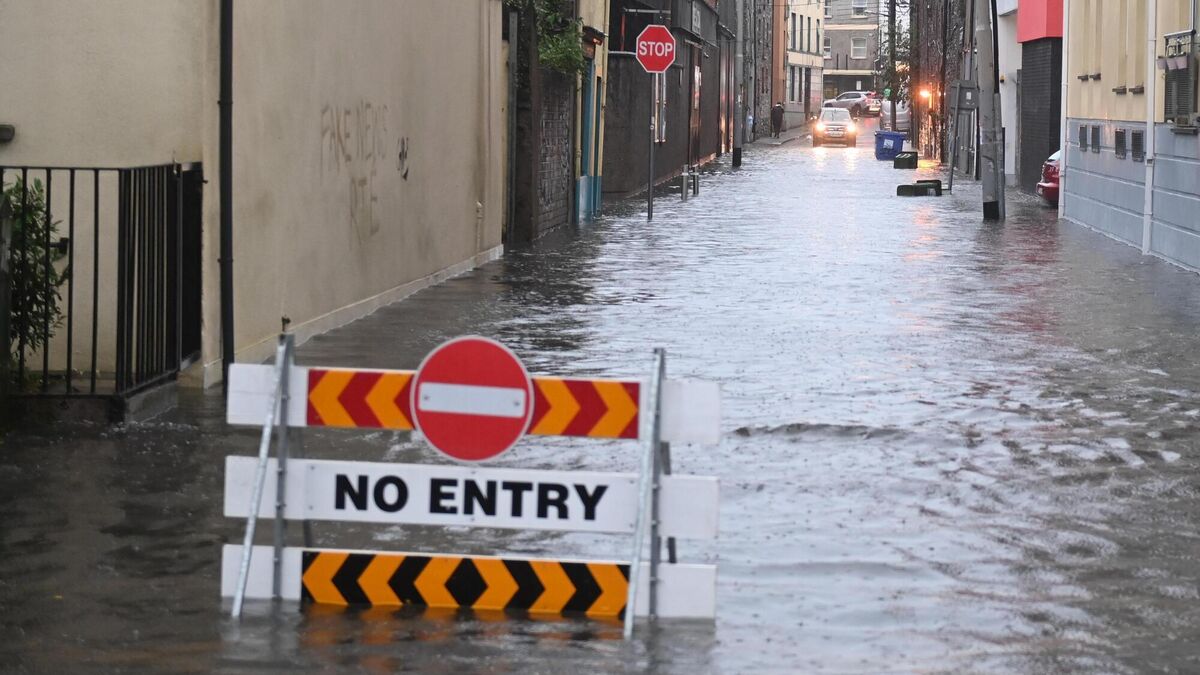
Flood waters on Rutland Street, Cork city during Storm Babet in 2023. Picture: Larry Cummins.

The Office of Public Works (OPW) has provided updates on a flood-prevention plan for Cork city, including that the cost has risen to €200m and that €16.8m has already been spent, with work unlikely to commence until 2027.

The OPW described the Lower Lee Flood Relief Scheme (LLFRS) as “critically-needed infrastructure” which represents the largest State investment in flood defence ever undertaken in the country. Funding is provided from a €1.3bn investment nationally in flood- relief measures.

“The LLFRS is the result of over a decade of study, utilising cutting-edge technology”, resulting in identifying “the only viable solution to the complexity of Cork city’s flooding problem”, which is both tidal and fluvial (river)," it said.

The key elements of the scheme include low-level quayside defences which will regulate Inniscarra and Carrigadrohid dams to significantly reduce the peak flow of water reaching the city at times of significant floods.

Additionally, the scheme includes the creation of washlands to the west of the city, the diversion of waters from the river’s south channel into the north channel, and an enhanced early flood-warning system.

The project also facilitates an urban renewal scheme comprising improvements to the public realm along Cork’s quaysides, such as new walkways, cycleways, and plazas. The scheme is a collaboration between the OPW, Cork City Council, Cork County Council, and the ESB.

Numerous public consultation phases have been held, to which the OPW said there has been “an unprecedented level of response”.

Timelines

Regarding timelines, it explained: “The OPW does not have powers to expedite flood- relief schemes arising from the damage caused by flooding events, and the delivery of all schemes must meet all of the regulatory and planning requirements.

“Since public exhibition, significant legislative changes in the areas of environmental assessment, climate change, and biodiversity have been introduced.

“These changes in legislative and policy frameworks have resulted in a significant body of additional analysis and design work being undertaken by the OPW and its consultants.”

Significant work has also gone into future-proofing the scheme, it said.

The OPW is now reaching the conclusion of the final revisions to the scheme design.

Design

At the moment, the plan is that the final design will be completed by the summer, the scheme will go to public consultation at the end of 2025, and into planning to the minister for public expenditure, infrastructure, public services reform and digitalisation in spring or summer 2026.

This means that construction will likely not begin until 2027.

The costs of the scheme will likely be at least €200m, the OPW said, adding: “The investment will protect some 900 homes and 1,200 businesses from flooding. It is worth remembering, as context, that flooding in 2009 and 2014 resulted in a reported €140m of damage in Cork at that time.”

Delays

The OPW also denied that there have been delays with the design, saying that instead there had been “significant enhancements to the scheme’s design, against some core principles, given the uniqueness, scale and complexity”.

These include ensuring that it explains why a particular view is not possible, including detailed analysis that considered a tidal barrier, which concluded that “it is not viable nor appropriate — and would not protect the city from a flood event similar to the 2009 event”.

The spokesperson continued: “It is acknowledged that this design work since public exhibition has been extensive and has increased the scale and associated costs for the scheme.

“Since 2017, the expenditure on the LLFRS at €13,446,000 represents circa 80% of the overall project expenditure to date.” This means that the overall cost so far is around €16.8m.

The costs associated with incorporating the city’s historic walls into the flood-relief scheme are included in the overall project costs, they added, describing it as “evidence of how the OPW wants to preserve the heritage of the city”.

more #Cork Flood Plan articles

Rain on umbrella background, weather forecast and environment concept Cork city crews on standby amid flood warning
Upgrade works on Cork city flood plan set to cause traffic disruption Upgrade works on Cork city flood plan set to cause traffic disruption
Family feels ‘embattled in own home’ due to flooding threat Family feels ‘embattled in own home’ due to flooding threat

More in this section

Cork father's appeal for motorbikes at daughter Amelia's funeral tomorrow Cork father's appeal for motorbikes at daughter Amelia's funeral tomorrow
Marina sculpture marks 40th year of Cork's assistance after Chornobyl nuclear disaster Marina sculpture marks 40th year of Cork's assistance after Chornobyl nuclear disaster
Plans approved for social housing in two Cork coastal towns Plans approved for social housing in two Cork coastal towns

Sponsored Content

AF The College Green Hotel Dublin March 2026 The College Green Hotel: A refined address in the heart of Dublin
SETU and Glassworks set to accelerate innovation SETU and Glassworks set to accelerate innovation
Driving Growth in Munster: How property finance is powering Cork’s future Driving Growth in Munster: How property finance is powering Cork’s future
Contact Us Cookie Policy Privacy Policy Terms and Conditions

© Examiner Echo Group Limited

Add Echolive.ie to your home screen - easy access to Cork news, views, sport and more