Micheál Martin defying all the odds while looking to future
Few would have thought Micheál Martin would still be leader of Fianna Fáil in 2024 after the mess he inherited in 2011. David Linnane looks at his staying power and what the future may hold.
Micheál Martin defying all the odds while looking to future

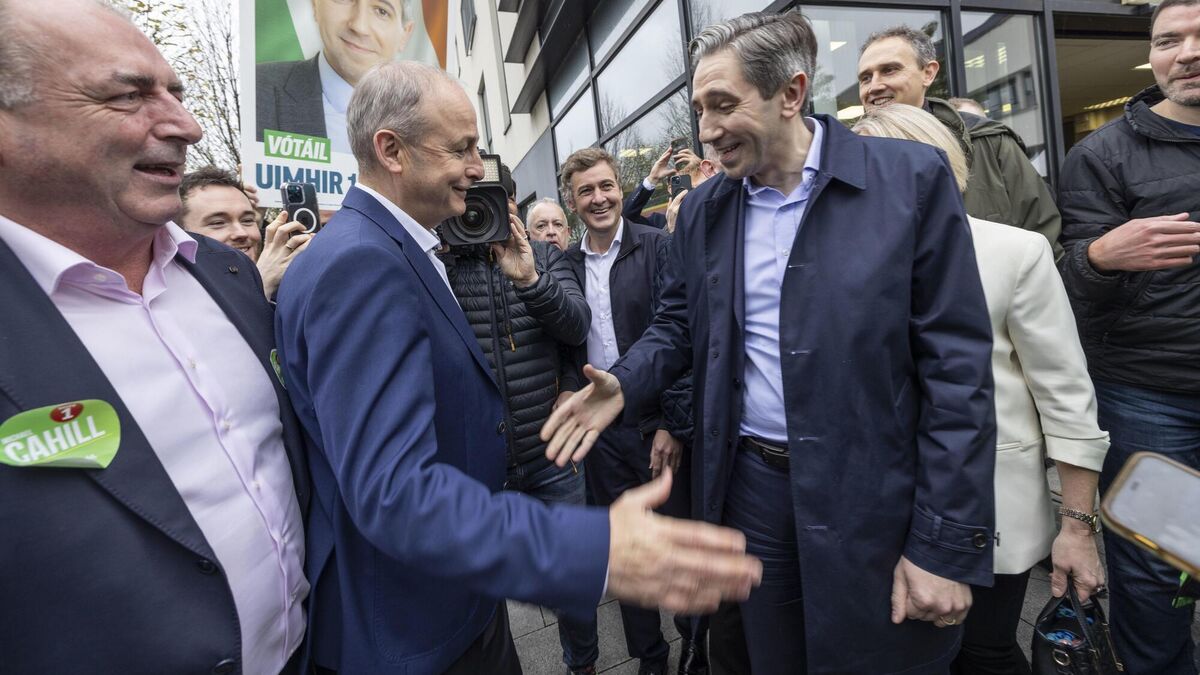
Taoiseach Simon Harris shaking hands with Tánaiste Micheál Martin whilst canvassing voters in Killorglin, County Kerry, ahead of the General Election on November 29.
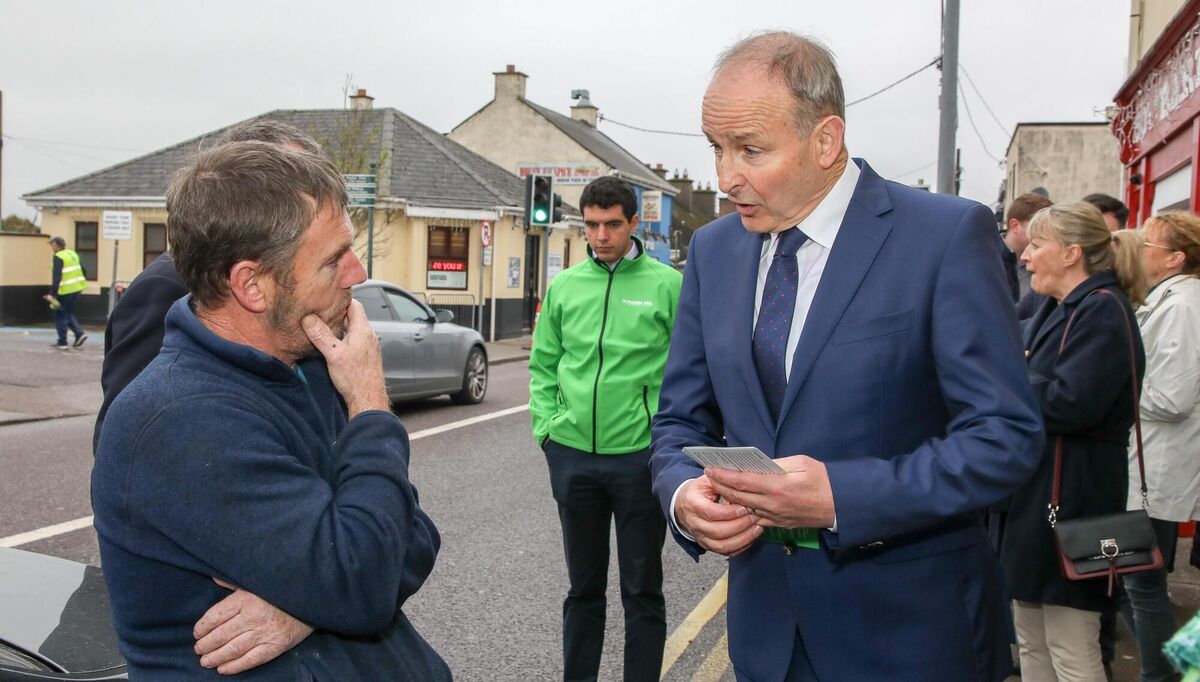
Earlier this year, Micheál Martin surpassed Bertie Ahern as Fianna Fáil’s second-longest serving leader, now rapidly approaching his 14th anniversary at the end of January.

And if you asked the man himself, he’d probably tell you he has Éamon de Valera’s 23-year record in sight as he leads Fianna Fáil into a fourth general election and seeks a second stint in the Taoiseach’s office.

But despite his tenure at the top of Irish politics, he’s also Ireland’s shortest serving Taoiseach, other than Simon Harris who only took over the role earlier this year.

Mr Martin has made no bones about his continued ambitions, and retirement doesn’t seem to have crossed the mind of the 64-year-old. 


In every constituency, telephone poles are covered in posters of Mr Martin by himself on a green background, reading ‘Moving Forward. Together/ Ag Bogadh ar Aghaidh. Le Chéile.

When he took over the party in 2011, Fianna Fáil was drowning in a flood of its own making and taking the country with it. Ireland was reaping what had been sown by the Ahern and Cowen governments — of which Mr Martin was a prominent member — and was ready to punish the party at the polls.

Few would have thought then that Mr Martin would be Taoiseach a decade later, leading the largest party in the Dáil. Fewer again would have thought it would be in a coalition with arch-rivals Fine Gael.

Unpredictable

Politics is unpredictable, and even days before the election it’s impossible to say with any great degree of certainty what coalition might emerge from what looks to be a very fractured 34th Dáil.

One thing that is worth a bet though is that, as he always has, Micheál Martin will make a solid play with the cards that are dealt to him and if there’s a whiff of a chance that Cork might have a Taoiseach again, he’ll make it work.

Martin isn’t a magician by any means. Fianna Fáil’s recovery hasn’t been linear. The party lost seats in 2020. Where they were once the natural leaders of government, they are now just a player in coalition arrangements.

The heights of the boom and the depths of the crash won’t soon be forgotten, and added to that price, Fianna Fáil has continued to gather baggage from the 2016 confidence and supply agreement through to the outgoing coalition government. 

Rising rents and house prices, endless crises in the health system, worsening rhetoric and violence around immigration and any other number of scandals that have rocked the coalition over the country over the last eight years.

Polling is an inexact science and should be taken with a grain of salt, but if the current trends hold up, Fianna Fáil looks like it will either lose seats for the second general election in a row, hold what it has on a good day, or only make modest gains on a very good day.

Relative

But all things are relative. Though Fianna Fáil lost seats in 2020, it narrowly beat out Fine Gael and Sinn Féin to become the largest party in the Dáil again.

Earlier this year, the party lost 31 council seats, but that was still enough to maintain its position as the largest party in local government.

We can come up with all the narratives we want, but when it comes to coalitions, its cold hard maths that matter.

The public has three feasible options for Taoiseach — Micheál Martin, Simon Harris, or Mary Lou McDonald.

Tánaiste Micheál Martin speaks with John O’Callaghan on the subject of housing while out canvassing in Carrigtwohill. Picture: David Creedon

With Fine Gael, Fianna Fáil, and Sinn Féin all hovering in the region of 25 to 40 seats, depending how everything lands, any coalition is likely to require two of the big three, plus some conglomeration of small party or independent TDs to make up a majority or facilitate a workable minority.

Few of those options appears too enticing or stable. Mr Martin has taken Sinn Féin off the table, saying the two parties are incompatible, though if push came to shove their differences could be put aside. A reminder — he said the same of Fine Gael during the 2020 campaign.

But such a coalition looks unlikely anyway, as the maths aren’t there. Combined, the parties might have 60-75 seats at best, well short of the 95 or so TDs that will be needed for a secure majority in the new 174-seat Dáil. 

Bridging that gap would likely involve overtures to two or more small parties and a few independents, creating a government that would make Bruton’s Rainbow Coalition look monochrome.

Without the need for much explanation, Fianna Fáil being frozen out by a Fine Gael-Sinn Féin coalition is as far from likely as you can get.

A totally new government seems unlikely too.

Floundered

For a period during this Dáil, Mary Lou McDonald looked like the Taoiseach in waiting as the coalition government floundered on various issues and the public seemed ready for a big change. In the polls, Sinn Féin was tipping over 37% as late as spring 2023 — rivalling Fine Gael under Enda Kenny or Fianna Fáil under Bertie Ahern — but over the past 18 months or so, support for the party has plummeted. Unless there’s a dramatic shift by polling day, any dreams of a Sinn Féin-led left coalition that excludes the old Civil War parties must be held for another day.

As of right now, the most likely outcome looks like a modified version of the current coalition, with another group subbed in for the Green Party.

In recent weeks, the two larger coalition partners have been campaigning like the 12-TD strong Greens were the ones really running the show and are to blame for everything the average voter disliked about the last four years. 

While the public transport positive Greens might get to admire the bus as they’re thrown under it, Fianna Fáil and Fine Gael are ready to ditch the Leap cards and car pool with someone else.

Labour and the Social Democrats are both likely to factor into government formation talks, and have been as clear about their willingness to do so as they have about their terms. On their current numbers and the lay of the land, it’s hard to see either party make a big breakthrough, but they could collectively be able to make up the numbers in a four-way coalition.

This election looks like it will favour independents though, with a surge in support and a number of high-profile candidates who could make a breakthrough.

Fianna Fáil has a history of losing strongholds to independents who have left the party, from the ever multiplying Healy-Raes in Kerry to Mattie McGrath in Tipperary. In Cork, Independent Ireland councillor Kenneth O’Flynn looks like he could pull off a similar feat.

However hard they have to bite their tongues, successive Taoisigh have successfully done business with independents, including those that have criticised them or jumped ship and taken a seat with them.

Groupings

While various different groupings exist, like the Rural Independents and Independent Ireland, the clue is in the name and these types of coalition arrangements are made on a one-to-one basis. 

That, however, does not mean they are impossible or unstable. In 2016, Enda Kenny held on to the Taoiseach’s office with a reduced Fine Gael party joined in cabinet by a ragtag group of independents and facilitated from opposition by Fianna Fáil. Initially agreed for three years, no one believed the arrangement would last three months, but it outlasted Kenny himself and ended up being renewed for an additional fourth year.

The real question then seems to be about who has the largest number of seats — Fianna Fáil or Fine Gael — and who wants the first go in the big chair.

There’s good reason to believe that Fine Gael are currently ahead, but the lack of incumbents could cost them marginal seats. With so many retirements as the star players of the Kenny and Varadkar years make way for Harris and his slogan of ‘A New Energy’, the party may miss out on gains as untested and inexperienced candidates try to gain a foothold.

Cork

This can be seen in Cork, where Colm Burke, who was only elected to the Dáil for the first time in 2020, is the only incumbent Fine Gael TD seeking re-election. Senator Jerry Buttimer is the only other Cork candidate to have seen the inside of the Dáil from the VIP seats, while TDs Simon Coveney, Michael Creed, and David Stanton all bid the chamber farewell.

It’s a similar story across the country, with more than half of the party’s sitting TDs stepping down. While a favourable wind and a fair amount of worn out shoe leather should save most of those seats, the difference between Fine Gael being the largest Dáil party or an equal to Fianna Fáil might only require two or three seats to flip.

In other words, we’re looking at a startlingly similar result to 2020, with Fianna Fáil and Fine Gael as relatively equal partners in a coalition.

Mr Martin has said that a rotating Taoiseach is on the table for any future coalition, and he’d be wise to seek the first go. A deal for the back half of a coalition is a deal for a Fianna Fáil leader to become Taoiseach, not necessarily the current one.

A stint like that could allow him to cap off his career and retire upon vacating the Taoiseach’s office — though many predicted he’d do that this time around and here we are.

It’s worth remembering though how the one man who led Fianna Fáil for longer left the main stage though. In 1959, de Valera stood down as leader of Fianna Fáil after being elected president.

Michael D Higgins’ second term is up next October. Just saying.

CIVIL WAR CLEAVAGE

The century or so of Dáil elections have been marked by a series of landmark moments that reshaped the political landscape, but the last few decades have been more volatile than any of those before.

For much of the 20th century, Ireland was an anomaly compared to other parliamentary democracies that were split down left-right lines. Instead our main cleavage was around the Civil War, with Pro-Treaty Sinn Féin and Anti-Treaty Sinn Féin evolving into Fine Gael and Fianna Fáil, and our PR-STV system rewarding moderation and the policies of every electable party clustering in the centre.

The first landmark moment was in 1932, when Fianna Fáil became the largest party in government in a peaceful transition of power just a few years after the end of the Civil War. Fianna Fáil would remain in the top spot for another 79 years.

The next big moment was in 1948, when Fianna Fáil was unseated by a coalition. This set the stage for the type of power exchange that would occur for much of the remainder of century, with single-party Fianna Fáil governments and Fine Gael-led coalitions swapping sides in the Dáil every few elections.

In the 1980s, the grip of the Civil War parties started to wane, with their combined support on a downward trajectory ever since, while smaller parties began to emerge. This culminated in 1989, with Charlie Haughey reneging on Fianna Fáil’s rule of no coalitions, forming a new government with the Progressive Democrats. No party has won a majority since Jack Lynch in 1977, and every government since has been a coalition or minority arrangement.

The 2008 crash exploded whatever was left of the old political order, and the dust has yet to settle, but things are starting to become a little bit more clear. In 2011, Fianna Fáil’s reign as the largest party came to a brutal end, with both Labour and Fine Gael leaping ahead of them. However, the celebrations would be short lived, with Labour being decimated and Fine Gael taking a serious bruising in 2016, creating space for Fianna Fáil to regain a foothold and Sinn Féin to emerge as a potential party of government.

Sinn Féin was now the de-facto lead opposition party, as Fianna Fáil supported Fine Gael through a confidence and supply agreement, a precursor to the 2020 coalition which put the century long Civil War to bed for good.

We’re now entering a third election in a row where Fianna Fáil and Fine Gael’s individual support hovers in the region of the 20-25%, and less than 50% combined making a straight coalition unlikely. Though Sinn Féin might take a dip in this election compared to 2020 and their high-water mark during mid-pandemic polling, a finish in the high teens of vote share would still be a big step above where they were a decade ago and firmly in the mix of the top three players in the Dáil.

With numbers like that, Ireland is no longer an anomaly — we’re firmly in the multi-party coalition territory that dominates across the rest of Europe, where maths matters as much as ideology.

Barring some major political earthquake, the next few governments will likely require two of the big three, with the other leading the opposition, however strange the bedfellows might seem.

NEXT LEADER OF FIANNA FÁIL

Whether by accident or intent — you be the judge — almost all of the pretenders to the Fianna Fáil throne have been sidelined in recent years.

Michael McGrath, a TD so popular he once outpolled Micheál Martin in the leader’s own constituency, is out of the national picture for now as he moves to Brussels for the prestigious role of EU Commissioner.

Darragh O’Brien’s ambitions have likely been softened by his time in the cabinet where he was tasked with making Fianna Fáil the party of housing again, but instead he’s been the face of the worst accommodation crisis the state has seen this side of the tenements.

Barry Cowen, who could have caused plenty of trouble in the aftermath of his sacking in 2020, has been brought back into the fold but out of the country and joins McGrath in Brussels as an MEP.

Former deputy leader Dara Calleary was shockingly snubbed in 2020 without a full cabinet position, only to be appointed in crisis a month later once Cowen’s scandal broke. 

What could have been a deep fracture in the party was quelled by Golfgate soon after and Calleary’s invite back in to the fold in recent years has been very much on Martin’s terms.
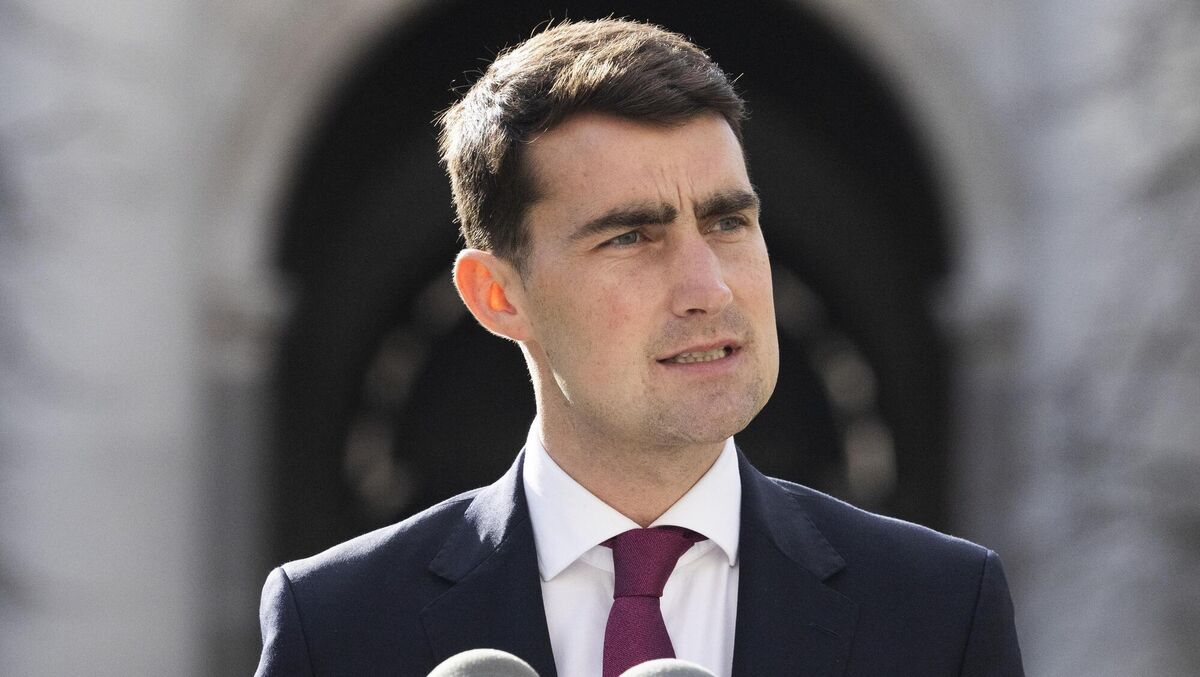
Fianna Fáil deputy leader, Jack Chambers.  Photo: Sam Boal /Collins Photos

Jim O’Callaghan, buoyed up by the media as Martin’s biggest threat, has failed to make any headway on the rubber chicken circuit in recent years. He was the only one who did refuse on offer, opting to remain on the backbenches instead of taking a role as junior minister, which now seems like an error as his media star waned while others were promoted ahead of him.

One of those rising stars is Jack Chambers, who was rapidly elevated to Finance Minister and deputy leader earlier this year, having served in various ministerial posts since 2020. With Martin himself as his biggest champion, giving him opportunity after opportunity to learn the ropes from roles as national Director of Elections to Chief Whip, he’s now firmly in the discussion as a potential future leader and Taoiseach.

But, one has to admire Martin’s choice of heir apparent — a 33-year old who is still only finding his footing and owes everything to the current party leader. Chambers is not a man who is ready to wield a knife and Martin can likely rest easy without worries of a coup, for now.
 

more Politics articles

Minister’s trip to Lebanon cancelled following Defence Forces concern Minister’s trip to Lebanon cancelled following Defence Forces concern
Trump’s threat to bomb Iran ‘back to the Stone Age’ unacceptable – Taoiseach Trump’s threat to bomb Iran ‘back to the Stone Age’ unacceptable – Taoiseach
Long-awaited Cork taskforce will be 'pointless' without funds, says FG councillor Long-awaited Cork taskforce will be 'pointless' without funds, says FG councillor

More in this section

Cork City Council puts focus on night-time with First Fridays initiative Cork City Council puts focus on night-time with First Fridays initiative
Cork students raise over €1,000 from local events for homeless charitiy Focus Ireland Cork students raise over €1,000 from local events for homeless charitiy Focus Ireland
Garda sign and blue lights on a Garda car. Cork motorist one of the first clocked speeding in garda Easter roads campaign

Sponsored Content

Driving Growth in Munster: How property finance is powering Cork’s future Driving Growth in Munster: How property finance is powering Cork’s future
Passionate producers get a helping hand from Tesco Passionate producers get a helping hand from Tesco
Where tech meets care: At the forefront of IVF Where tech meets care: At the forefront of IVF
Contact Us Cookie Policy Privacy Policy Terms and Conditions

© Examiner Echo Group Limited

Add Echolive.ie to your home screen - easy access to Cork news, views, sport and more