Little Nellie of Holy God: A bright light in Good Shepherd’s pained past
After a fifth fire at the former Good Shepherd convent in Sunday’s Well, Donal O’Keeffe looks at the history of a derelict site that was once a Magdalene laundry and is the final resting place of the unofficial patron saint of Cork, a little girl whose short life fundamentally changed the Catholic Church.
Little Nellie of Holy God: A bright light in Good Shepherd’s pained past

Little Nellie, Cork's unofficial saint
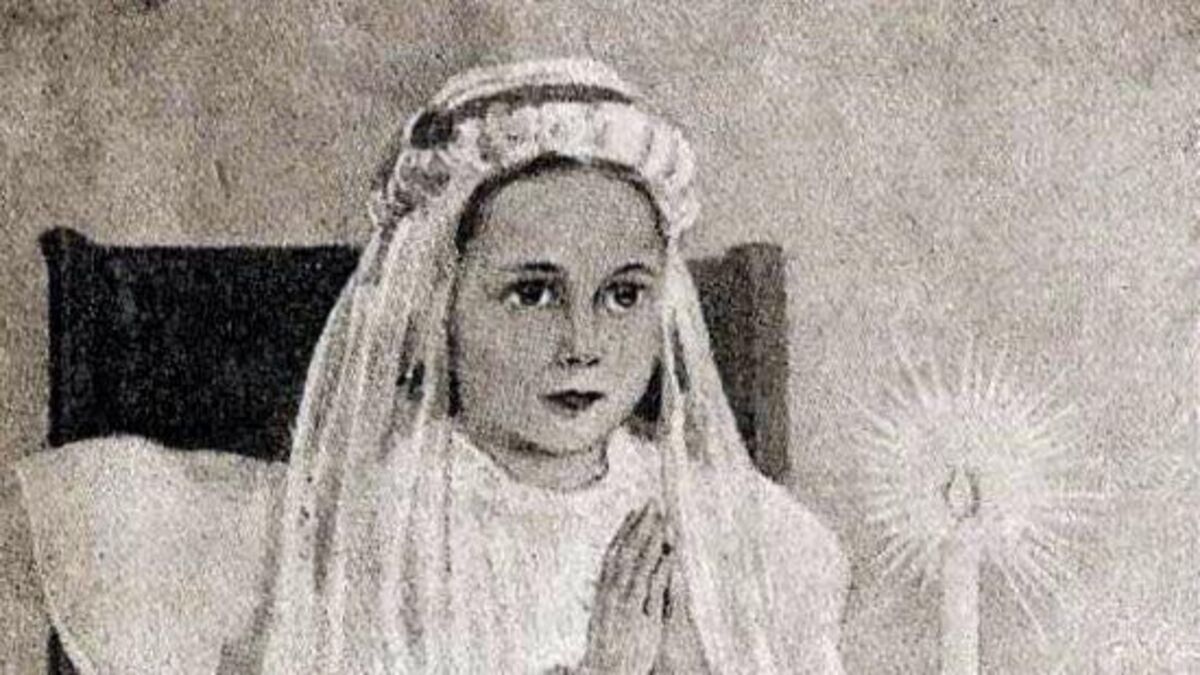
Little Nellie of Holy God, as she would later be known, was born Ellen Organ in Waterford on August 24, 1903, the youngest of William Organ (a variation of Horgan) and Mary Ahern’s four children. 

When Ellen, known to all as Nellie, was a baby, she was dropped by a babysitter and suffered severe spinal injuries which left her in constant pain.

When Nellie was two, her father, a soldier attached to the Royal Garrison Artillery, was transferred to Spike Island in Cork Harbour, bringing with him his family. It was there that Mary, a deeply religious woman, fell fatally ill with tuberculosis (TB).

When Mary died, in 1907, William struggled to raise his four young children, all under the age of nine, and they were eventually placed in care. Nellie, then aged four, was sent with her sister to the industrial school run by the Sisters of the Good Shepherd at Sunday’s Well. 

Nellie was in the care of the nuns there for eight months and she spent most of that time in the infirmary.

As well as her severe back-pain, she was also suffering from whooping cough and caries, a rotting disease of the mouth which eventually caused her jaw to disintegrate. She had also contracted TB.

Precocious

A precocious child, Nellie impressed the Good Shepherd nuns with her religiosity, her devotion to the Child of Prague, and her belief that God was present in the tabernacle. 

The nuns successfully petitioned the then-bishop of Cork, Thomas Alphonsus O’Callaghan, to grant her the sacrament of confirmation, and then, two months later, communion, a sacrament then reserved for children who were over the age of 12.

When Nellie died, on February 2, 1908, the feast of the Purification of Mary, at the age of four years, five months and eight days, she was buried at St Joesph’s Cemetery, Turner’s Cross. 

Nineteen months after her death, the Good Shepherd nuns had Nellie’s body exhumed from St Joseph’s to be re-buried on their property. They claimed that when they opened her coffin, her body was perfectly preserved, and all signs of decay had disappeared.

Pilgrimage

Soon her new grave became a place of pilgrimage, with people who suffered disabilities visiting, and some claiming cures which they attributed to Little Nellie’s intercession with God. Tales of her piety spread to Rome, and Bishop O’Callaghan began promoting the case for Little Nellie’s beatification. Pope Pius X asked for a lock of her hair and declared Nellie a sign from God, decreeing that the age of first communion be lowered to seven.

Pius died in 1914, and Bishop O’Callaghan in 1916, and with them Little Nellie’s pathway to sainthood, but nonetheless, for much of the 20th century, her grave at Sunday’s Well was a pilgrimage site.

Even decades after the convent closed, and years after it has fallen into ruin, the faithful continue, even now that the site is largely inaccessible, to visit Little Nellie’s grave.

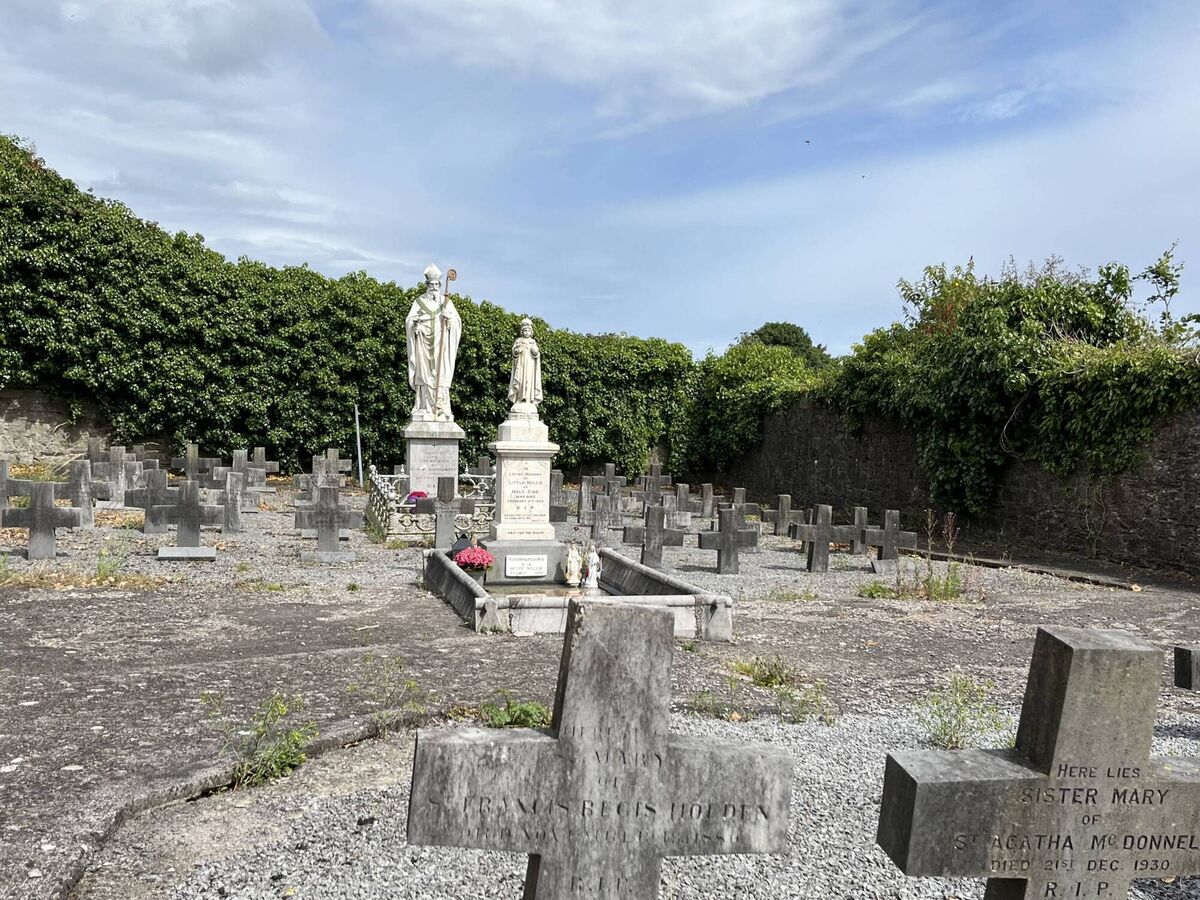
The grave of Ellen Organ, 'Little Nellie of Holy God', in the nuns' graveyard on the Good Shepherd site in Sunday's Well. Picture: Donal O'Keeffe

In 2015, the then-Bishop of Cork and Ross, Bishop John Buckley, called for Little Nellie’s exhumation, with a view to moving her remains from the closed-off Good Shepherd site to a more accessible venue.

“As devotion grows to Little Nellie, we should ensure that maybe her remains are exhumed again, and placed in a more public place, where people could come and pray to her,” he said.

When campaigners and survivors expressed concern that the bishop had made no mention of a mass grave of Magdalene women on the property, Bishop Buckley said he fully supported calls for that grave to be made accessible.

“I would support calls to make the other graves there accessible to those who wished to visit and pray there and would also support calls that the graves would be maintained appropriately and reverentially."

The bishop also condemned acts of vandalism at the grave and said he hoped that the matter had been reported to the gardaí.

“Respect for the dead, their place of burial, and religious sites are fundamental to a civilised society and are fundamental aspects to our Christian belief,” he said.

Nine years on, Little Nellie remains buried in the nuns’ graveyard, the Magdalene women’s grave remains inaccessible, and no garda investigation into the vandalisation of their grave has ever occurred.

Burials on the Good Shepherd site

There are more than 140 people buried on the sprawling, overgrown grounds of the former Good Shepherd site, but we cannot know the precise number.

The most famous person laid to rest there is “Little Nellie”. The so-called “unofficial patron saint of Cork” is buried in the nuns’ graveyard on the north-east corner of the site, among the neat stone crosses and memorials which mark the resting places of the 110 brides of Christ buried there.

For generations of Cork people, the Good Shepherd convent was a place of pilgrimage, with Little Nellie’s grave the centrepiece, beneath a white marble plinth and a statue of the divine infant Jesus. Even today, there are plastic statues, candles, bottles of holy water, Mass cards, and even family photographs left on the grave.

The nuns’ graveyard has seen better days, and someone stole a plaque from Little Nellie’s grave recently, but the cemetery is still relatively neat and tidy, and fresh flowers appear there now and then, even if the entire site is at least nominally closed off. 

Young people get into the convent ruins most summer evenings when the weather is good, and clearly someone still pays occasional respects to the women there who gave their lives in service of the Catholic Church.

Vandalised

There are other women buried on the site who gave their lives in service of the Catholic Church too, but we cannot be sure of how many there actually are, and flowers are seldom left at their final resting place, a repeatedly vandalised mass grave situated at the top of an almost inaccessible and dangerous climb.

Across the Good Shepherd site from the nuns’ graveyard, high up on its north-west corner, above and behind Cork Gaol, is a stone cross, broken into pieces, and a mass grave containing an uncertain number of women who died in the Magdalene Laundry.

The grave was unmarked until the late 1990s, when the order agreed to erect a headstone, following a campaign by a former resident of the laundry.

However, as reported by Conall Ó Fátharta in the Irish Examiner, four of the women named on the stone are also recorded as being buried, in two separate mass graves, at St Joseph’s Cemetery.

One of those graves was only discovered by Justice For Magdalenes Research in 2012, when they also found a grave at Kilcully Cemetery. That grave appears to contain later burials from both the Good Shepherd and Peacock Lane laundries.

The Good Shepherd convent was established at Sunday’s Well in 1870 and was completed in 1881, operating until 1977. During that time, in which the convent also served as a Magdalene laundry, an orphanage, and an industrial school, thousands of women and children were incarcerated inside its red-brick walls.

Newspaper records show courts sending women to the institution well into the 1970s. In one case, in 1932, the courts sent a woman to the laundry for the concealment of a birth for two years. She remained there for 46 years and is buried in the Magdalene plot at Sunday’s Well.

Burial records show that at least 188 women died while in the care of the Good Shepherd Sisters in Cork.

Crews from Cork Fire Brigade battle a fire at the former Good Shepherd convent and Magdalene laundry in Sunday's Well in September 2022.

In the years after the convent closed, the building and its lands were sold for development. First purchased by UCC in 1995, the eight-acre Good Shepherd site was subsequently bought by developer Pat Hegarty, who sold it to the Frinailla group in 2011 for €20m at market peak. When the site went on sale in May 2016, agents Savills noted its suitability for residential development, private hospital, retirement home or nursing home.

It was purchased by its current owners, Dundalk-based and Dublin-registered Moneda Developments Limited, in late 2016, reportedly for in excess of €1.5m.

In December of 2017, Moneda secured planning permission with the provision that its proposal for 234 apartments at the site be reduced to 182.

The company also had to make a number of changes to their plans in the interest of the area’s visual and residential amenities.

At the time, local residents lodged more than 30 objections against the proposed development, insisting that the area would not be able to cope with an influx of hundreds of additional residents in an area already prone to chronic traffic congestion.

In 2018, Tom Coleman, spokesman for the Good Shepherd Community Action Group, told media that the development would create gridlock in the area. In the event, nothing was done, and planning permission for the site expired in December of 2023.
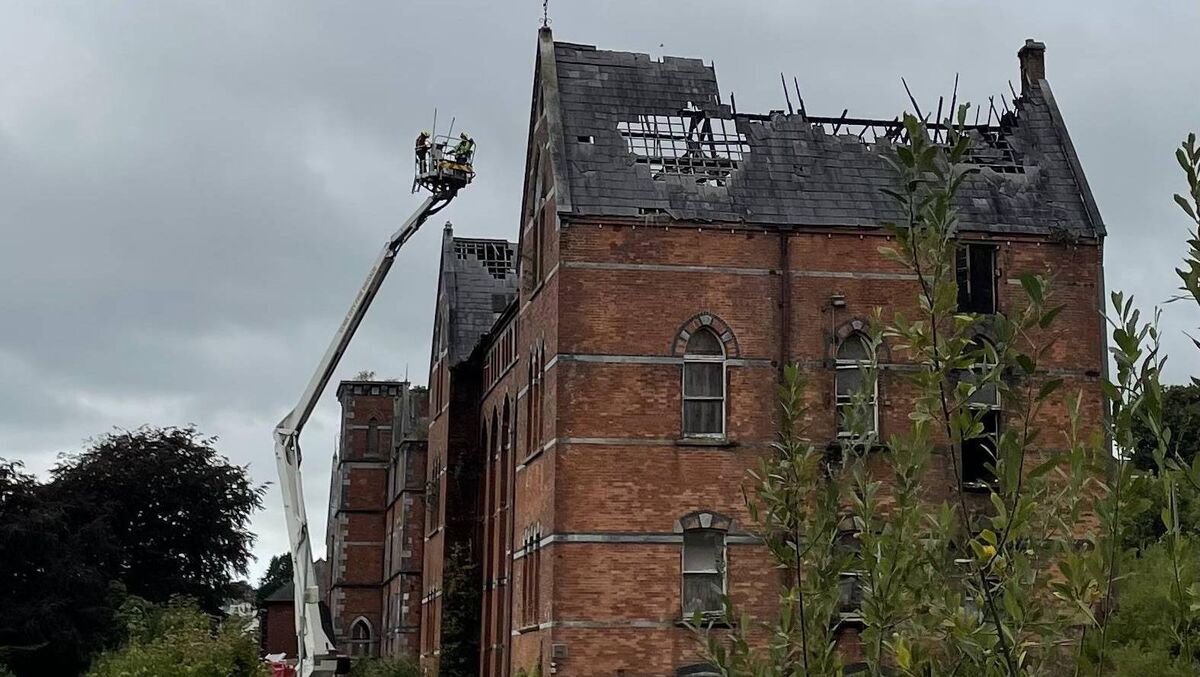
Fire crews from Anglesea Street tending the ruins of the former Good Shepherd Convent in Sunday's Well in Cork, some 12 hours after a fire broke out in the former Magdalene laundry, mother and baby home and orphanage. Picture: Donal O'Keeffe.

The Good Shepherd site has been on Cork City Council’s derelict sites register since February of 2019 and has an estimated current market value of €1,850,000.

Earlier this month, following the latest fire in the ruined convent building, several local councillors called on Cork City Council to compulsorily purchase the site, with a possible view to using it for some form of social housing.

The Echo was unsuccessful in attempts to contact Moneda Developments.
More in this section

Cork man charged with robbery allegedly racially abused staff member at Subway outlet Cork man charged with robbery allegedly racially abused staff member at Subway outlet
Inquest hears experienced climber died instantly after fall in Baltimore Inquest hears experienced climber died instantly after fall in Baltimore
Singer Rita Ora visits Kinsale ahead of Cork Apple gig Singer Rita Ora visits Kinsale ahead of Cork Apple gig

Sponsored Content

Driving Growth in Munster: How property finance is powering Cork’s future Driving Growth in Munster: How property finance is powering Cork’s future
Passionate producers get a helping hand from Tesco Passionate producers get a helping hand from Tesco
Where tech meets care: At the forefront of IVF Where tech meets care: At the forefront of IVF
Contact Us Cookie Policy Privacy Policy Terms and Conditions

© Examiner Echo Group Limited

Add Echolive.ie to your home screen - easy access to Cork news, views, sport and more