‘We want to be on the street, not at a screen’, says Cork garda
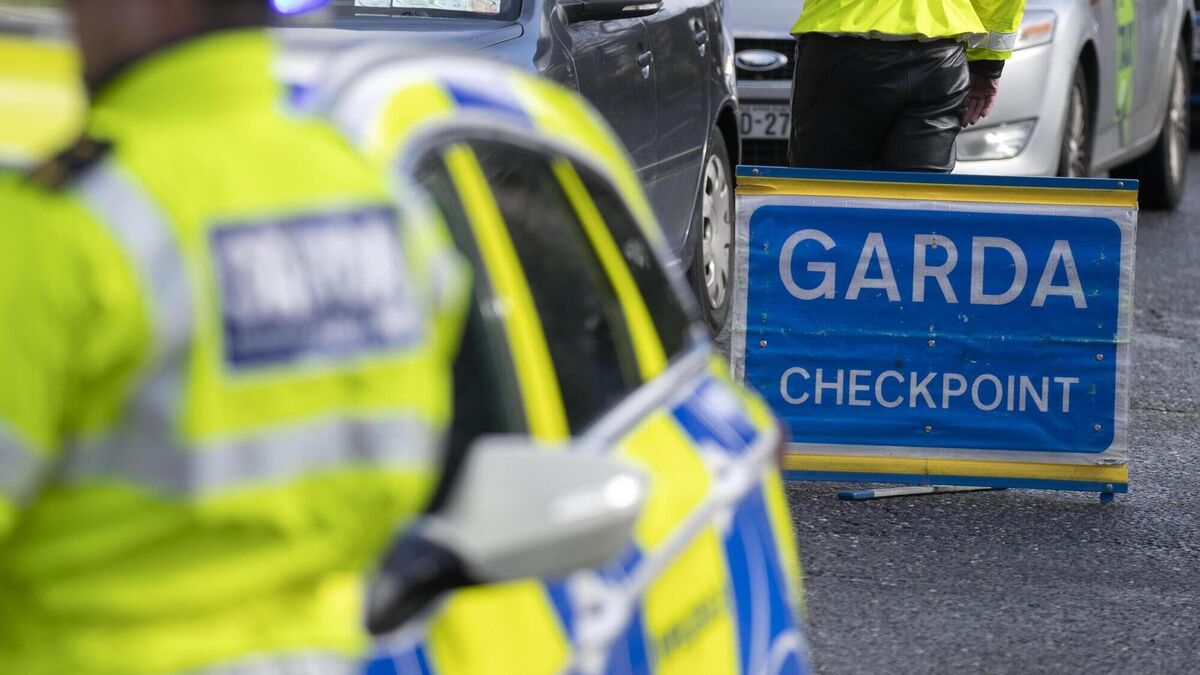
The directive that all uniform gardaí perform 30 minutes of ‘high-visibility’ roads policing per shift is ‘more negative than positive’, say some gardaí. It’s a specialist job.
“The job was fantastic when I joined,” Garda John Parker said. “It was basic, we had little, but there was less calls on us. It was less violent, less drugs, less everything. We coped.” He was speaking during a break at the recent Garda Representative Association (GRA) annual conference.
A central executive committee (CEC) member of the GRA, representing Cork North, Mr Parker is a 34-year veteran, based in Mallow.
The GRA represents 11,000 rank-and-file members of An Garda Síochána’s 14,000-strong force. This year’s conference took place in Westport, and Drew Harris became the first sitting Garda commissioner not to be invited. Relations are strained. Justice Minister Helen McEntee then declined to attend, adding to the disgruntlement at the conference.
Increased bureaucracy
For Mr Parker, the job has changed completely since he joined in early 1990s: Increased bureaucracy means more hours in front of a screen and fewer hours on the beat.
“A lot of us should be high-visibility: People should see the guard more often, rather than, ‘he’s finished his shift and he has an hour’s paperwork to input on the computer’, or ringing a call centre to input, but his shift is over, so it rolls over in to the next shift, but some things have to go on the system immediately.
“So the following day, he’s following up on stuff from the previous day and he’s not able to [do that] in between going to live calls; there is no time to devote to work you have done in the past week.”
Shane Coakley, a divisional GRA representative based in Ballincollig, agreed.
“The bureaucracy in the job is huge at the moment: The paperwork. When I came out as a probationer 17 and a half years ago, your sergeant was encouraging you to get out on the road, detect crime, detect road-traffic offences.”
Mr Coakley said: “Now, the sergeant is nearly telling you to come back in, to finish off that paperwork. There’s so many different applications in our job now, in terms of being in front of that computer.
“The time wasted is astronomical, filling out paperwork, updating applications, when you could be out there, detecting that crime, catching that burglar at the scene, catching that intoxicated driver, catching that person speeding, catching that person committing road-traffic offences.”
Negative
Mr Coakley works in the Roads Policing unit, and like most GRA reps, he was unimpressed with the directive from the commissioner mandating that all uniformed gardaí perform 30 minutes of “high-visibility” roads policing per shift.
“I think it’s more negative than positive, I think it’s covering the cracks in relation to roads policing in the country, where we’re down about 50%.
“These 30-minute checkpoints, which are brought in for every uniformed member, are going to have a brutal effect on detection rates; they’re going to have an issue with community policing.”
Roads Policing is a specialist unit. In the instance of a fatal road-traffic incident, gardaí from the unit are the experts and seen as such by their colleagues.
“We’re not going to be the person responding to the burglaries, but we’re going to be the person responding to and detecting the drink drivers, the speeders, the people not wearing seatbelts, the people using mobile phones. The ‘lifesaver offences’ is what they’re called.”
Outgoing GRA president Brendan O’Connor described An Garda Síochána as a statistically obsessed organisation, an assessment with which Paul Breen, GRA CEC member for West Cork, agreed.
“And it’s duplication of statistics then, as well. It’s paper, paper, paper and a lot of that is just for recording purposes,” Mr Breen said.
Manpower
The recruitment-and-retention crisis meant there wasn’t the manpower to do everything that the job required, a job that has changed drastically in recent years, Mr Parker said.
“The terms and conditions have gone down the Swanee as regards people expecting a decent wage and a decent pension out of it,” Mr Parker said.
“It’s just not an attractive job anymore, especially with social media, people videoing you and putting up selected clips and a story to go with it that doesn’t reflect what actually happened.
“Nobody likes to be ridiculed or made fun of, or whatever, but it seems to be becoming something that’s ever more prevalent these days. So, at that stage, I would say I wouldn’t actually recommend any of my family to go in, because the job isn’t as straightforward as it was before, with paperwork and oversight.
“Accountability is fine, but [now we have] over-accountability, where you have three or four bodies, between GSOC, the Garda Inspectorate, the Policing Authority, everybody wants their cut.”
For all of that, Mr Parker said he didn’t regret joining An Garda Síochána.
“I would do the job again, because, in the times that were there, things were a lot more simple, things got done, there was a lot less red tape, the populations were manageable, the towns were manageable, but some of the towns are bordering on cities now, at this stage, and the manpower hasn’t increased proportionately.
“Unfortunately, nationwide, management are very slow to bring in people on overtime; and as well as that there’s no spare capacity. Nurses have private nurses, they have agency nurses, the guards just have a finite number and the resources are just too few and too far between.”
Mr Coakley said he was happy to be working in roads policing, preventing drivers from committing lifesaver offences, but he could not recommend a Garda career.
“To tell you the truth, if someone came to me and they had a serious interest in getting out there and had good communication skills and a serious love for investigating crime, then I wouldn’t turn them off it, but, in general, I wouldn’t recommend this job. It’s gone too bureaucratic.
“I wouldn’t advise someone to join the guards in general, no.”
Mr Breen agreed.
“I’m happy I joined when I did join, but, now, with the terms and conditions and the pension and stuff like that, there’s no way you could say to someone ‘This is a good career and at the end of it you’ll have a nice pension’, you just couldn’t.
“When I joined, it was a job for life with a good pension at the end of it. You don’t have that now.”
Statement
An Garda Síochána, in a statement issued through its press office, said it does not respond to “third-party comments”.
However, the statement said that “significant advances” have been made over recent years in supporting Garda members, including SMART policing technologies that reduce paperwork and which help to prosecute offences (as recommended by the Commission on the Future of Policing).
It further highlighted the input of Garda Commissioner Drew Harris at the PAC on March 21.
The statement said: “Under A Policing Service for Our Future, there has also been a significant investment in ICT systems and tools to reduce paperwork that will enable gardaí to spend more time on patrol, and on the street, than in the station. It also ensures that we have robust data to inform policing activity.
“We have developed a world-leading mobility device.
“This enables members of the garda to access critical information while on the move. It again requires less time in stations. It enables fixed-charge notices to be issued by gardaí at the roadside.
“On average, 14,000 fixed-charge notices are issued every month from these devices. This means that 85% of all fixed-charge notices are now issued electronically. In 2022, more than 10,000 Garda personnel had mobility devices, and that number has grown today to 15,000. Our mobility devices are improving all the time.
“We have a PULSE person-search app, a health-and-well-being app, KOPS, a Microsoft Teams app that allows us to hold meetings online and an updated traffic app, which now includes live insurance data.”
The statement concluded by saying that An Garda Síochána continue to listen to their members on how improvements can be implemented to deliver a better, more efficient, and effective policing service, which supports gardaí in keeping people safe.





 App?
App?


