Turning off road lights on Ballincollig bypass causing a driving hazard, says Cork councillor
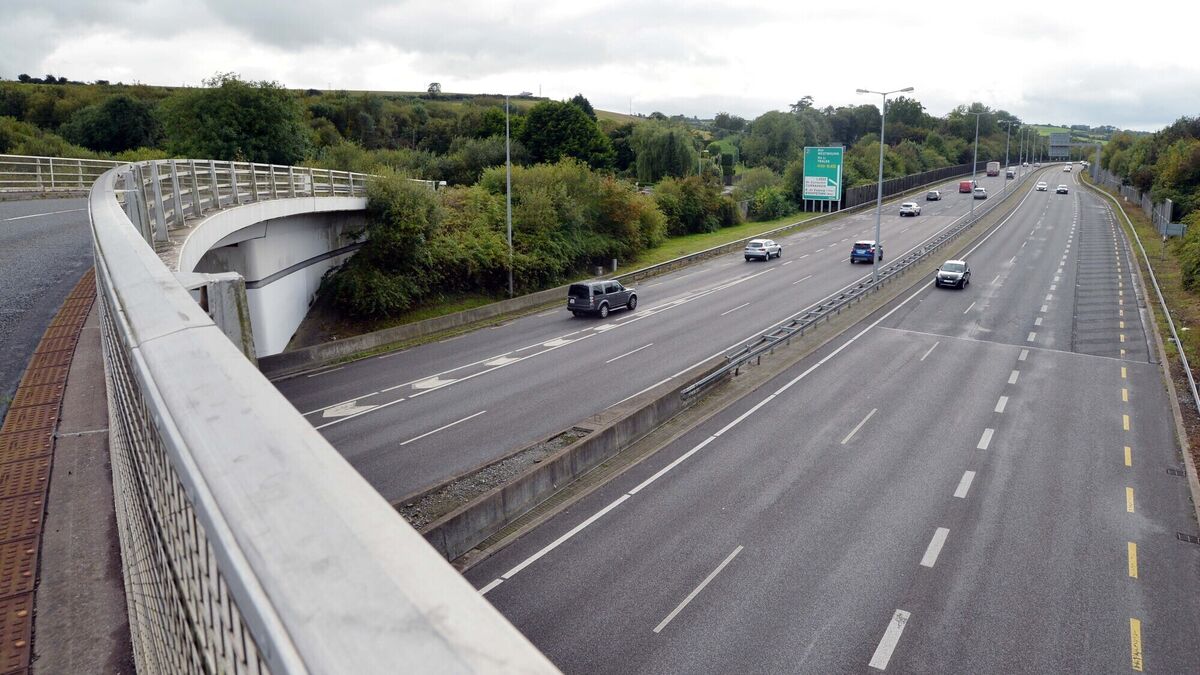
It has been claimed the switching off of street lights on the Ballincollig bypass is compromising road safety.
The switching off of lighting on the Ballincollig bypass is causing road traffic accidents, a Cork city South Central councillor has claimed.
Independent councillor Mick Finn contacted the TII in December, saying that there had been at least two multiple car pile-ups since the removal of the street lights.
Since then, another incident occurred, with a Garda spokesperson confirming that emergency services attended an incident on January 24 where a man was injured.
Different strategy
Mr Finn told The Echo: “I’m asking for a different strategy — taking out whole sections of lights is reckless, and contrary to other road safety campaigns.”
TII confirmed that the street lights have been switched off on the N40/N22 Ballincollig Bypass (mainline plus N40 junctions 1 and 2, and N22 junctions 2 and 3) for environmental reasons.
Mr Finn stated in an email to TII: “The decision to remove all lighting in one area instead of perhaps some lighting in a wider stretch seems to me at best reckless, and while it may be a climate target induced decision, it is contrary to other Government campaigns and investments to make our roads safer.
“There should be no compromising road safety infrastructure, including proper lighting, and I am asking that this move is examined and reversed or dilute where possible and particularly on the N40.”
Mr Finn told The Echo: “Making roads as safe as possible for motorists is a role of TII and plunging stretches into darkness is not the way to do that.
“A different solution to achieve climate targets is required ... perhaps more selective switch-offs across a wider area where the impact for drivers can be negated/diluted.”
Report
A spokesperson for the TII shared with The Echo a report compiled during the pilot phase of the streetlight removal, explaining: “An evaluation of the pilot study was carried out looking at An Garda Síochána Pulse collision data for time intervals before and after the pilot study began.
“Collision data records for 32 months before, and 16 months after the lighting change implementation were examined.”
The report explains: “The results of the pilot study indicate that there is no significant safety difference between the control sites and the treated sites. There was no significant change in the proportion of collisions occurring during the hours of darkness observed in the before and after data examined.
“Further collision analysis looked at both injury and material damage collisions.
“The statistical analysis found that there is no significant difference in injury and material damage collisions from the before and after periods of the pilot study.”
Limitations to this study include a small sample size of junctions to pilot the lighting switch-off as well as a lack of exposure data, which means that any changes to traffic volumes were not part of the analysis, and a shorter than anticipated after period of collision analysis due to the impacts of covid-19.
Monitor
The report added: “However, TII Safety and Network Operations sections continue to monitor the performance of all junctions, with no trends emerging which would contradict the analysis to date.”
A TII spokesperson confirmed to Mr Finn: “Reducing route lighting consumption will continue to play a significant role in TII’s efforts.”
Over one month after he contacted TII, Mr Finn said that the streetlights are still off, and that the road is still “pitch black”.
Mr Finn added: “The lighting scenario on a stretch of the N40 in Ballincollig is just not good enough and is totally at variance with other Government measures to improve road safety.
“Rather than creating a black hole, surely there’s a way of reducing the lighting footprint in a more gradual, targeted way — the TII practice being deployed here is unsafe, in my opinion, and needs immediate reversal.”

App?