Memories of Cork's magnificent Slí Chumann na mBan Walkway
Historian Richard T Cooke took a stroll along one of his favourite haunts through some of Cork's ancient and picturesque acreage. 
Memories of Cork's magnificent Slí Chumann na mBan Walkway

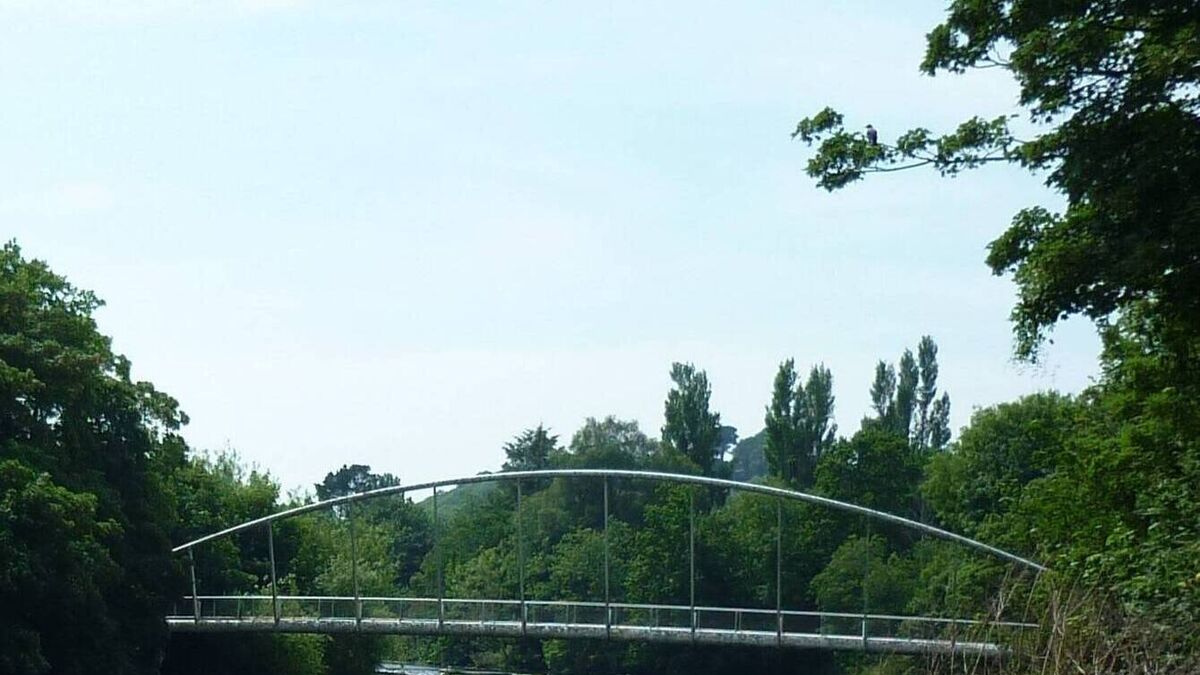
The remains of the gateway pillars to the residence of Atwell Hayes lying on the bank with the Mardyke Bridge in the background, surrounded by lush foliage and the ancient weir. In June 2015 cycling along the Walkway, I met my good friend, the eminent Historian, Dr Sean Pettit. Sean chatted with me about the late 18th and early 19th century noted brewer, miller and glass works owner, Atwell Hayes, whose house was lo¬cated on the marshy island named after him. There’s a lovely story about Atwell and his pet goat. On the grass bank beside his house (see insert in photograph), his goat grazed and quenched his thirst from the waters of the Lee. The old Cork saying: As old as Atty Hayes’ goat is reputed to have originated after Atwell trav¬elled to a masquerade ball in a small chariot drawn by his pet. Pictures: Richard T. Cooke and Insert of Atwell Hayes’ House; Courtesy Cork City Library

Over the Christmas I took a stroll along one of my favourite haunts; the Slí Chumann na mBan Walkway (a section of the Banks of the Lee Walkway) to lose a pound or two after piling it on over the festive holiday.
I have to say, the Cork City Council Parks Department must take a bow for their initiative in constructing this passageway through some of the ancient and picturesque acreage of our beautiful smiling City of Cork, along the banks of the glorious north channel of the River Lee and through the breathtaking beauty of the Valley of the Lee.

This walkway was officially opened on Wednesday, February 1, 2006, by the Lord Mayor of Cork, Cllr Deirdre Clune and christened: The Banks of the Lee Walkway. However, on April 17, 2006, it was renamed: Slí Chumann na mBan Walkway in honour of the 90th anniversary of the 1916 Easter Rising.

Cumann na mBan, the ‘League of Women’, was formed in 1914 as an auxiliary corps to complement the Irish Volunteer Force. Its recruits came from diverse backgrounds, mainly white-collar workers and professional women, with a significant proportion also from the working class.

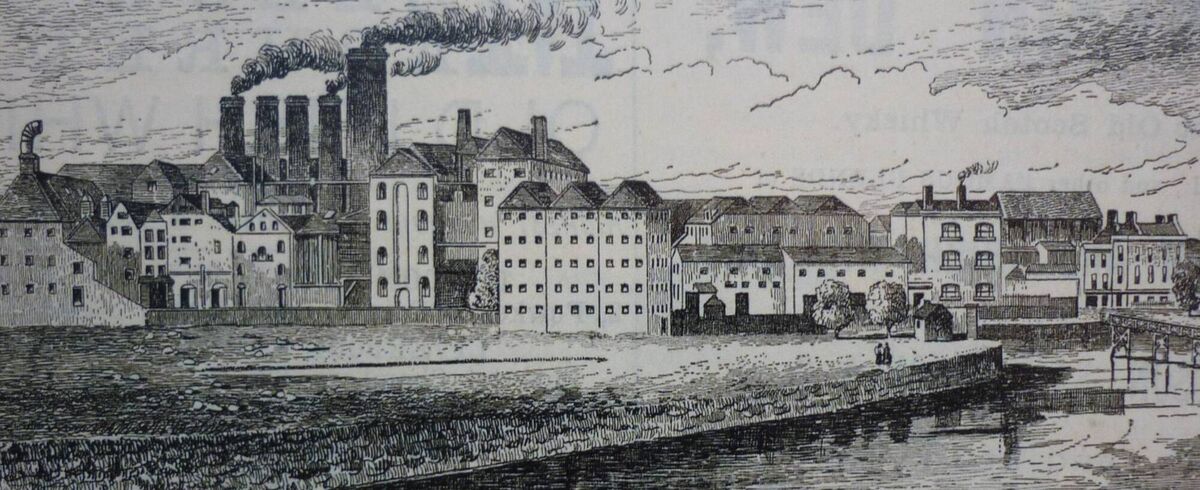
An artist’s impression of the North Mall (Wise’s) Distillery in the 19th century from Grenville Place. This distillery was established in 1779 by the Wise brothers, William and Thomas. In 1887, with a workforce of almost three hundred, the Distillery complex covered an area of twenty-three acres and distilled a brand called: “Wise’s Old Pot Still Whiskey”. In 1920, following a fire which destroyed a large section of the complex, it ceased its whiskey production after which the Distillery was converted into a bottling and store facility which operated until 2007. Three years later, much of the site was redeveloped and became the home of UCC's North Mall Campus. Notice on the right is a wooden bridge this was erected in 1862 and in 1875 it was replaced by the present St. Vincent’s Bridge. Picture: Cork Distilleries Company Annuals/Cork City Library

Scenic walkway

This picturesque riverside walkway begins at the entrance to the Distillery Fields, now the home of UCC’s North Mall Campus, at Wise’s Quay/North Mall. It continues westwards, under the stately elms through the ancient fields where Vikings, Normans and Franciscan Monks once rambled. Growing up in the North Mall area, the Distillery Fields was a playground for my friends and I, and like our hero Huckleberry Finn, we were always ready for an adventure and had endless hours of fun in this magical place.

As I strolled along on the right are remnants of the Cork Distillery, a fine example of the stone workmanship and engineering of the old Cork brick layers and masons and a treat for students of this wonderful trade and tradition to study.

On the left across the river, you can see the Mercy Hospital. This elegant Georgian structure, built in 1767, was once the official residence of the Mayors of Cork where stage coaches and sedan chairs brought the high society of the day to theatrical soirées. Adjacent to this is the sturdy limestone and red sandstone 19th-century structure of UCC’s Lee Maltings Complex, overlooking the Lee, now the home of the Tyndall National Institute and on the right is the red brick Presentation College building.

The walkway continues over the pedestrian Mardyke Bridge, completed in 2005 by Harland and Wolff. Standing on the bridge and looking west, during the fishing season, you can see the magnificent sight of salmon leaping up over the old weir in the Lee, opposite Sunday’s Well Boating and Tennis Club, as they make their way west, under the watchful gaze of graceful snow-white swans. On the right of the weir is an inlet which powered mills down through the centuries.

After stepping off the bridge, you’ll find yourself on another section of the walkway which connects to the Mardyke Walk. This spacious green area is an ideal spot for a leisurely Sunday afternoon picnic and is also the site of a popular skateboard facility.

Mardyke Gardens House

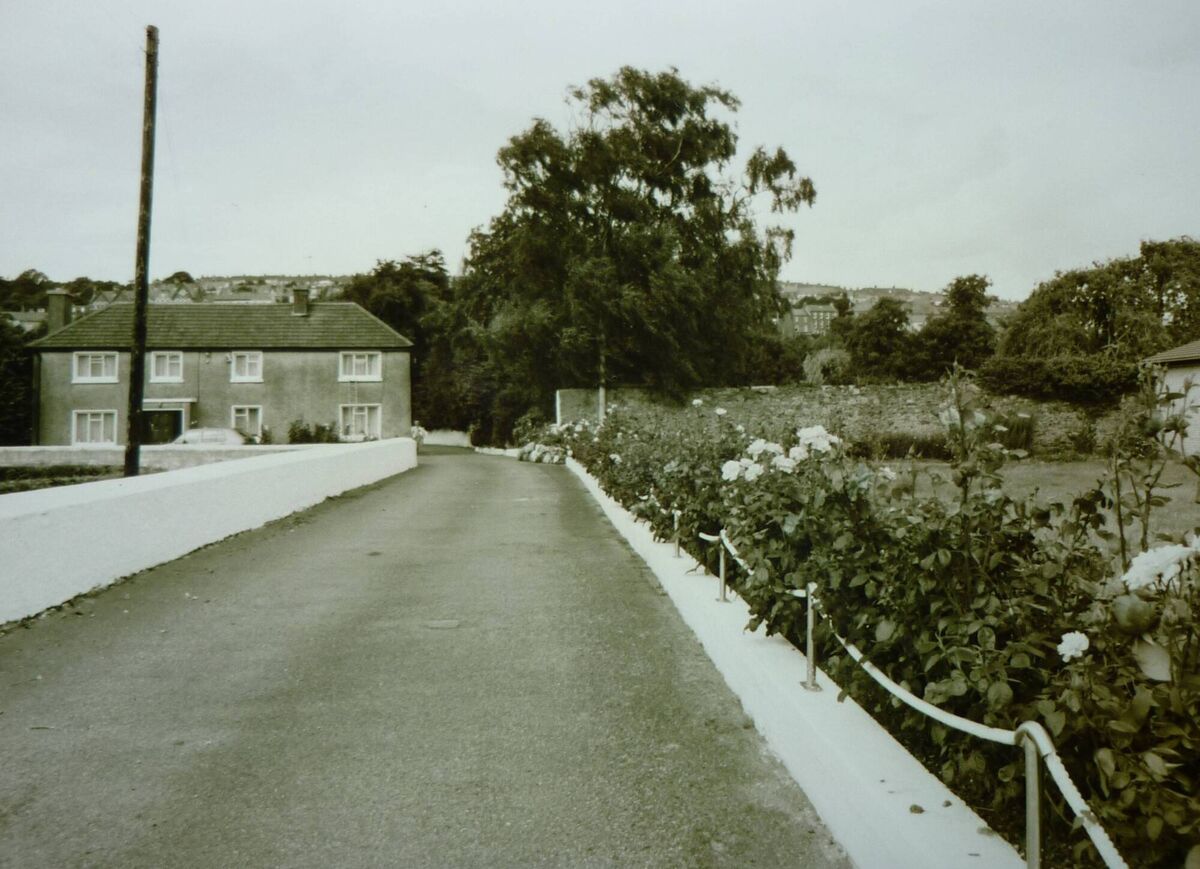
The Mardyke Gardens House taken from the Mardyke Walk in 1980, now the Slí Chumann na mBan Walkway. Picture: Richard T. Cooke

This green which is bounded by the north channel of the River Lee and the Mardyke Walk on the south, Mardyke House and the Leafy Shade cottage grounds on the east and the Cork County Cricket Club on the west, was once the home of the Mardyke Gardens House erected in the 1880s by James Cronin, a market gardener.He had the grounds of his house laid out with fruit and vegetable gardens, fronting the Mardyke Walk and at the rear of the house stretching to the north channel of the Lee.

In order to sell his produce, he had a shop erected at the entrance to his house in 1910 which could be accessed by a small bridge over the Dyke Stream.

This shop, which was made of wood and painted green with a corrugated roof, was leased by many until it closed in the late ’50s.

In 1960, the property was purchased by Denis O’Mahony and was renovated.

The following year the old ‘Mardyke Shop’, which had become a landmark on the walk, was taken down.

Over the years Mr O’Mahony had converted the old orchards into beautiful lawns and rose beds.

He also planted apple trees for personal use until the grounds became the property of the Cork Corporation (now city council) in the 1970s.

‘The Merries’

On the south western corner of the green is a field, approx. one acre in size, which was part of the Cork County Cricket Club grounds up to the 1970s.

The club leased this field a few times each year to interested parties, including Piper’s Funfair and Amusements, affectionately known to Corkonians as ‘The Merries’, a much-loved Cork institution. This hallowed ground was sold to the Cork Corporation in 1970s.

Leaving this spacious well-kept green and the Slí Chumann na mBan Walkway behind, you step onto the busy Mardyke Walk, thus ending our healthy stroll, although you can continue its lush journey along the Banks of the Lee Walkway westward.

Sources: 

C.J.F. Mac Carthy Files Richard T. Cooke, The Mardyke – Cork City’s County Walk in History. Published: Quality Books, Sheares Street, Cork. 

1990 Lord Mayor Speech, Slí Chumann na mBan.

More in this section

Cork County Council launches cost rental homes in Carrigtwohill  Cork County Council launches cost rental homes in Carrigtwohill 
Cork trio on shortlist for TV Home Cook competition Cork trio on shortlist for TV Home Cook competition
Pictures: Cork’s first Mela festival celebrates cultures from 20 nations at Fitzgerald Park Pictures: Cork’s first Mela festival celebrates cultures from 20 nations at Fitzgerald Park

Sponsored Content

Your local hearing care experts in Cork Your local hearing care experts in Cork
AF The College Green Hotel Dublin March 2026 The College Green Hotel: A refined address in the heart of Dublin
SETU and Glassworks set to accelerate innovation SETU and Glassworks set to accelerate innovation
Contact Us Cookie Policy Privacy Policy Terms and Conditions

© Examiner Echo Group Limited

Add Echolive.ie to your home screen - easy access to Cork news, views, sport and more